OSHA 29 CFR 1926.153 LP-Gas Rules: Myths vs. Facts for Bidders
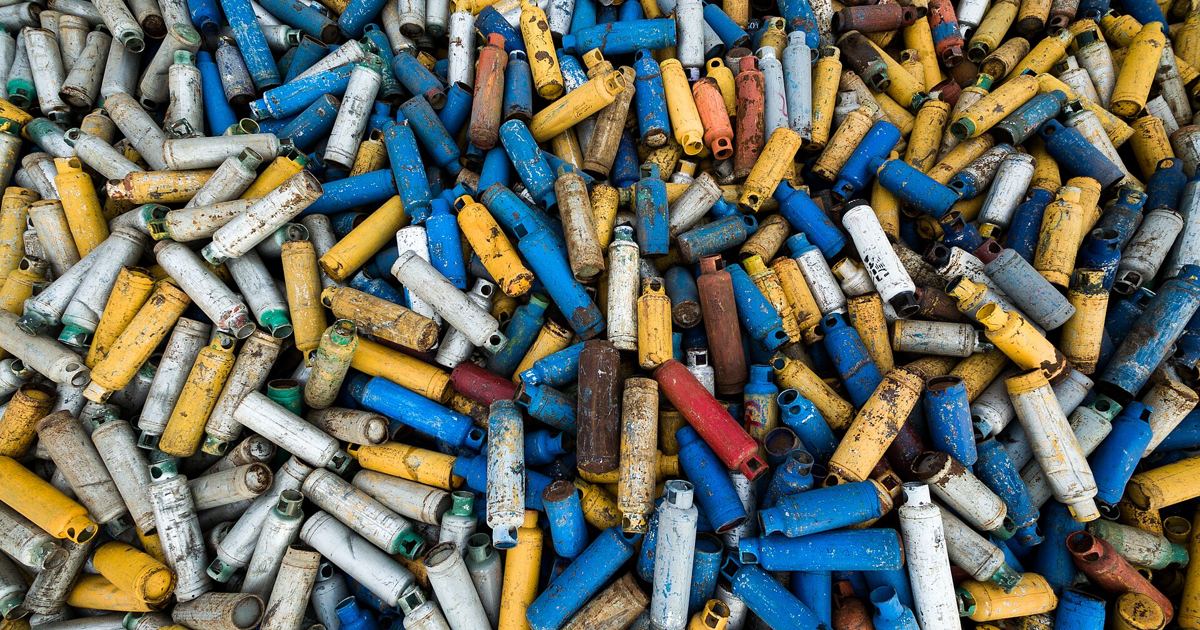
Temporary heating and fuel handling frequently impact general conditions, site coordination, and project schedules during cold-weather construction. Estimators must account for fuel lines, storage setups, and separation distances rather than assuming temporary heaters can simply be plugged in anywhere. Under OSHA 29 CFR 1926.153, the Occupational Safety and Health Administration regulates liquefied petroleum gas (LP-Gas) equipment, containers, and site operations. Misunderstanding these federal safety mandates leads to bid oversights, schedule interruptions, and unexpected jobsite safety retrofits. Here is a breakdown of common industry myths and the actual regulatory facts estimators and contractors must price into their bids.
Myth: Spare LP-Gas Containers Can Be Staged Inside Buildings
Fact: Storing liquefied petroleum gas containers inside buildings is strictly prohibited. Under paragraph (j) of 29 CFR 1926.153, storage of LPG within buildings is not permitted under any circumstances. The standard defines "containers in use" as those connected for use. When operational requirements make portable cylinder use inside structures necessary because outdoor placement is impracticable, only active containers connected for use are allowed indoors.
Contractors cannot stage reserve cylinders in corridors, mechanical rooms, or drywall hanging areas. Estimators accounting for cold-weather drying or temporary heat in general conditions estimating must factor in the labor and schedule requirements for transporting empty and full containers outside each day. Furthermore, individual containers connected indoors are capped at a maximum water capacity of 245 pounds, which equals a nominal 100 pounds LP-Gas capacity.
Myth: Any Standard Hose and Heater Arrangement Is Compliant Indoors
Fact: Indoor temporary heating demands exact hardware specifications, spacing limits, and component ratings. Valves, fittings, and accessories connected directly to a container, including primary shutoff valves, must feature a rated working pressure of at least 250 p.s.i.g. Hoses must also carry a working pressure rating of at least 250 p.s.i.g., and the hose design, construction, and performance must be listed by a nationally recognized testing agency. In addition, aluminum piping or tubing is entirely barred from use.
Clearance rules also govern heating equipment placement inside unpartitioned spaces:
- Heaters other than integral heater-container units must sit at least 6 feet away from any LP-Gas container.
- Blower and radiant heaters must never be directed toward an LP-Gas container located within 20 feet.
- Where two or more heater-container units operate in an unpartitioned area on the same floor, containers must be separated from any other unit by at least 20 feet.
- When heaters connect to manifolded cylinders in an unpartitioned floor area, the total water capacity cannot exceed 735 pounds (nominal 300 pounds LP-Gas capacity), with manifolds separated by at least 20 feet.
- Portable heaters with heating inputs above 50,000 B.t.u. per hour require an approved automatic flame-failure shutoff device along with an electrical ignition system or a proven pilot light.
Myth: Equipment Components and Lines Can Support Heaters or Stand Unguarded
Fact: Federal rules explicitly forbid using container valves, connectors, regulators, manifolds, piping, or tubing as structural supports for heating appliances. Systems using containers with a water capacity greater than 2 1/2 pounds (nominal 1 pound LP-Gas capacity) must feature excess flow valves, either integral to the container valves or in the connections to the valve outlets. When connected for use indoors, containers over 2 1/2 pounds water capacity must stand on a firm, substantially level surface and be secured in an upright position when necessary.
Valves on containers with a water capacity exceeding 50 pounds (nominal 20 pounds LP-Gas capacity) must be protected against physical damage during use or storage. Project planners should explicitly define in bid exclusions and clarifications who furnishes protective barriers, manifolds, and tie-offs, ensuring line items reflect compliant rigging and physical protection.
Myth: Skid Tanks and Outdoor Containers Require No Special Foundations
Fact: Containers and regulating equipment placed outdoors must stand upright on firm foundations or remain firmly secured, with flexible connections or special fittings guarding against settling. For skid tanks—portable or semiportable containers equipped with steel runners—specific design criteria apply under paragraph (m). When used temporarily at a jobsite location for a period not to exceed 6 months, skid tanks require adequate ferrous metal supports rather than fire-resisting foundations.
The standard establishes strict elevation and dimensional limits for skid tanks:
- The outside bottom of the container shell cannot sit more than 5 feet (1.52 m) above ground level unless fire-resisting supports are supplied.
- The bottom of the skids must be between 2 inches (5.08 cm) and 12 inches (30.48 cm) below the container shell bottom.
- Skids and attachment lugs must have a minimum factor of safety of four to withstand loading in any direction equal to four times the weight of the loaded container and attachments.
- Shutoff valves on container connections must sit as close to the container as practicable, and safety relief valve discharges must vent freely to the outer air at least 5 feet horizontally from any lower building opening.
Myth: Outdoor Storage and Fuel Dispensing Follow Arbitrary Jobsite Layouts
Fact: Outdoor storage for cylinders awaiting use is governed by rigid setback distances established in Table F-3 based on total weight:
- 500 lbs. or less of stored LP-Gas requires 0 feet of separation from the nearest building or group of buildings.
- 501 to 6,000 lbs requires a minimum distance of 10 feet.
- 6,001 to 10,000 lbs requires a minimum distance of 20 feet.
- Quantities over 10,000 lbs require a minimum setback of 25 feet.
These outdoor storage sites must feature a suitable ventilated enclosure or equivalent protection against tampering. Additionally, every storage location must be equipped with at least one approved portable fire extinguisher carrying a rating of not less than 20-B:C. Furthermore, when dispensing fuel, filling portable containers or skid-mounted containers from bulk storage must take place not less than 50 feet away from the nearest building, while filling vehicle fuel containers requires at least 10 feet from a masonry-walled structure and at least 25 feet from any other building or opening.
Myth: Field Alterations and Welding Are Acceptable for Jobsite Fitting
Fact: Welding directly on LP-Gas containers is strictly prohibited. Field welding is permitted only on saddle plates or brackets that were originally installed by the tank manufacturer. All cylinders must comply with Department of Transportation specification identification requirements under 49 CFR part 178. Where LP-Gas containers are stored alongside other industrial gases, marking must comply with American National Standard Z48.1-1954 to identify the contained material. Bidders should price factory-certified vessels and avoid planning field modifications that trigger OSHA citations.
Sources
- eCFR: 29 CFR 1926.153 - Liquefied petroleum gas (LP-Gas)
- OSHA: Construction Industry Standards and Resources
Published October 28, 2026. No affiliate links on this page. Facts come from the sources linked above; check them for updates.