Bidding OSHA 29 CFR 1926.304: Woodworking Tool Questions for the GC
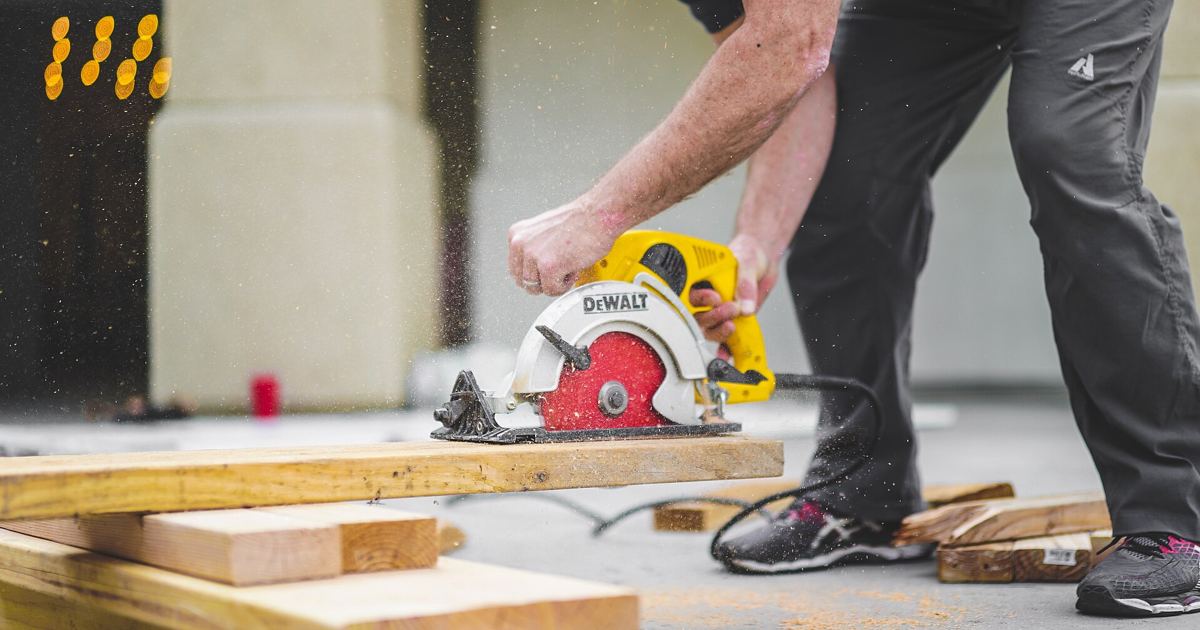
Carpentry, drywall, and interior finishing crews rely on power saws and shapers every day to frame partitions, trim openings, and fabricate assemblies. However, federal safety regulations set clear physical and mechanical conditions for these devices on commercial projects. Under eCFR 29 CFR 1926.304, stationary and portable woodworking machinery must meet strict guarding, power shutoff, and speed criteria. When an estimator overlooks site logistics or power availability for compliant cutting stations, the subcontractor can face schedule stoppages, unexpected equipment swap costs, and project friction. To protect your estimate and schedule, treat woodworking safety as a coordination item before bid day. Here are the essential questions subcontractors should ask the general contractor before submitting a proposal.
Question 1: Where will stationary tools be located and how will power disconnects be handled?
When interior trades set up stationary fabrication benches on a deck or in a staging yard, electrical switch configurations become an immediate safety checkpoint. Under federal rules, all fixed power-driven woodworking equipment must feature a disconnect switch capable of being locked or tagged in the off position. If your crew brings a shop-style stationary unit to process backing, blocking, or architectural trim, the field setup cannot rely on an ambiguous cord pull or an unreachable panel.
Estimators should ask the general contractor where central fabrication areas will be permitted and who provides lockable power points. In addition to disconnect hardware, the standard requires all woodworking machinery and tools to conform to the applicable provisions of American National Standards Institute, 01.1-1961, Safety Code for Woodworking Machinery. Confirming these expectations prevents downtime when safety managers inspect staging setups. For tips on managing trade scope boundaries in your bids, review our guide to bid exclusions and clarifications.
Question 2: Are jobsite ripsaws, crosscut saws, and radial units guarded to federal specifications?
Subcontractors frequently share cutting areas or bring specialized saws to site, but table and radial saws face detailed hood mandates. Under 29 CFR 1926.304, hand-fed circular ripsaws require a protective hood that completely encloses both the blade portion above the table and the portion above the material being sawed. The hood must automatically adjust to stock thickness, maintain constant contact with the workpiece, and operate smoothly without offering considerable resistance to material feeding. To prevent catastrophic blade damage, the hood material must be soft enough that it is unlikely to cause tooth breakage, while remaining strong enough to resist operational blows, deflect splinters, and withstand side thrust.
Hand-fed circular crosscut table saws must meet these same protective hood rules. For radial saws, the upper hood must completely enclose the upper blade down through the end of the saw arbor, deflecting sawdust and broken saw teeth away from the operator. Furthermore, the lower exposed sides of a radial saw blade must be guarded to the full blade diameter with a device that automatically adjusts to stock thickness and maintains contact during the cut. Asking the GC whether provided saws meet these points avoids compliance shut-downs.
Question 3: How will portable circular saw inspections and blade speed limits be managed?
Handheld circular saws are standard equipment for framing and interior crews, but jobsite inspections frequently target field modifications or damaged springs. OSHA requires portable, power-driven circular saws to have operational guards both above and below the shoe or base plate. The upper guard must cover the blade to the depth of the teeth, allowing only the minimum arc needed for bevel cuts. The lower retractable guard must also enclose the blade to the tooth depth, opening only enough to contact work material and automatically and instantly returning to cover the blade as soon as the tool is withdrawn.
Estimators must also account for saw blade speed ratings. For circular saws over 20 inches in diameter or operating at over 10,000 peripheral feet per minute, the operating speed must be etched or permanently marked on the blade. Operating marked blades at any other speed is strictly prohibited. If a marked saw blade is retensioned for an altered operating speed, the etching or marking must be corrected. Subcontractors should verify blade inventories so field teams avoid running unrated or mismarked blades.
Question 4: Does the project work permit automatic feeding devices?
When high-volume milling or repetitive ripping is required for large drywall framing or millwork contracts, mechanical feeding can affect both safety compliance and labor production. Under 29 CFR 1926.304 Woodworking tools, automatic feeding devices must be installed on machines whenever the nature of the work permits. Where automatic feeders are attached, their feed rolls and moving mechanisms must be guarded or covered to shield operators from hazardous pinch points.
Estimators should ask the general contractor whether repetitive cutting operations are expected to utilize self-feeding attachments or whether manual feeding is accepted across all production tasks. Clarifying this detail ensures your labor pricing accurately reflects cycle times, handling labor, and equipment rental rates. For further detail on pricing craft hours without missing hidden operational factors, see our walkthrough on pricing carpenter labor.
Question 5: What personal protective equipment protocols govern fabrication zones?
All woodworking tools operated on the jobsite require personal protective equipment conforming to subpart E of the federal safety standards. Because woodworking tools generate high-velocity chips, sawdust, and noise, general contractors may enforce specific eye, face, or hearing mandates in designated cutting zones. Estimators should clarify:
- Whether stationary saw benches must be isolated from general foot traffic or enclosed to contain splinters and dust.
- Who supplies power drops equipped with lockable disconnect switches in staging yards.
- Whether the GC conducts pre-mobilization tooling audits to inspect lower blade guard retraction on portable saws.
- How retensioned or large blades over 20 inches in diameter are verified for speed markings before use.
Sources
Electronic Code of Federal Regulations: 29 CFR 1926.304 Woodworking tools
Published October 28, 2026. No affiliate links on this page. Facts come from the sources linked above; check them for updates.