OSHA 29 CFR 1926.603: Bidding Pile Driving Equipment Requirements
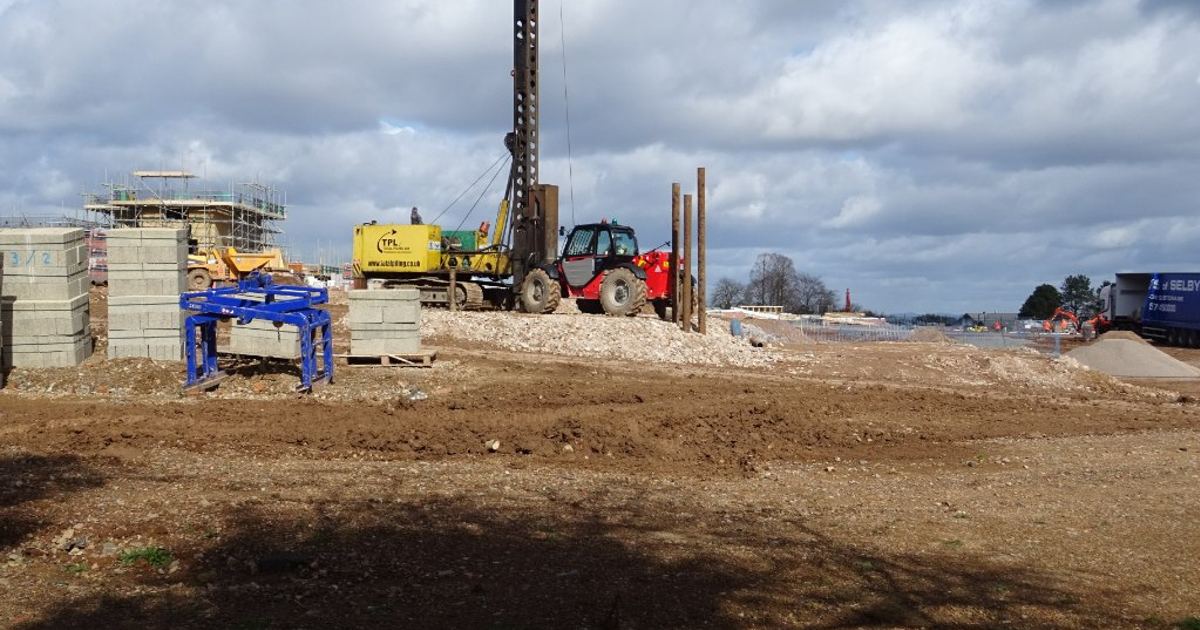
Deep foundation work carries heavy mechanical loads, overhead hazards, and tight site logistics. When bidding foundation packages, estimators cannot treat safety compliance as unpriced site overhead. Federal safety rules under eCFR 29 CFR 1926.603 mandate specific equipment hardware, stability devices, pressure controls, and working clearance zones for pile driving operations. Missing these requirements during bid assembly leads to unexpected field modifications, idle equipment time, and scheduling delays. This step-by-step walkthrough details what the standard requires and how to account for each element in your bids and project schedules.
Step One: Quantify Rig Stability and Overhead Protection Hardware
Preparing a pile driving rig begins with mandatory structural guarding. Federal standards require overhead protection for the rig operator that will not obscure vision and meets subpart N criteria. The overhead guard must provide strength equivalent to 2-inch planking or other solid material of equivalent strength. Estimators reviewing equipment options must confirm whether cabs already carry compliant overhead guards or require capital outlays prior to delivery.
Rig stability must also be addressed in bid logistics. Operators must be provided with guys, outriggers, thrustouts, or counterbalances as necessary to maintain the stability of pile driver rigs. If the project design calls for driving batter piles where leads must be inclined, your plan must include provisions to stabilize the inclined leads. Additionally, the leads require stop blocks to prevent the hammer from being raised against the head block, and guards must be installed across the top of the head block to prevent the hoisting cable from jumping out of the sheaves.
Step Two: Price Pressurized Lines, Safety Restraints, and Valve Controls
Hammers powered by steam or compressed air operate under substantial pressure. The standard imposes specific physical connection requirements to mitigate hose whip hazards:
- Steam hoses running to a steam hammer or jet pipe must be securely attached to the hammer with an adequate length of chain or cable of at least 1/4-inch diameter to prevent whipping if the joint breaks.
- Air hammer hoses must be equipped with the identical protection of at least 1/4-inch diameter chain or cable.
- Safety chains, or equivalent means, must be provided for each hose connection to prevent whipping or thrashing if couplings detach.
- Steam line controls require two shutoff valves, one of which must be a quick-acting lever type placed within easy reach of the hammer operator.
- Boilers and piping systems used with pile driving gear must meet the applicable requirements of the American Society of Mechanical Engineers rules for Power Boilers (section I).
- All pressure vessels used with pile equipment must satisfy the American Society of Mechanical Engineers rules for Pressure Vessels (section VIII).
Estimators should capture these hoses, 1/4-inch safety chains, replacement couplings, and valve checks directly within their general conditions estimating worksheets before work starts.
Step Three: Factor Lead Access and Under-Hammer Blocking into Daily Labor
Working at height on pile leads requires dedicated access hardware. When using fixed leads, the equipment must feature a ladder and adequate rings or similar attachment points so the loft worker can engage a safety belt lanyard. If the leads incorporate loft platforms, those platforms must be protected by standard guardrails. Factoring loft harness hook-offs and ladder climbs into daily shift startup ensures labor targets remain realistic.
Maintenance labor must also reflect mechanical safety controls. Employers must provide a blocking device capable of safely supporting the weight of the hammer. This blocking device must be placed in the leads beneath the hammer at all times while employees perform work under the hammer. Winches or cable friction cannot replace mechanical blocking, and crews must carry the time needed to place and remove this device during routine maintenance.
Step Four: Schedule Hoisting Separation and Pile Cutoff Clearances
Site logistics and project schedules are heavily dictated by operating clearance rules. Crane engineers and winchmen must accept signals only from designated signalmen. When piling is actively hoisted into the leads, all employees must be kept clear of the area. When blowing out steel tube piles, employees must be kept well beyond the range of falling materials.
Cutoff operations create an even larger impact on project duration. When it is necessary to cut off the tops of driven piles, pile driving operations must be suspended unless cutoff work is located at least twice the length of the longest pile away from the driver. If the jobsite footprint cannot accommodate a buffer zone of at least twice the longest pile length, driving and cutoff work cannot occur simultaneously. Estimators must sequence cutoff labor on separate shifts or extend overall schedule duration accordingly.
Step Five: Account for Excavated Pits and Jacked Pile Curbs
When foundation engineering calls for driving piles below grade or inside pit excavations, site preparation rules apply. If piles are driven in an excavated pit, the pit walls must be sloped to the angle of repose or sheet-piled and braced. If your scope excludes trench and pit excavation shoring, estimators should define earthwork responsibilities using clear bid exclusions and clarifications.
When driving jacked piles, access pits require ladders for personnel movement along with bulkheaded curbs. These bulkheaded curbs prevent loose soil and falling material from tumbling into the pit where personnel are stationed. Incorporating the lumber, curbs, and ladders for jacked pile pits ensures these small direct costs are not omitted from foundation proposals.
Step Six: Review Marine Requirements for Floating Work
When pile driving equipment operates over water, additional marine safety requirements apply. The standard specifies that barges or floats supporting pile driving operations must meet the applicable requirements of § 1926.605. Reviewing the provisions of 29 CFR 1926.603 alongside marine float rules ensures your bid captures gangways, float stabilization, and water rescue equipment when work moves offshore.
Sources
Published October 28, 2026. No affiliate links on this page. Facts come from the sources linked above; check them for updates.