Underground Electrical Installations and Substations: Compliance for Contractors
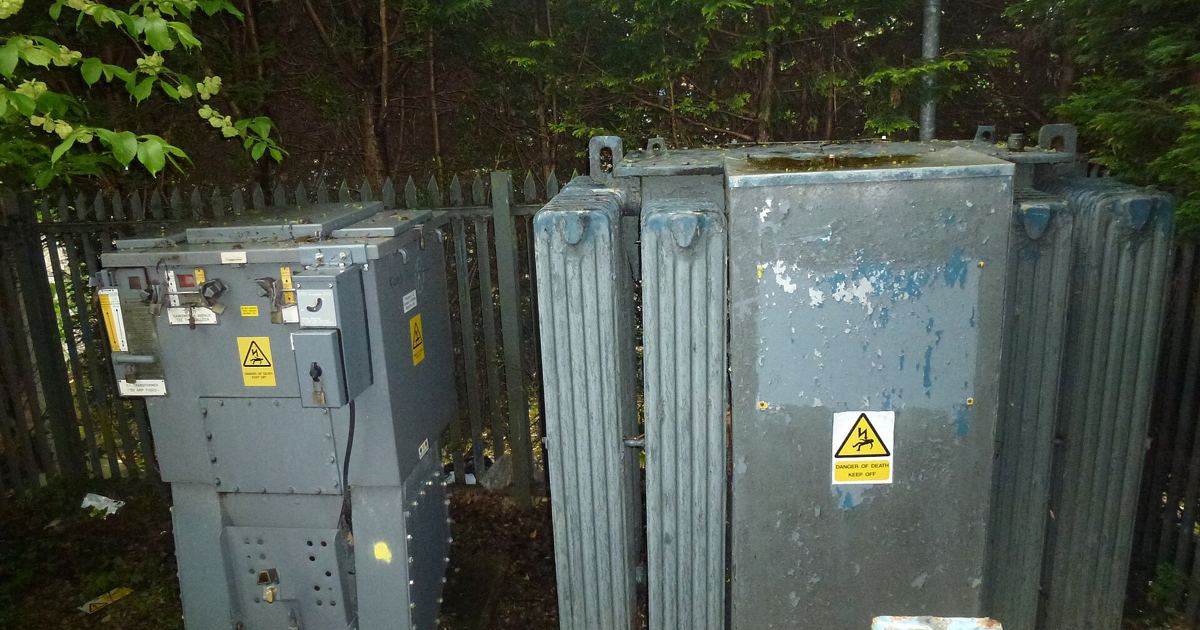
Trade subcontractors and general contractors bidding on commercial, industrial, or utility projects frequently cross paths with subsurface vaults, duct banks, and high-voltage substations. Federal safety standards establish rigorous protocols to prevent severe shock, arc flash, and structural hazards in these environments. Understanding the exact requirements in 29 CFR 1926.965 for underground electrical work and 29 CFR 1926.966 for substations is essential for accurate jobsite coordination and pricing crew logistics into your general conditions estimate.
Vault and Manhole Access Rules Under 29 CFR 1926.965
Underground vaults present immediate physical and electrical risks that alter how crews mobilize equipment and access work areas. When employees enter or exit any subsurface vault or manhole deeper than 1.22 meters (4 feet), employers must furnish a ladder or equivalent climbing device. Workers are strictly forbidden from climbing into or out of vaults by stepping on cables or cable hangers.
Material handling through street-level or slab openings requires controlled procedures:
- Hoisting gear used to lower tools and materials into manholes or vaults must have the structural capacity to support the load and must be inspected for defects prior to use.
- Every worker inside the vault must be completely clear of the zone directly beneath the overhead opening before any material or tooling is lowered into the hole.
- When pushing duct rods into conduit, crews must feed them in the direction that presents the lowest hazard to personnel, and a designated employee must be stationed at the far end of the duct line to verify that minimum approach distances are preserved.
Surface Attendants, Communications, and Cable Fault Containment
Labor allocations for underground utility runs must account for surface-level monitoring under 29 CFR 1926.965. While personnel perform work inside a manhole or vault housing energized electrical equipment, an employee trained in first aid must remain on the surface in the immediate vicinity of the entry opening to deliver emergency assistance. The surface attendant is permitted to step into the vault briefly for nonemergency assistance, though separate rules under paragraph (h) of 1926.953 may forbid an attendant from entering depending on the space classification. In addition, reliable communication—such as two-way radios or equivalent equipment—must be maintained across the entire crew.
Sole-worker entry without an attendant is limited to brief visits for inspections, housekeeping, or reading instrumentation, provided the employer proves the employee is shielded from all electrical dangers. Furthermore, paragraph (b)(1)(ii) of 1926.960 requires employees to be qualified if they enter spaces containing uninsulated, unguarded energized equipment operating at 50 volts or more.
Before moving energized conductors or working in vaults where adjacent lines exist, crews must identify the target cable using electrical means unless its identity is clear from distinct physical markers or positioning. If an energized cable exhibits abnormalities, the employer must deenergize it before work begins unless service loads and feasible alternatives make deenergizing impossible. Abnormal conditions that indicate impending faults include:
- Oil or insulating compound leaking from cables or joint connections.
- Cracked or broken cable sheaths and joint sleeves.
- Localized hot surface temperatures detected on cables or joints.
- Joint assemblies swollen beyond normal tolerance.
If an abnormal or work-affected line cannot be shut down, workers may enter only if protected by protective shields or devices designed to contain the adverse effects of an electrical failure. Whenever crews handle buried lines or cables in vaults, metallic-sheath continuity must be preserved; otherwise, the sheath must be treated as fully energized.
Substation Enclosures and Clearance Standards Under 29 CFR 1926.966
Substation packages governed by 29 CFR 1926.966 mandate precise workspace clearances and entry restrictions. Employers must maintain sufficient working space around electrical apparatus to facilitate safe maintenance and operation. OSHA benchmarks compliant dimensions against the American National Standard National Electrical Safety Code, ANSI/IEEE C2-2012, or prior editions in effect at original installation, provided current minimum approach distances are maintained.
Rooms and interior spaces containing electrical supply lines or equipment must be enclosed by walls, screens, partitions, or fences to keep unqualified individuals out under specific voltage thresholds:
- Where exposed live parts operating at 50 to 150 volts to ground are within 2.4 meters (8 feet) of the floor or working deck.
- Where live parts operating at 151 to 600 volts to ground within 2.4 meters (8 feet) of the floor are guarded solely by location.
- Where live parts operate at more than 600 volts to ground, unless they are housed in grounded, metal-enclosed assemblies designed to deflect foreign objects, or are installed at an elevated clearance providing protection equivalent to an 8-foot (2.4-meter) height at 50 volts.
Unqualified persons are barred from these spaces while equipment is energized. All entrance doors or gates must be kept locked, display posted warning signs telling unqualified personnel to keep out, or remain under continuous manual observation by an assigned attendant.
Breaker Safety, Perimeter Fences, and Component Guarding
Mechanical operations inside substations involve strict procedures for breakers and conductive barriers. When technicians install or remove draw-out-type circuit breakers, the breaker must sit in the open position, and the control circuit must be rendered inoperable if equipment design permits. Substation perimeter fences constructed of conductive materials must be properly grounded. If a contractor expands a substation footprint or removes a fence panel, fence sections must be isolated, grounded, or bonded in alignment with guidelines such as IEEE Std 80-2000 to protect workers from hazardous electric potential differentials.
Live parts operating at more than 150 volts to ground without insulating covering require physical guards, unless their horizontal or vertical clearance prevents accidental contact in accordance with ANSI/IEEE C2-2002. These barriers must remain in position during operations to keep dropped tools from touching live components. If a crew temporarily removes guards from energized equipment, they must erect external barriers to protect non-working personnel in the area.
Substation Check-In and Mandatory Job Briefings
Site management protocols dictate strict communication whenever personnel enter an active facility. Any employee entering an attended substation—excluding regular resident station staff—must immediately report to the employee in charge of the facility. This check-in provides critical awareness regarding unusual system conditions that could affect trade safety.
Before work proceeds, the site supervisor must conduct a job briefing compliant with 1926.952. As detailed in our review of briefings and electrical safety rules, this briefing must communicate special system operating conditions, identify all energized components located inside or adjacent to the work area, and clearly establish the physical boundaries of the deenergized safe work zone.
Sources
Official federal standards and referenced publications cited in this guide:
- Occupational Safety and Health Administration: 29 CFR 1926.965 - Underground electrical installations
- Occupational Safety and Health Administration: 29 CFR 1926.966 - Substations
Published October 30, 2026. No affiliate links on this page. Facts come from the sources linked above; check them for updates.