Crane Boom Free Fall Limits: OSHA 29 CFR 1926.1426 Checklist
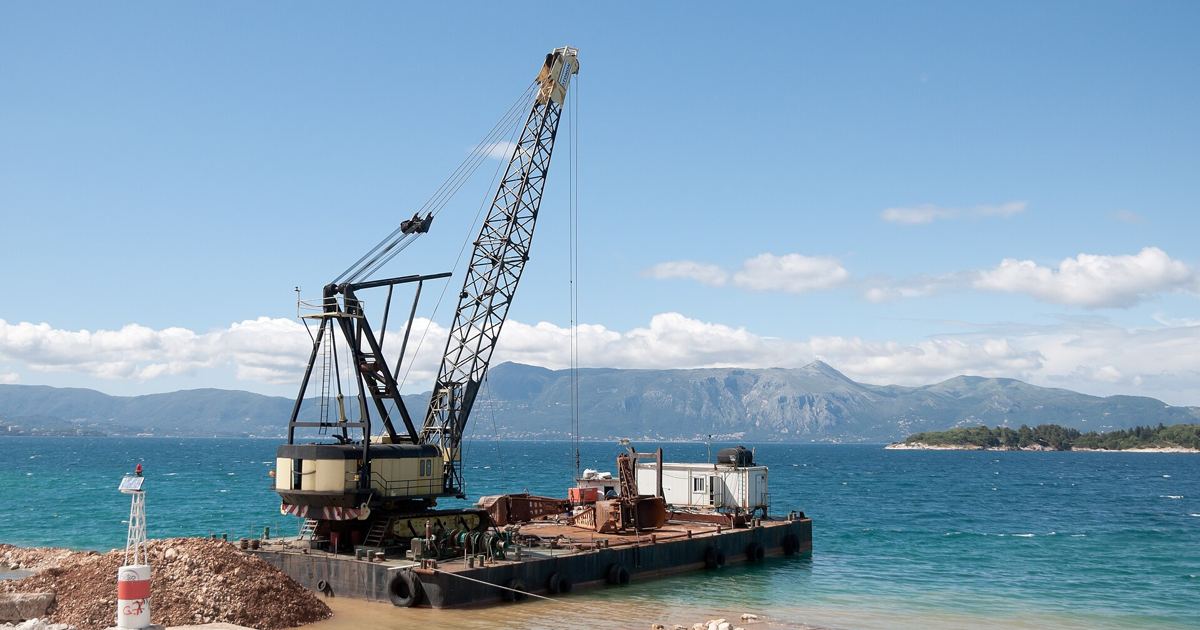
Lifting operations on commercial construction sites carry substantial mechanical and operational risks that estimators, project managers, and trade contractors must account for during planning. Hoisting equipment configured with a live boom—meaning a boom designed to lower via gravity free fall—introduces severe hazards if dropped or operated near workers or utilities. Under federal safety standards outlined in 29 CFR 1926.1426, strict limitations dictate when live boom operation is banned and when positive, controlled load lowering is mandatory. This checklist-driven guide outlines the prohibited operating environments, required secondary holding devices, and load hoist restrictions necessary to ensure jobsite compliance.
Checklist: Conditions Where Boom Free Fall Is Strictly Prohibited
Before mobilizing crane equipment or authorizing hoisting procedures on site, project teams must verify that none of the restricted operating conditions defined by the Occupational Safety and Health Administration are present. The use of equipment in which the boom is designed to free fall is prohibited in each of the following circumstances:
- Fall Zone Personnel: An employee is located anywhere within the fall zone of the boom or the load.
- Personnel Hoisting: An employee is being hoisted by the equipment (for project planning, review Hoisting Personnel with Cranes: Questions to Ask the GC Before Bidding).
- Power Line Proximity: The load or boom is positioned directly over a power line, or over any part of the area extending the clearance distance specified in Table A of § 1926.1408 to each side of the power line (see our Bid-Day Checklist: OSHA Crane Power Line Safety Under Section 1926.1408).
- Power Line Vertical Travel Radius: Any part of the area extending the Table A clearance distance to each side of the power line falls within the radius of vertical travel of the boom or the load.
- Shaft Operations: The load is positioned over a shaft, unless there are no employees inside the shaft.
- Cofferdam Operations: The load is positioned over a cofferdam, unless there are no employees in the fall zone of the boom or the load.
- Hazardous Facilities: Lifting operations are taking place inside a refinery or tank farm.
Narrow Exceptions Permitting Live Boom Equipment
Federal standards severely limit the situations where equipment designed with a live boom may operate. Even if a crane possesses live boom capability, it cannot be operated in that manner unless every single prohibited condition listed above is entirely absent.
Where none of those conditions exist, live boom operations are permitted only if the equipment satisfies one of two criteria:
- The equipment was manufactured prior to October 31, 1984.
- The machinery is configured as a floating crane or derrick, or is a land crane or derrick mounted on a vessel or flotation device.
If the equipment does not meet one of these two qualifications, or if any prohibited circumstance arises during the shift, boom free fall cannot be used.
Required Secondary Mechanisms for Hoist Drums and Cylinders
When operating equipment where a free-falling boom design is prohibited, 29 CFR 1926.1426 mandates that the boom hoist have a secondary mechanism or device designed to prevent the boom from falling if the primary system used to hold or regulate the boom hoist fails.
Equipment designs must comply with specific mechanical requirements depending on how the boom hoist is powered:
- Friction Drums: Must feature a friction clutch and, in addition, a braking device to allow for controlled boom lowering. Friction drums must also have a secondary braking or locking device—manually or automatically engaged—to back up the primary brake while the boom is held, such as a secondary friction brake or a ratchet and pawl device.
- Hydraulic Drums: Must be equipped with an integrally mounted holding device or internal static brake designed to stop boom hoist movement in the event of hydraulic failure.
- Hydraulic Boom Cylinders: Must include an integrally mounted holding device to prevent uncontrolled descent.
- Clutch and Motor Restrictions: The standard explicitly establishes that neither clutches nor hydraulic motors must be considered brake or locking devices for the purpose of these secondary holding requirements.
Preventing Uncontrolled Retraction on Telescoping Booms
In addition to downward vertical travel limits, hydraulic telescoping booms introduce the potential hazard of uncontrolled retraction under load. Federal regulations target this mechanical risk directly. Under paragraph (c) of the standard, hydraulic telescoping booms must have an integrally mounted holding device engineered to prevent the boom from retracting in the event of hydraulic system failure.
Checklist: Mandatory Controlled Load Lowering
Safety considerations extend beyond the boom structure to the load line itself. Free fall of the load line hoist is prohibited, and positive, controlled load lowering is required in each of the following circumstances:
- An employee is directly under the load.
- An employee is being hoisted.
- The load is directly over a power line, or over any part of the area extending the Table A of § 1926.1408 clearance distance to each side of the power line.
- Any part of the area extending the Table A of § 1926.1408 clearance distance to each side of the power line is within the radius of vertical travel of the load.
- The load is over a shaft.
- The load is over a cofferdam, except where there are no employees in the fall zone of the load.
Contractors operating near shafts, power lines, cofferdams, or active personnel pathways must plan hoist speeds and equipment capabilities accordingly to guarantee controlled lowering across every phase of the lift.
Sources
Published October 30, 2026. No affiliate links on this page. Facts come from the sources linked above; check them for updates.