Crane Safety Devices and Operational Aids: What to Ask the GC Before a Lift
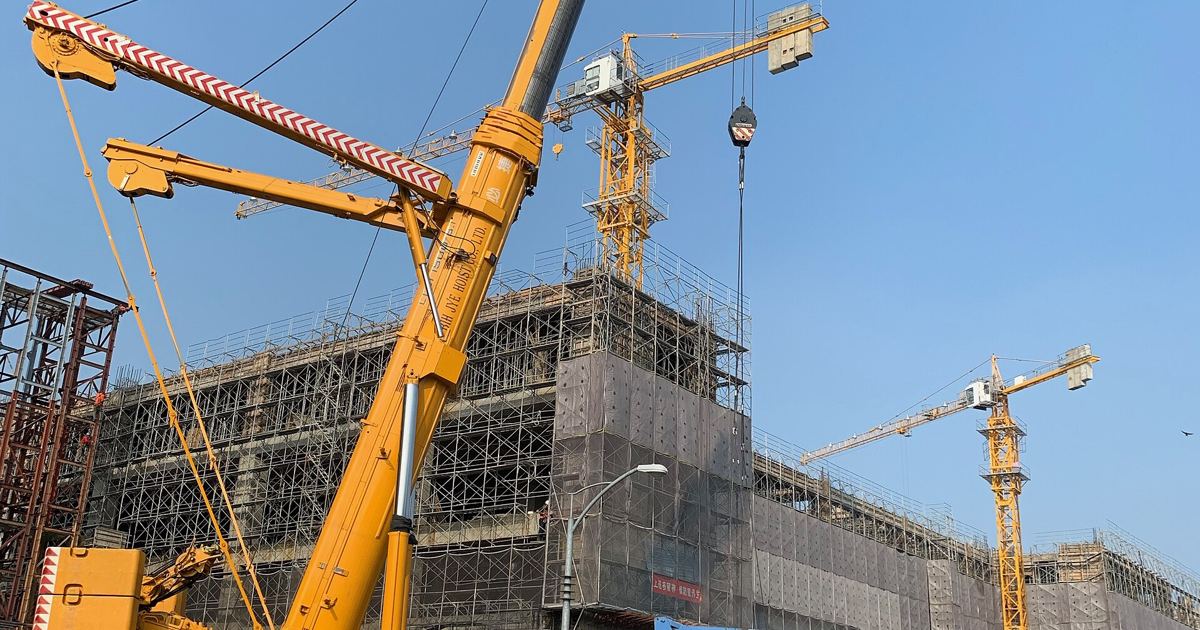
When an interiors subcontractor, steel erector, or framing crew plans a major hoist, project schedules hinge entirely on whether the crane hook moves on time. Yet under federal safety standards, crane operations cannot simply begin because equipment is standing on-site. Federal safety standards draw a strict line between crane safety devices and operational aids. Knowing the status of this equipment prevents unexpected job shutdowns, standby crew costs, and disputes over hoist availability. Use this question-based guide to verify compliance with the general contractor before rigging your first bundle.
1. Are All Mandatory Safety Devices Fully Functional With Zero Workarounds?
Your first question to the general contractor must target the crane safety devices governed by 29 CFR 1926.1415 Safety devices. The law is absolute: operations must not begin unless every required safety device is in proper working order. Unlike operational aids, OSHA permits no alternative measures or temporary bypasses under this section. If any single device fails, the crane must be shut down and removed from service until repaired.
Ask the GC to confirm the operating status of these mandatory safety devices:
- Crane level indicator: Must be built into the crane or available on the equipment (except on portal cranes, derricks, floating cranes, or cranes on barges, pontoons, or vessels). If built-in and defective, it must be tagged-out or removed; if removable and defective, it must be removed.
- Boom stops: Required on all booms, except for hydraulic booms and derricks.
- Jib stops: Required whenever a jib is attached, except on derricks.
- Foot pedal brake locks: Must be present on equipment fitted with foot pedal brakes.
- Check valves: Hydraulic outrigger jacks and hydraulic stabilizer jacks must feature an integral holding device or check valve.
- Rail stops and rail clamps: Required on rail-mounted equipment, excluding portal cranes.
- Horn: Must be built-in or immediately available to the operator. Defective built-in horns must be tagged-out or removed, and removable horns must be removed.
2. Which Category I Operational Aids Are Defective, and Are Temporary Measures Active?
Unlike safety devices, operational aids governed by 29 CFR 1926.1416 Operational aids may experience downtime without an immediate site-wide shutdown, provided specific temporary alternative measures are executed immediately. Operational aids fall into two groups with distinct repair timeframes.
Category I aids under 29 CFR 1926.1416 must be repaired no later than 7 calendar days after a deficiency occurs. An exception applies if the employer documents that replacement parts were ordered within 7 calendar days of the breakdown; in that case, repairs must be finished within 7 calendar days of receiving the parts. Ask the GC whether any Category I items are down and verify that the required alternative protocols are functioning:
- Boom hoist limiting device: Required on equipment manufactured after December 16, 1969. If down, the crew must use a boom angle indicator, clearly mark the hoist cable so the operator has sufficient time to stop the hoist within the minimum allowable radius (adding mirrors or remote video cameras and displays if needed), or mark the cable for a spotter to give stopping signals. Equipment manufactured on or before December 16, 1969, without the device must continuously maintain one of these three measures.
- Luffing jib limiting device: Must follow the same temporary methods as the boom hoist limiter, adapted to restrict luffing jib motion.
- Anti two-blocking device: Telescopic boom cranes manufactured after February 28, 1992, must automatically prevent contact between the load block or overhaul ball and the boom tip. If broken, temporary measures require clearly marking the cable within the operator's view and using a spotter when extending the boom. For lattice boom cranes manufactured after February 28, 1992, or after November 8, 2011, and articulating cranes manufactured after December 31, 1999, with a load hoist, verify appropriate marking and spotter assignments.
3. Are Category II Operational Aids Operating Within the 30-Day Window?
Category II operational aids govern radius tracking, boom geometry, and load measurement. When a Category II aid fails, it must be repaired no later than 30 calendar days after the deficiency occurs. If parts are documented as ordered within 7 calendar days but cannot arrive in time, the repair must be finished within 7 calendar days of receiving the parts.
Before relying on the crane for heavy bundles of drywall or framing, ask the GC to show the documented temporary procedures for any defective Category II aid:
- Boom angle or radius indicator: If not readable from the operator's station, crews must establish the radius or boom angle using an actual measuring device.
- Jib angle indicator: When broken on equipment with a luffing jib, crews must determine the main boom angle and measure the radii or jib angle with a measuring device.
- Boom length indicator: On telescopic booms without independent capacity ratings, alternatives include measuring the boom with a measuring device, marking measured marks directly on the boom, or calculating length using boom angle and radius measurements.
4. How Is Load Weight Being Verified Under Section 1926.1416(e)(4)?
Equipment manufactured after March 29, 2003, with a rated capacity over 6,000 pounds (excluding derricks and articulating cranes) must have a load weighing device, load moment indicator, or load moment limiter. Articulating cranes manufactured after November 8, 2011, require an automatic overload prevention device, load weighing device, load moment indicator, or rated capacity limiter.
If these monitoring instruments are undergoing repair, ask the GC how the weight of the load is being established before each lift. Under federal rules, load weight must be determined from an industry-recognized source (such as the material manufacturer) or by an industry-recognized calculation method (such as calculating a steel beam from known per-foot weights and dimensions). This verified weight must be supplied directly to the crane operator prior to the lift. Clarifying these material weights early protects your crew and aligns with your bid exclusions and clarifications.
5. Do Modern Sensors Comply With the November 8, 2011 Standard?
Cranes manufactured after November 8, 2011, feature advanced monitoring requirements that subcontractors should check with the GC. These units require outrigger or stabilizer position sensors for horizontal beam extensions, as well as hoist drum rotation indicators if the drum is not visible from the operator's station.
If the outrigger position sensor is inoperative, the operator must physically verify that outrigger or stabilizer beam positions match manufacturer procedures before starting lifts. If a hidden hoist drum rotation indicator fails, the drum must be marked, and displays, mirrors, or video cameras must be used so the operator can see drum rotation clearly. Verifying these details avoids surprise downtime that drains your site budget under general conditions estimating.
Sources
Regulatory details and standards cited in this guide can be verified directly at the following official resources:
- Electronic Code of Federal Regulations: 29 CFR 1926.1415 Safety devices
- Electronic Code of Federal Regulations: 29 CFR 1926.1416 Operational aids
Published October 29, 2026. No affiliate links on this page. Facts come from the sources linked above; check them for updates.