FAR 52.236-23: Architect-Engineer Responsibility Walk-Through for Bidders
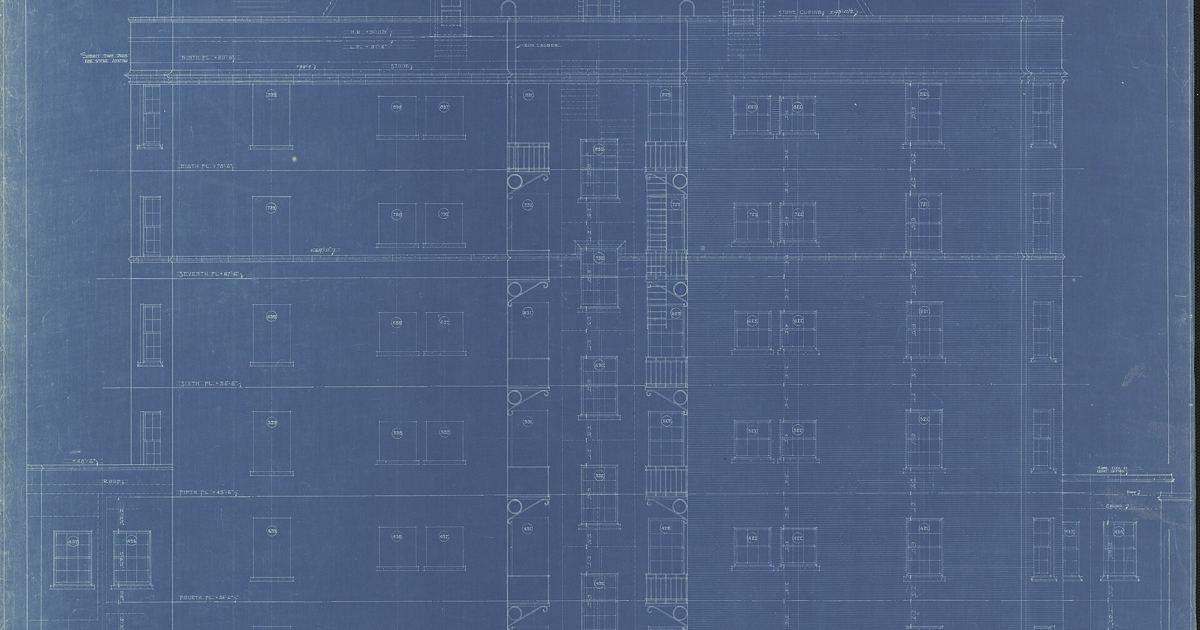
When estimators review solicitation packages for federal work, they frequently find conflicting details between architectural drawings, structural layouts, and MEP plans. For trade contractors—such as drywall, framing, and ceiling specialists—and small general contractors, understanding the design professional's contractual obligations under FAR 52.236-23 Responsibility of the Architect-Engineer Contractor provides critical context for how drawing deficiencies, requests for information, and subsequent corrections are handled by the federal government.
Hypothetical Scenario: The Uncoordinated Interior Wall Elevation
Consider a hypothetical bidding scenario on a federal building project. A drywall and framing subcontractor is performing a detailed takeoff for interior partition assemblies. While reviewing the architectural plans against the structural and mechanical drawings, the estimator spots an impossible condition: partition elevations call for full-height metal stud framing running directly through a primary duct corridor and structural bracing without clear head-of-wall details, deflection track coordination, or penetration framing notes.
In private commercial work, an estimator might simply guess an allowance or wait for a field change. On a federal procurement, however, the government procures design work under specific Federal Acquisition Regulation clauses. Under FAR 52.236-23, prescribed in section 36.609-2(b), the architect-engineer contractor operates under explicit, non-waivable performance standards regarding technical accuracy and trade coordination.
Step 1: Establishing the Duty for Coordination and Accuracy
In our scenario, the prime contractor or bidding subcontractor must understand what the government expects from its design team. Paragraph (a) of the clause establishes that the architect-engineer contractor shall be responsible for three specific benchmarks across all deliverables:
- The professional quality of all designs, drawings, specifications, and other furnished services.
- The technical accuracy of the engineering and architectural documents.
- The coordination of all designs, drawings, specifications, and related contract services.
Furthermore, paragraph (a) mandates that the design contractor shall correct or revise any errors or deficiencies in its designs, drawings, specifications, and other services without additional compensation. In our hypothetical framing conflict, if the government directs the design firm to resolve the uncoordinated duct paths and partition details, the architect-engineer cannot bill the government additional fees to fix those design deficiencies.
Step 2: Review and Payment Do Not Waive Government Rights
Subcontractors often ask whether the contracting officer's acceptance of the bid package relieves the architect from liability for mistakes. When our hypothetical framing contractor submits a pre-bid inquiry pointing out that partition details do not align with MEP drawings, the government does not lose its rights merely because it published the package or made progress payments to the designer.
Under paragraph (b) of the clause, neither the government's review, approval, or acceptance of, nor payment for, the required services shall be construed to operate as a waiver of any rights under the contract or of any cause of action arising out of contract performance. In addition, the architect-engineer remains liable to the government under applicable law for all damages to the government caused by negligent performance of any services furnished. Under paragraph (c), these rights and remedies are in addition to any other rights and remedies provided by law.
Step 3: Joint and Several Liability on Multi-Entity Design Teams
Federal design contracts are frequently awarded to joint ventures or consortiums combining architectural firms, structural specialists, and MEP engineers. If our hypothetical project involves a joint venture where the structural designer and the architectural firm failed to coordinate wall clearances, liability cannot be passed around in circles to avoid responsibility.
Paragraph (d) of the clause states that if the architect-engineer contractor is comprised of more than one legal entity, each such entity shall be jointly and severally liable under the contract. For the construction contractor, this reinforces that the entire design entity bears collective responsibility to correct errors and face damages caused by negligent performance.
Bid-Day Strategy for Subcontractors and Small GCs
While FAR 52.236-23 binds the design professional to the government rather than creating a direct contract between the architect and the construction trades, knowing these requirements shapes how estimators should assemble their proposals:
- Document coordination gaps early: Submit formal pre-bid inquiries detailing exact sheet discrepancies so the contracting officer can require the design team to issue revised drawings.
- Protect your pricing baseline: Use clear bid exclusions and clarifications stating the exact drawing revisions and scope assumptions included in your number.
- Track design-driven delays: When uncoordinated drawings require field revisions during construction, understand the procedures for pricing change orders to ensure your firm is compensated for added material and labor while the government resolves design liability with the architect-engineer.
Sources
52.236-23 Responsibility of the Architect-Engineer Contractor. | Acquisition.GOV
Published October 29, 2026. No affiliate links on this page. Facts come from the sources linked above; check them for updates.