Air Conditioning and Refrigeration Equipment Price Trends for Estimators
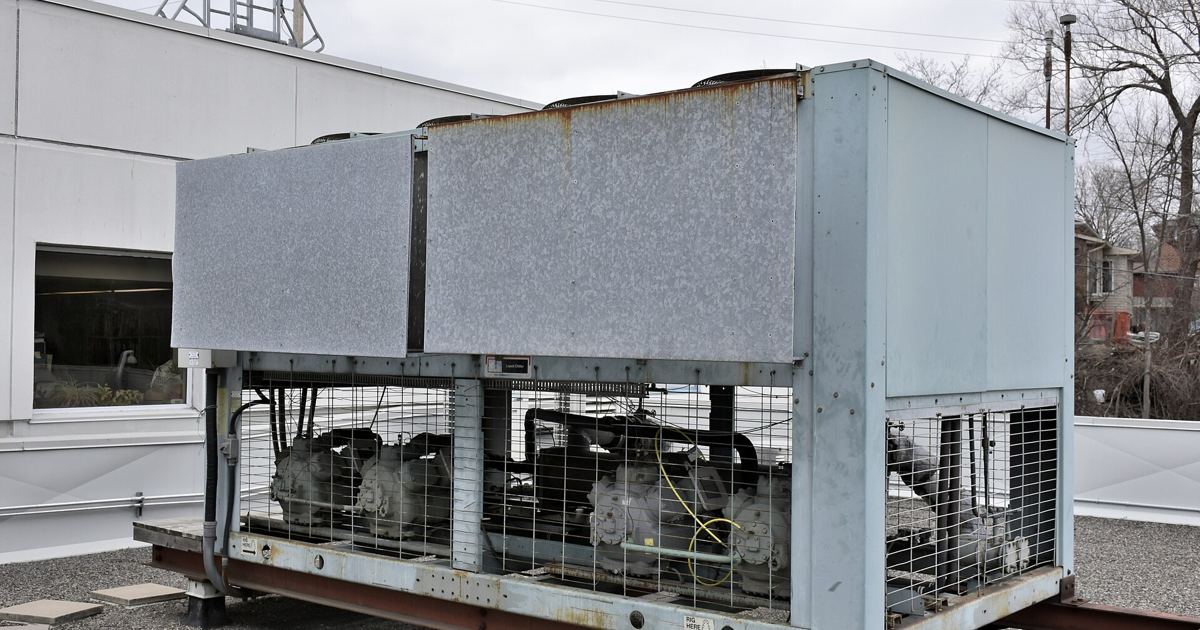
Estimating commercial projects requires keeping a close watch on equipment prices that can shift significantly before purchase orders get cut. Whether you are packaging mechanical scopes as a general contractor or coordinating ceiling, framing, and drywall layouts around major rooftop units and coolers, official federal indices offer a reliable benchmark for managing price risk. Here is how the latest federal price data looks through September 2026 and an estimator checklist for using it in bids and contract terms.
The Equipment Price Baseline: BLS Series WPU1148
The primary benchmark for mechanical equipment pricing is the U.S. Bureau of Labor Statistics Producer Price Index for Machinery and equipment-Air conditioning and refrigeration equip (series WPU1148). This not seasonally adjusted index uses a base period of 1982 = 100. Recent months remain preliminary and subject to revision for four months following initial publication.
The index stood at 327.7 in September 2026. That represents a 5.7% increase compared to September 2025, when the index registered 310.1. Looking back two years, the index measured 299.5 in September 2024, reflecting a 9.4% climb to the latest level. The long-term trajectory is even more pronounced: compared to September 2021, when the index sat at 228.1, prices have risen 43.7%. Against the pre-pandemic benchmark of January 2020 at 201.0, the September 2026 level shows a cumulative rise of 63.0%.
| Reference Period | PPI Value | Change to September 2026 |
|---|---|---|
| September 2026 (Latest) | 327.7 | 0.0% |
| August 2026 (Window High) | 328.1 | -0.1% |
| September 2025 (One Year Prior) | 310.1 | +5.7% |
| September 2024 (Two Years Prior) | 299.5 | +9.4% |
| September 2021 (Five Years Prior) | 228.1 | +43.7% |
| January 2020 (Pre-Pandemic) | 201.0 | +63.0% |
| January 2016 (Window Low) | 179.4 | N/A |
Recent Month-by-Month Price Trajectory
Over the full data window from January 2016 through September 2026, the series low was 179.4 in January 2016, and the series high was 328.1 in August 2026. The month-over-month change from August 2026 to September 2026 showed a slight dip of -0.1%, putting the latest value at -0.1% versus that high.
Reviewing annual averages shows steady upward movement across the past decade: 180.8 in 2016, 184.5 in 2017, 192.6 in 2018, 200.2 in 2019, 204.0 in 2020, and 221.9 in 2021. The index jumped to 272.8 in 2022, continued upward to 291.3 in 2023, 298.2 in 2024, 308.1 in 2025, and reached an average of 322.5 across the months of January through September in 2026.
Looking at monthly values across the last 13 months illustrates the steady ascent:
- September 2025: 310.1
- October 2025: 313.0
- November 2025: 313.3
- December 2025: 312.9
- January 2026: 313.7
- February 2026: 317.5
- March 2026: 320.1
- April 2026: 320.8
- May 2026: 323.6
- June 2026: 323.8
- July 2026: 326.9
- August 2026: 328.1
- September 2026: 327.7
Checklist Step 1: Benchmark Equipment Scopes on Bid Day
When compiling quotes from equipment suppliers and mechanical trades, estimators should cross-reference incoming pricing against the published index to identify anomalous pricing or verify supplier claims about cost escalation. When comparing package numbers across bidders, consult our guide on how to level subcontractor bids to ensure all equipment inclusions match specification requirements.
- Identify all major air conditioning and refrigeration equipment packages within your scope.
- Record the exact month and year of supplier quotes received.
- Check the latest BLS series WPU1148 commodity data to confirm the current index baseline at bid submission.
Checklist Step 2: Structure Your Escalation Language
Fixed-price bids carry substantial risk when equipment procurement stretches months into the future. Incorporating index-linked adjustment language helps balance this exposure between project owners and contractors.
- Specify the exact index series title: Machinery and equipment-Air conditioning and refrigeration equip, series WPU1148.
- State whether the baseline uses the preliminary value or accounts for the standard four-month BLS revision window.
- Define clear trigger points for adjustment rather than relying on open-ended allowances. For advice on formatting your bid documentation, see our checklist on bid exclusions and clarifications.
Checklist Step 3: Track Historical Baseline Windows for Auditing
When evaluating multi-year project adjustments or auditing change proposals, check the historical milestones in the WPU1148 series to establish whether cost growth aligns with market conditions:
- Confirm the base index value established at contract signing.
- Verify the publication date of the target comparison month, recognizing that recent months remain preliminary.
- Calculate percentage changes against agreed baseline indices rather than general overall inflation rates.
Sources
U.S. Bureau of Labor Statistics, Producer Price Index series WPU1148
Published October 28, 2026. No affiliate links on this page. Facts come from the sources linked above; check them for updates.