OSHA 1926.1211 Confined Space Rescue: Bidding Myths and Facts
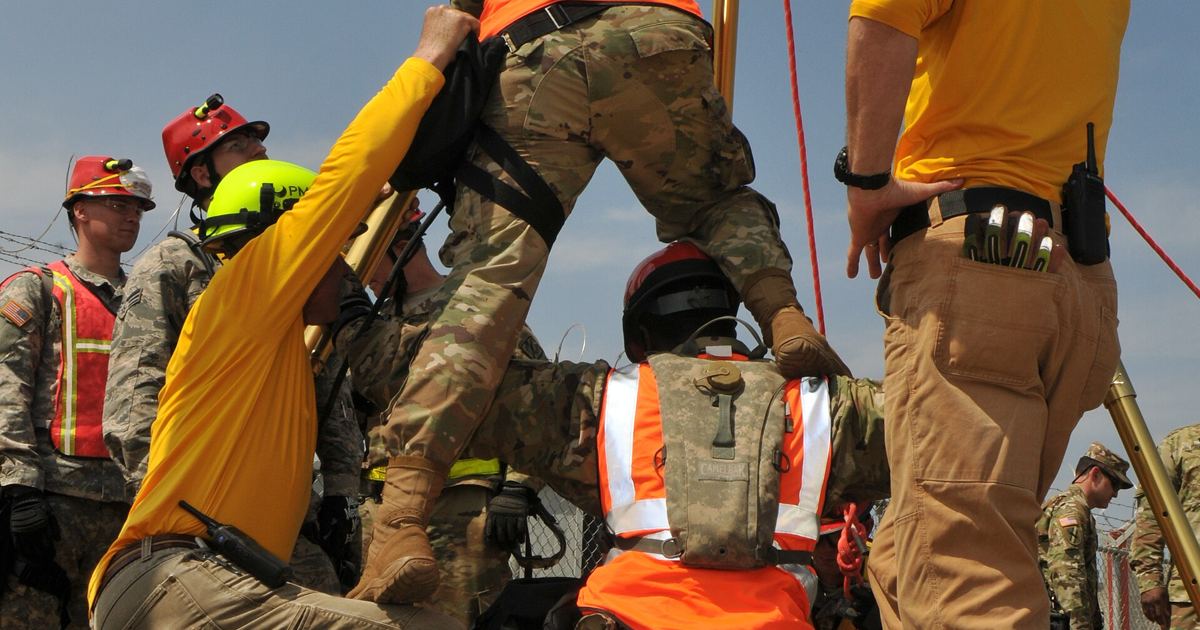
When general contractors and specialty trades plan work involving permit-required confined spaces, emergency rescue preparedness cannot be treated as an unpriced assumption. Federal safety standards establish detailed criteria for emergency response readiness, extrication hardware, and personnel training. Understanding the mandatory requirements in OSHA § 1926.1211 enables estimators and project managers to avoid unexpected compliance delays, project interruptions, and missing general conditions expenses.
Myth: Dialing Local Responders Automatically Satisfies Rescue Duties
Fact: Designated rescue providers must undergo formal evaluation and site coordination before entry starts.
A frequent bidding error is assuming that calling municipal emergency services fulfills jobsite rescue obligations. Under standard 1926.1211(a), an employer designating rescue and emergency services pursuant to § 1926.1204(i) must evaluate prospective responders thoroughly prior to authorizing space entries.
Contractors must assess whether a prospective rescuer can respond to an emergency summons promptly, taking into account each identified jobsite hazard. Response timeliness varies according to the hazards involved. For example, § 1926.103 mandates standby personnel capable of immediate action when entrants wear respirators inside atmospheres defined as immediately dangerous to life or health.
Employers must also verify that the rescue provider possesses demonstrated skill with rescue equipment and emergency procedures suited to the specific permit spaces on site. The selected service must have the capability to reach entrants within an appropriate timeframe, maintain proper equipment, and agree to notify the employer promptly if the rescue service becomes unavailable. Furthermore, the employer must inform the rescue team of site hazards and provide access to permit spaces so responders can practice and develop rescue plans. Estimators should account for these administrative steps within their schedule milestones and general conditions estimating.
Myth: In-House Rescue Teams Require No Annual Simulated Drills
Fact: Employers using internal rescue personnel must fund recurring hands-on extraction training.
When a contractor chooses to use in-house personnel rather than an outside rescue service, standard 1926.1211(b) establishes mandatory employer-provided training and equipment requirements. All necessary gear and instruction must be provided at no cost to the employees.
Staff assigned to rescue duties must receive necessary personal protective equipment at no charge and undergo training to gain full proficiency with that gear. Assigned workers must establish proficiency as authorized entrants under §§ 1926.1207 and 1926.1208. Additionally, the employer must ensure that rescue staff receive instruction in basic first aid and cardiopulmonary resuscitation (CPR), and at least one team member holding current certification in basic first aid and CPR must be available during entry operations.
Practical extraction drills are also mandatory. Employees must practice permit space rescues before attempting an actual rescue and at least once every 12 months. This requires simulated extractions using dummies, manikins, or personnel from actual or representative spaces. Representative permit spaces must match opening dimensions, internal configurations, and accessibility. Simulated practice is excused only if the team successfully performed an actual rescue during the preceding 12 months in the same or a similar space. Bidders must include non-productive labor hours for these drills when building labor burden and craft budgets.
Myth: Sending Rescuers Inside Is Preferred Over External Retrieval
Fact: Non-entry rescue is mandatory unless extraction equipment increases worker danger or proves ineffective.
Sending a rescuer into a hazardous permit space introduces extreme risks. Paragraph (c) of OSHA § 1926.1211 requires non-entry rescue methods unless the retrieval equipment would elevate the overall risk of entry or fail to assist the entrant. If non-entry rescue cannot be deployed, the employer is required to designate an entry rescue service.
Whenever non-entry retrieval is chosen, mechanical setups must be established prior to entry, and employers must confirm that emergency assistance is available should non-entry efforts fail. The standard enforces specific equipment rules:
- Each authorized entrant must wear a chest or full body harness connected to a retrieval line at the center of the back near shoulder level, above the head, or at another point presenting a small profile for extraction.
- Wristlets or anklets are allowed only if the employer proves that chest or full body harnesses are infeasible or generate a greater hazard, and that wristlets or anklets represent the safest alternative.
- A mechanical device must be present outside to extract workers from vertical permit spaces deeper than 5 feet (1.52 meters).
- Unsuitable equipment cannot be used, including retrieval lines that risk becoming entangled with lines of other entrants or lines obstructed by interior space geometry.
Myth: Chemical Hazard Documentation Can Wait Until After Extrication
Fact: Safety data sheets must accompany exposed workers to medical treatment facilities immediately.
Rescue protocols extend beyond pulling an entrant through an opening. Under paragraph (d) of the regulation, if an injured worker suffers exposure to a chemical requiring a Safety Data Sheet (SDS) on site, that documentation must be provided directly to the medical facility treating the worker.
Waiting for an incident to track down chemical records creates dangerous medical delays. During the estimating stage, trade contractors should clarify chemical communication responsibilities with general contractors. Subcontractors can establish clear scopes of responsibility by incorporating explicit language through their bid exclusions and clarifications.
Factoring Rescue Compliance into Bids and Project Schedules
Meeting permit space rescue rules requires budgeting discrete safety line items rather than absorbing costs into general labor rates. Estimators should account for these recurring obligations:
- Dedicated hardware purchases: Tripods, winches, and mechanical hoists for vertical spaces deeper than 5 feet (1.52 meters), alongside harnesses, lines, and entrant PPE.
- Training expenses: First aid and CPR classes ensuring at least one certified responder is on site, plus entrant training under referenced entry rules.
- Workforce scheduling allowances: Scheduled crew hours dedicated to simulated extraction drills conducted at least once every 12 months.
- Third-party rescue contracts: Standby fees for qualified outside rescue providers who must evaluate site spaces and agree to give immediate notification if unavailable.
Sources
Published October 28, 2026. No affiliate links on this page. Facts come from the sources linked above; check them for updates.