OSHA 29 CFR 1926.106: Working Over or Near Water in Bids and Schedules
Estimating construction projects located along coastlines, rivers, retention basins, or bridge structures requires estimators to look past ordinary site conditions. When trade crews operate near edges where falling into water is possible, basic personal protective equipment is no longer sufficient on its own. Overlooking the specific compliance requirements outlined in OSHA 29 CFR 1926.106 can quickly lead to omitted gear budgets, unpriced labor routines, and expensive project stoppages. Examining the most common jobsite misconceptions alongside federal safety text helps estimators include accurate line items in trade proposals and general conditions budgets.
Myth: Any Generic Flotation Vest Meets Jobsite Standards
A widespread assumption among estimators and field teams is that any commercially available personal flotation device will satisfy safety inspectors. Project teams sometimes assume that basic recreational life jackets or standard water sports vests can be bought in bulk to cover crews working near water margins.
Under 29 CFR 1926.106, the regulation explicitly states that employees working over or near water, where the danger of drowning exists, shall be provided with U.S. Coast Guard-approved life jacket or buoyant work vests. Commercial-grade, approved vests are engineered to maintain performance under demanding working conditions. Estimators must carry allowances specifically for U.S. Coast Guard-approved equipment rather than budgeting for basic recreational gear, ensuring that field crews do not face immediate compliance violations upon mobilization.
Myth: Buoyant Work Gear Needs Only Periodic Visual Checks
Another frequent oversight involves how equipment inspections are handled. Many contractors treat flotation vests like fall harnesses or hard hats, assuming that a single pre-job check at the start of the project or an occasional weekly audit fulfills their responsibility.
The standard mandates that prior to and after each use, the buoyant work vests or life preservers shall be inspected for defects which would alter their strength or buoyancy. The standard further directs that defective units shall not be used. This creates a concrete impact on daily production. Crews cannot simply put on vests and immediately begin framing, drywalling, or structural work. Designated personnel must review the equipment before work starts and after work concludes every single shift. Estimators must recognize that these repetitive checks consume non-productive field labor hours that belong in the task labor estimate.
Myth: Ring Buoy Spacing and Line Lengths Allow Field Flexibility
Contractors often assume that hanging a single rescue ring on a nearby rail fulfills emergency rescue expectations, leaving line lengths and placement intervals to field discretion.
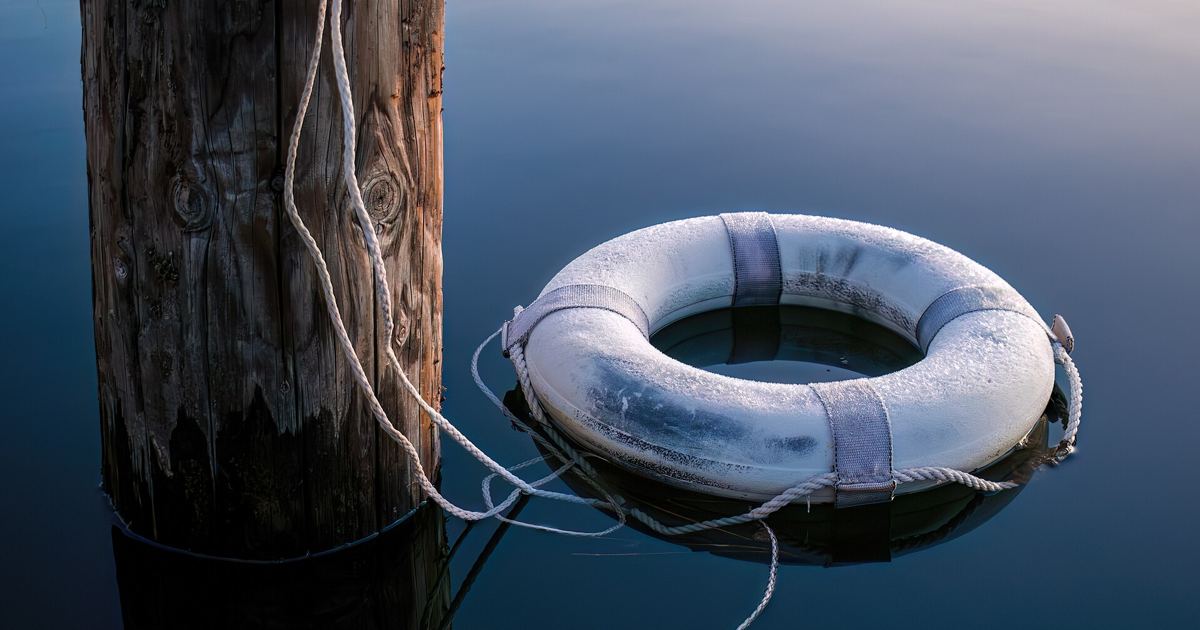
Federal regulations do not leave ring buoy placement open to interpretation. Ring buoys with at least 90 feet of line shall be provided and readily available for emergency rescue operations. Furthermore, the distance between ring buoys shall not exceed 200 feet. When pricing safety hardware for a waterfront project, estimators must review the site plan and measure the entire linear boundary exposed to water. If the boundary extends along a wide frontage, ring buoy stations must be positioned so that the spacing between units does not exceed 200 feet, and each station must be stocked with at least 90 feet of line ready for deployment.
Myth: A Dedicated Rescue Boat Is Optional When Workers Wear Vests
Because workers are already outfitted with approved personal flotation vests, bidders sometimes conclude that rescue watercraft are unnecessary unless specifically demanded by an owner in special project specifications.
Personal flotation vests and emergency skiffs serve different functions under the standard. The rule states that at least one lifesaving skiff shall be immediately available at locations where employees are working over or adjacent to water. Providing a dedicated lifesaving skiff is a major job-site expense that cannot be left out of project numbers. Estimators must carry the acquisition, delivery, launching logistics, and daily availability of at least one operational skiff throughout the duration of all over-water or adjacent tasks.
Fact: How to Account for 29 CFR 1926.106 in Bid Packages and Schedules
Meeting marine and waterfront safety rules requires integrating compliance measures directly into your takeoff, general conditions budget, and schedule milestones. Estimators can protect project margins by addressing these core elements:
- Procurement of compliant gear: Price U.S. Coast Guard-approved life jackets or buoyant work vests, including extra replacement inventory so work continues when defective units are removed from service.
- Perimeter ring buoy stations: Calculate perimeter linear footage to supply ring buoys with at least 90 feet of line each, making sure the distance between buoys does not exceed 200 feet.
- Vessel coordination: Carry the capital or rental cost of at least one lifesaving skiff within general conditions estimating, accounting for water staging and daily availability before work begins.
- Inspection labor: Factor shift start and shift end inspection time into daily crew rates to account for mandatory checks prior to and after each use.
- Contract scope division: Use clear bid exclusions and clarifications to establish whether the general contractor or the specialty subcontractor supplies ring buoy stations and the lifesaving skiff.
Sources
eCFR 29 CFR 1926.106 Working Over or Near Water
Published October 28, 2026. No affiliate links on this page. Facts come from the sources linked above; check them for updates.