OSHA 29 CFR 1926.600: Bidding Construction Equipment Safety
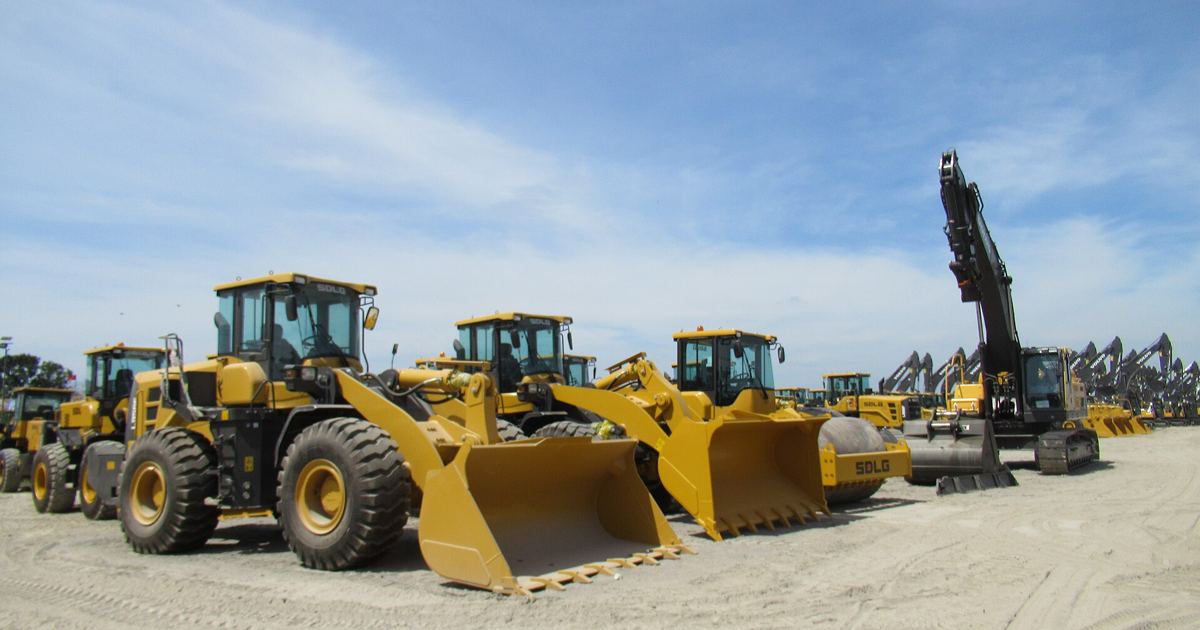
Every commercial or civil jobsite relies on heavy machinery, but mobilizing that iron brings strict federal safety obligations that directly affect project schedules and operational budgets. Understanding the mandate under eCFR 29 CFR 1926.600 allows contractors and estimators to account for equipment compliance before submitting a bid. To see how these provisions play out during project execution, consider a hypothetical contractor preparing a staging, grading, and structural placement scope alongside an active roadway.
Staging the Corridor: Nighttime Barriers and Parking Controls
In our hypothetical walk-through, the contractor must park heavy earthmoving machines near a public roadway and an ongoing work zone. Federal safety standards govern exactly how that machinery must be secured when work stops. Under eCFR 29 CFR 1926.600, equipment left unattended at night adjacent to a highway in normal use, or adjacent to construction areas where work is underway, must be marked with appropriate lights or reflectors, or enclosed by barricades fitted with lights or reflectors.
Beyond perimeter illumination, parking procedures require physical safeguards. Operators cannot simply turn off an ignition and walk away. Mandatory parking rules include:
- Parking brakes must be set whenever any machine is parked.
- Equipment parked on inclines must have the parking brake set and wheels chocked to prevent unexpected rolling.
- End-loader buckets, bulldozer blades, scraper blades, and dump bodies must be fully lowered to the ground or blocked securely when not in use.
- All operating controls must remain in neutral with motors stopped, unless specialized operational procedures require otherwise.
Maintenance Rules: Blocking, Split Rims, and Cab Windows
As the hypothetical project progresses, equipment servicing occurs on site. Federal regulations establish strict physical barriers to protect service mechanics. Heavy machinery or parts that are suspended or held aloft with jacks, slings, or hoists cannot be worked under or between until they are substantially blocked or cribbed against shifting or falling. In addition, when service crews dismount, mount, or inflate tires installed on split rims or rims using locking rings, the standard requires the use of a safety tire rack, cage, or equivalent protective equipment.
Estimators should also evaluate equipment cab condition prior to mobilizing rented or owned units. All cab glass must consist of safety glass or an equivalent material that produces no visible distortion capable of degrading safe operation. Furthermore, all battery use, care, and charging operations must strictly conform to subpart K electrical provisions.
Working Near Overhead Power Lines and Clearance Limits
A critical stage of our hypothetical scenario involves operating lifting equipment and tall machinery near utility corridors. Overhead lines present acute contact hazards, and federal rules treat every overhead line as energized unless the line owner or electric utility authorities confirm it is de-energized and visibly grounded. Moving or working machinery near energized lines demands adherence to rigid minimum boundary distances:
- Lines rated 50 kV or below require a minimum clearance of 10 feet between the line and any part of the crane or load.
- Lines rated over 50 kV demand a minimum clearance of 10 feet plus 0.4 inch for each 1 kV over 50 kV, or twice the length of the line insulator, while never dropping below 10 feet.
- Equipment in transit with no load and boom lowered requires clearance of at least 4 feet for voltages under 50 kV, 10 feet for voltages over 50 kV up to and including 345 kV, and 16 feet for voltages up to and including 750 kV.
- A designated observer must be assigned to watch clearances and provide timely warnings whenever the machine operator cannot maintain visual confirmation from the cab.
Although contractors may attach proximity warning devices, boom guards, or insulating links, the regulation makes clear that such tools do not eliminate or alter the required boundary distances.
Transmitter Towers and Spur Track Precautions
If our hypothetical jobsite sits near radio or communication transmitter towers, electrical charges can be induced directly into booms and handled materials. When working in those zones, the contractor must verify whether the transmitter can be de-energized or test for induced voltage. Where induced voltage exists, safety rules require attaching an electrical ground directly to the upper rotating structure that supports the boom. Ground jumper cables must be affixed to handled materials using nonconductive poles equipped with large alligator clips, and all combustible or flammable materials must be cleared from the immediate work area.
Finally, if the project contains spur railroad tracks where rolling rail cars could roll into active work spaces, enter a building, or strike other cars being worked, the standard requires physical derail devices or bumper blocks to halt uncontrolled movement.
Integrating Equipment Compliance into Bids and General Conditions
Compliance with equipment safety rules is not cost-free, and leaving these logistics out of a bid risks project delays and field change disputes. Estimators can capture site barricading, reflector equipment, wheel chocks, tire cages, and cribbing materials within Estimating General Conditions rather than burying them inside equipment rental rates.
Labor for designated spotters watching electrical lines also impacts field productivity. If site overhead lines must be de-energized or guarded by the utility provider, or if rail derail blocks are required, contractors should outline these obligations clearly through bid exclusions and clarifications before contract award.
Sources
Electronic Code of Federal Regulations: 29 CFR 1926.600 Equipment
Published October 28, 2026. No affiliate links on this page. Facts come from the sources linked above; check them for updates.