OSHA 29 CFR 1926.757: Open Web Steel Joist Rules for Bids
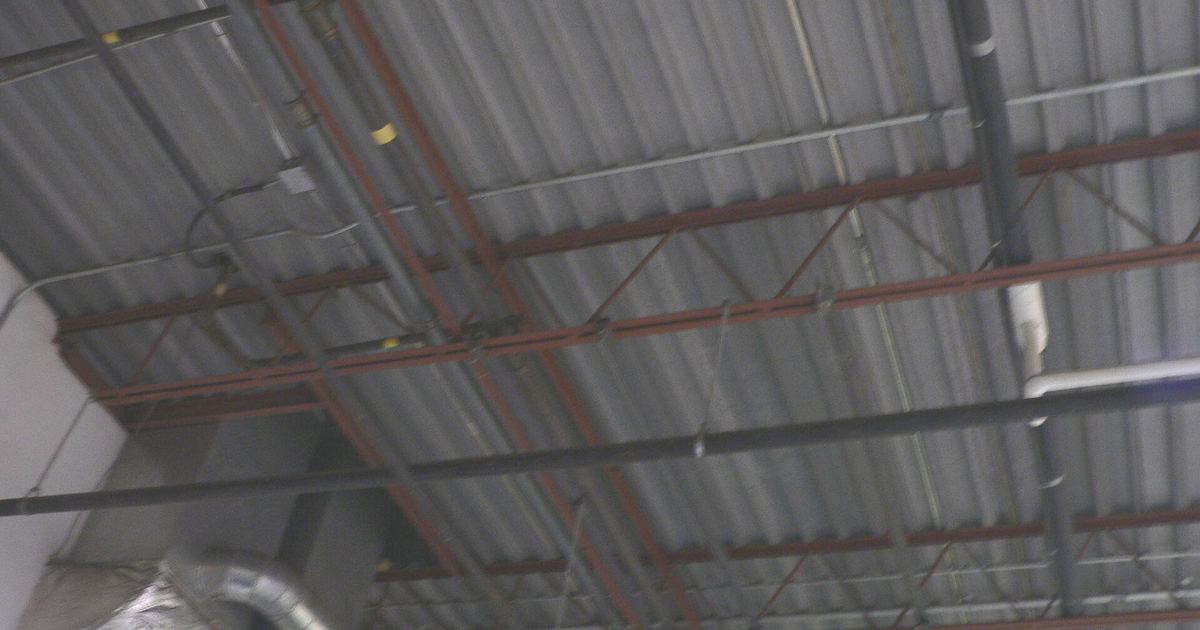
Open web steel joists provide an efficient framing solution for commercial floors and roofs, but improper handling during erection creates serious structural stability risks. When general contractors and framing estimators bid structural steel packages or coordinate work directly beneath overhead iron, failing to budget for mandatory erection sequencing can cause severe schedule overruns. Understanding the exact requirements of federal safety standards ensures crane hours, rigging labor, and engineering sign-offs are properly carried in your project estimates.
Myth vs. Fact: Releasing Crane Hoisting Cables at Columns
The Myth: Riggers can release the crane hook as soon as an open web steel joist is set onto its bearing seat.
The Fact: Under eCFR 29 CFR 1926.757, columns that are not framed in at least two directions with solid web structural steel members require a field-bolted steel joist at the column to establish lateral stability during erection. OSHA prohibits releasing hoisting cables until the seat at each end of the steel joist is field-bolted and each end of the bottom chord is restrained by a vertical column stabilizer plate.
This vertical stabilizer plate must meet strict minimum dimensions:
- The plate must be a minimum of 6 inch by 6 inch (152 mm by 152 mm).
- The plate must extend at least 3 inches (76 mm) below the bottom chord of the steel joist.
- The plate must feature a 13/16 inch (21 mm) hole to provide an attachment point for guying or plumbing cables.
If constructibility prevents setting a joist at the column, an alternate stabilizing method designed by a qualified person must be shop installed on both sides near the column and shown on the erection drawings before hoisting lines are unhooked.
Myth vs. Fact: Tying Off Fall Arrest Gear to Joists
The Myth: Any steel joist or joist girder offers an immediate anchorage point for personal fall arrest equipment.
The Fact: Under OSHA 29 CFR 1926.757, steel joists and steel joist girders shall not be used as anchorage points for a fall arrest system unless written approval to do so is obtained from a qualified person. Unbridged or partially fastened open web members lack the lateral torsional resistance to sustain fall arrest impact forces without buckling.
Similarly, field crews cannot alter web members or chords on the fly to clear mechanical lines or interior framing chases. The standard explicitly states that no modification affecting the strength of a steel joist or steel joist girder shall be made without the approval of the project structural engineer of record.
Myth vs. Fact: Joist Spans and Erection Bridging Mandates
The Myth: Joist bridging is an afterthought that can be installed whenever convenient before decking arrives.
The Fact: Span length dictates mandatory diagonal bridging, crane release sequencing, and crew size on the iron:
- Spans of 60 feet (18.3 m) or less at columns: The joist must be designed with sufficient strength to allow one employee to release the hoisting cable without erection bridging.
- Column joists spanning more than 60 feet (18.3 m): Joists must be set in tandem with all bridging installed, unless an alternative method providing equivalent stability is designed by a qualified person and included in the site-specific erection plan.
- Bays of 40 feet (12.2 m) or more: Individual joist connections must be fabricated to allow field bolting during erection.
- Spans over 60 feet (18.3 m) through 100 feet (30.5 m): All rows must be bolted diagonal bridging. Two rows of bolted diagonal erection bridging must be installed near the third points, and hoisting cables cannot be released until this bridging is installed and anchored. No more than two employees may be on the span until all other bridging is anchored.
- Spans over 100 feet (30.5 m) through 144 feet (43.9 m): All rows must be bolted diagonal bridging. Hoisting cables cannot be released until all bridging is installed and anchored, with a maximum of two employees allowed on the span.
- Spans exceeding 144 feet (43.9 m): Erection methods must follow § 1926.756.
Myth vs. Fact: Landing Bundles of Bridging and Decking
The Myth: Bundles of metal deck and bridging steel can be landed anywhere across loose joists to keep crane picks moving quickly.
The Fact: OSHA prohibits construction loads on steel joists until all bridging is installed and anchored and all joist-bearing ends are attached, with tightly defined exceptions:
- Bridging bundles: Total weight cannot exceed 1,000 pounds (454 kg). The bundle must be placed on a minimum of three steel joists secured at one end, and the edge of the bundle must rest within 1 foot (.30 m) of that secured end.
- Decking bundles: Decking may only land on partially bridged joists if a qualified person documents in a site-specific erection plan that the structure can support the load. The bundle must not exceed 4,000 pounds (1816 kg), must sit on a minimum of three joists attached at both ends, must have at least one row of bridging installed and anchored, and its edge must sit within 1 foot (.30 m) of the bearing surface.
Factoring Joist Compliance Into Bids and Project Schedules
Complying with joist rules directly shapes field productivity, crane hook duration, and hardware costs. Each end of "K" series joists requires at least two 1/8-inch (3 mm) fillet welds 1 inch (25 mm) long, or two 1/2-inch (13 mm) bolts. In contrast, "LH" and "DLH" series joists and joist girders require a minimum of two 1/4-inch (6 mm) fillet welds 2 inches (51 mm) long, or two 3/4-inch (19 mm) bolts per end.
Estimators should account for tandem setting and bolted diagonal bridging in their crane time allowances. Holding the crane hook while crews bolt bridging on long spans slows daily pick counts compared to unbolted configurations. Make sure your general conditions estimating covers necessary crane rental durations, and utilize explicit language in your bid exclusions and clarifications to define trade responsibilities for stabilizer plates, temporary bridging terminus points, and engineering submittals.
Sources
eCFR 29 CFR 1926.757: Open Web Steel Joists
Published October 28, 2026. No affiliate links on this page. Facts come from the sources linked above; check them for updates.