Overhead and Gantry Crane Mistakes Under OSHA 29 CFR 1926.1438
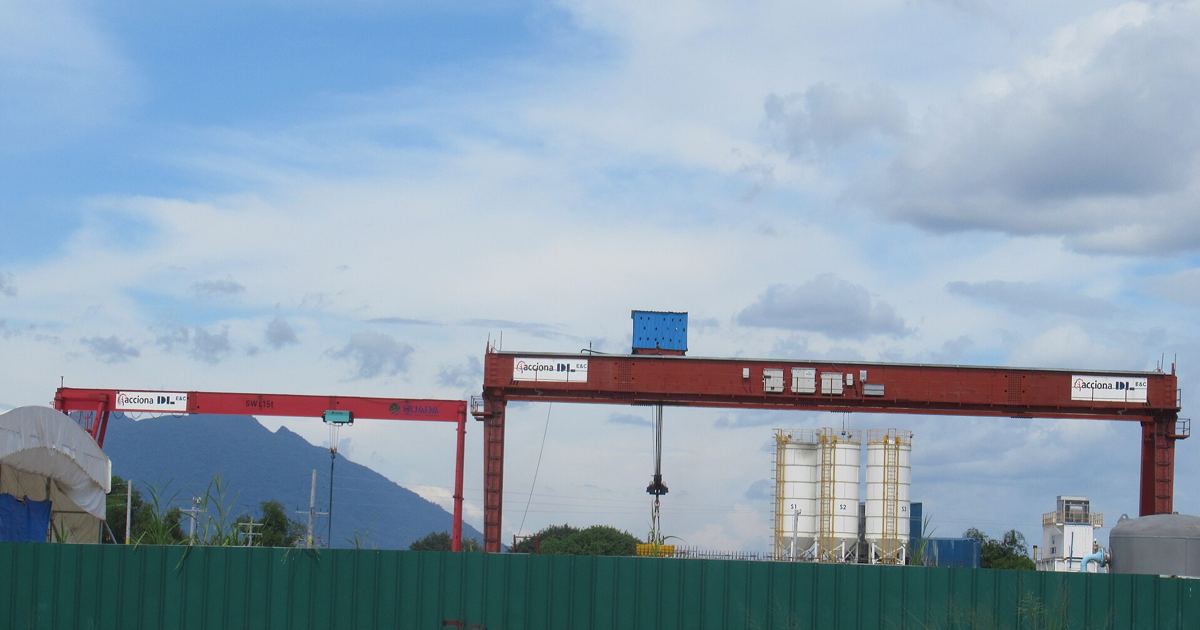
Estimators, general contractors, and trade subcontractors frequently encounter overhead and bridge cranes when working inside industrial plants, manufacturing bays, or heavy civil sites. Misunderstanding how federal safety standards apply to this machinery is a frequent source of estimating errors and jobsite compliance disputes. Under 29 CFR 1926.1438, the Occupational Safety and Health Administration establishes clear dividing lines between permanently installed cranes and temporary equipment. Reviewing the common pitfalls outlined below ensures your bids reflect the exact standard governing the equipment on your project.
Mistake 1: Treating Permanently Installed Cranes as Standard Subpart CC Equipment
One of the most widespread errors occurs when contractors assume that all cranes utilized during a construction activity must comply directly with the full scope of 29 CFR part 1926 subpart CC. Paragraph 1926.1438(a) explicitly clarifies that when overhead and gantry cranes are permanently installed in a facility and utilized in construction, the requirements of subpart CC do not apply.
Instead, permanently installed equipment must satisfy the general industry requirements found in 29 CFR 1910.179, with a single specific exception: paragraph 1910.179(b)(1) does not apply. This rule covers several distinct equipment designs, including:
- Overhead and gantry cranes
- Semigantry cranes
- Cantilever gantry cranes
- Wall cranes
- Storage bridge cranes
- Other equipment sharing the same fundamental characteristics
Assuming that full construction crane documentation, assembly protocols, or field modifications are governed by subpart CC for a permanent facility bridge crane creates confusion during work planning.
Mistake 2: Missing Which Subpart CC Sections Apply to Non-Permanent Equipment
When overhead and gantry equipment is not permanently installed in a facility, paragraph 1926.1438(b)(1) governs. This applies to overhead/bridge cranes, semigantry, cantilever gantry, wall cranes, storage bridge cranes, and launching gantry cranes, irrespective of whether the unit travels on tracks, wheels, or other means.
A frequent estimating oversight is failing to verify which sections of subpart CC apply. Rather than applying the entire subpart indiscriminately, paragraph 1926.1438(b)(2)(i) mandates compliance with a precise list of sections:
- Sections 1926.1400 through 1926.1414
- Sections 1926.1417 through 1926.1425
- Section 1926.1426(d)
- Sections 1926.1427 through 1926.1434
- Sections 1926.1437, 1926.1439, and 1926.1441
Navigating these boundaries requires cross-referencing fundamental requirements such as general OSHA 1926.1400 scope rules and operator qualifications under OSHA 1926.1427 crane operator certification.
Mistake 3: Overlooking Required General Industry Portions Under Section 1910.179
For temporary, non-permanent overhead and gantry equipment, contractors often forget that OSHA merges construction rules with specific general industry standards. Under 1926.1438(b)(2)(ii)(A), employers must follow designated paragraphs of 29 CFR 1910.179 alongside the construction standards.
The standard selectively adopts the following subsections of 1910.179:
- Paragraphs (b)(5), (b)(6), and (b)(7)
- Paragraphs (e)(1), (e)(3), (e)(5), and (e)(6)
- Paragraphs (f)(1) and (f)(4)
- Paragraph (g)
- Paragraphs (h)(1) and (h)(3)
- Paragraphs (k) and (n)
Excluding these specific mechanical, electrical, and operational subsections from equipment audits leaves contractors exposed to non-compliance on non-permanent installations.
Mistake 4: Using the Wrong Definitions for "Hoist" and "Load"
When applying the general industry standards to non-permanent overhead equipment, paragraph 1926.1438(b)(2)(ii)(B) establishes that the definitions in 29 CFR 1910.179(a) generally control the interpretation of terms. However, there is a critical trap: the general industry definitions for "hoist" and "load" do not apply.
For the words "hoist" and "load," employers must apply the definitions codified in 29 CFR 1926.1401. Conflating the general industry definitions with construction definitions can skew operational planning and equipment classifications.
Mistake 5: Ignoring the September 19, 2001 Manufacturing Cutoff Date
Under 29 CFR 1926.1438, the manufacture date of non-permanent equipment dictates whether OSHA general industry design rules or national consensus standards apply. Failing to check the date on the crane's data plate is an easy way to prepare an inaccurate compliance plan.
If the equipment was manufactured before September 19, 2001, paragraph 1926.1438(b)(2)(ii)(C) dictates that 29 CFR 1910.179(b)(2) applies. If the machinery was manufactured on or after September 19, 2001, paragraph 1926.1438(b)(2)(iii) requires compliance with specific portions of ASME B30.2-2005 (incorporated by reference in 29 CFR 1926.6):
- Sections 2-1.3.1, 2-1.3.2, 2-1.4.1, 2-1.6, 2-1.7.2, 2-1.8.2, 2-1.9.1, and 2-1.9.2
- Sections 2-1.11, 2-1.12.2, 2-1.13.7, 2-1.14.2, 2-1.14.3, 2-1.14.5, and 2-1.15
- Sections 2-2.2.2 and 2-3.2.1.1
- Section 2-3.5, with the modification that in section 2-3.5.1(b), 29 CFR 1910.147 is substituted for ANSI Z244.1
Sources
Standards referenced in this guide are published by the federal government:
- 29 CFR 1926.1438 Overhead & gantry cranes, Electronic Code of Federal Regulations
Published October 29, 2026. No affiliate links on this page. Facts come from the sources linked above; check them for updates.