Aerial Work Platforms and Winches Price Trends: PPI Guide
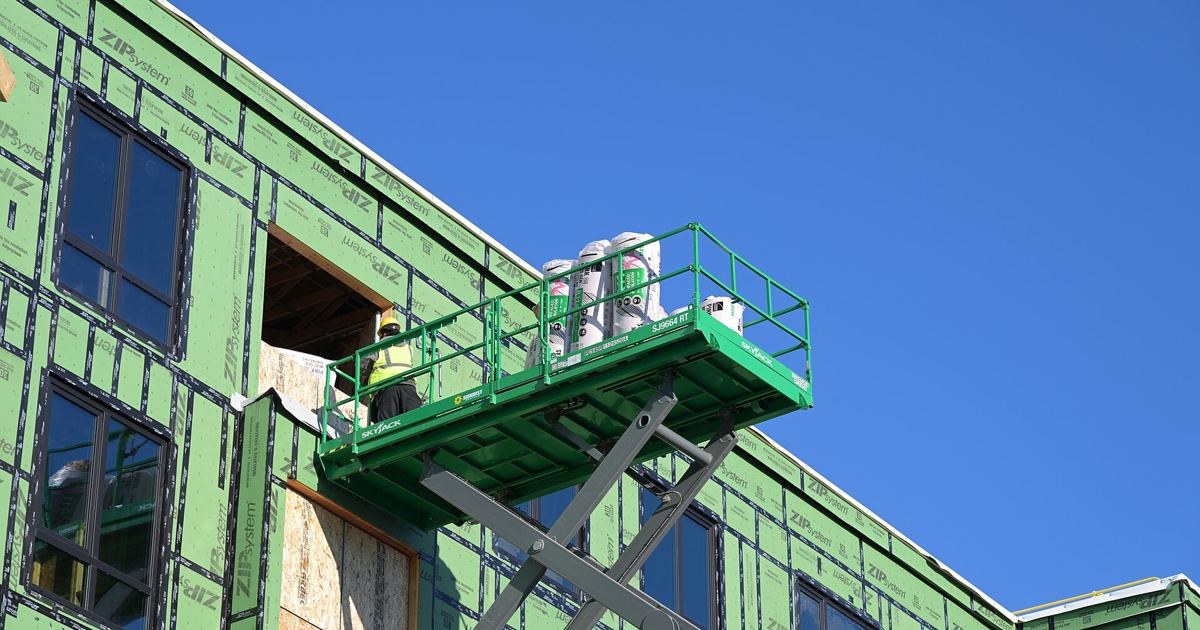
Estimating commercial construction requires careful budgeting for heavy mechanical access equipment, material winches, and aerial platforms. Tracking government cost metrics helps estimators verify whether supplier rate changes align with broader equipment manufacturing trends. By analyzing wholesale pricing data, subcontractors and general contractors can protect their bottom lines against sudden equipment procurement cost shifts.
Requirement 1: Establish Index Baselines for Lift and Hoist Machinery
To measure changes in access equipment pricing, estimators reference commodity index data published by the federal government. The U.S. Bureau of Labor Statistics PPI commodity data for series WPU112J01 tracks winches, aerial work platforms, and automotive wrecker hoists, including parts and attachments. This series uses an index base period where December 2005 equals 100.
The latest monthly figure available in the series reached 200.8 in September 2026. This reflects a slight month-over-month decline of -0.1% compared to the index high of 201.0 recorded in August 2026. Estimators must also note that recent monthly values remain preliminary and are subject to revision for four months after initial reporting.
Requirement 2: Track Multi-Year Increases in Equipment Manufacturing Costs
Equipment budgets that rely on outdated numbers carry substantial exposure because manufacturing costs surged significantly over recent years. Comparing historical index values reveals how dramatically overhead for lifting machinery expanded:
- The September 2026 index level of 200.8 reflects a 41.2% increase compared to the pre-pandemic baseline of 142.2 recorded in January 2020.
- Against the September 2021 level of 160.1, the index reflects a five-year increase of 25.4%.
- Examining the entire window from January 2019 to September 2026, the lowest monthly value stood at 138.5 in January 2019.
- Annual averages illustrate the steady upward trajectory: 139.5 in 2019, 142.2 in 2020, 154.4 in 2021, 175.9 in 2022, 187.3 in 2023, 189.0 in 2024, 194.1 in 2025, and 200.1 for the January-September period of 2026.
Subcontractors preparing multi-year bid packages should incorporate protective language such as price escalation clauses to avoid absorbing long-term supplier increases.
Requirement 3: Quantify Short-Term Equipment Price Changes
Short-term movement across recent seasons indicates that while rapid post-pandemic acceleration moderated, pricing remains near record highs. In September 2024, the index was 188.5, indicating a two-year change of +6.5% to the latest reading. By September 2025, the figure reached 196.6, producing a one-year increase of +2.1% into September 2026.
A closer look at the 13 months through September 2026 shows monthly stability followed by late-spring increases. The series stood flat at 196.6 through September 2025, October 2025, and November 2025, before stepping up to 198.8 in December 2025. Entering 2026, the metric was 198.9 in January, held steady at 199.2 through February, March, and April, increased to 200.7 in May, reached 200.8 across June and July, peaked at 201.0 in August, and settled at 200.8 in September.
Requirement 4: Structure Lift Budgets Around Verified Market Data
When compiling bid proposals involving vertical access, scissor lifts, and boom equipment, estimators should ensure their equipment cost models reflect published producer benchmarks. Bidders frequently manage access machinery through third-party suppliers or internal equipment divisions, making market comparisons vital for validating rate allowances. Understanding procurement rules, such as those covered in federal guidance on rental costs under FAR 31.205-36, keeps project budgets aligned with allowable commercial standards.
| Benchmark Period | Index Value | Change to Latest (September 2026) |
|---|---|---|
| January 2020 (Pre-Pandemic) | 142.2 | +41.2% |
| September 2021 (Five Years Earlier) | 160.1 | +25.4% |
| September 2025 (One Year Earlier) | 196.6 | +2.1% |
| August 2026 (Series Peak) | 201.0 | -0.1% |
| September 2026 (Latest Available) | 200.8 | Baseline |
Requirement 5: Document Benchmark Sources for Proposal Transparency
Bidders who submit clear rationale for equipment line items build stronger positions during negotiations. Verifying movements through the U.S. Bureau of Labor Statistics allows estimators to separate real manufacturing shifts from arbitrary vendor markups. Citing official commodity data gives project owners and general contractors an objective framework to assess equipment escalation requests.
Sources
U.S. Bureau of Labor Statistics, Series WPU112J01
Published November 9, 2026. No affiliate links on this page. Facts come from the sources linked above; check them for updates.