Barge Crane Lifts: Walking Through 29 CFR 1926.1437 Rules
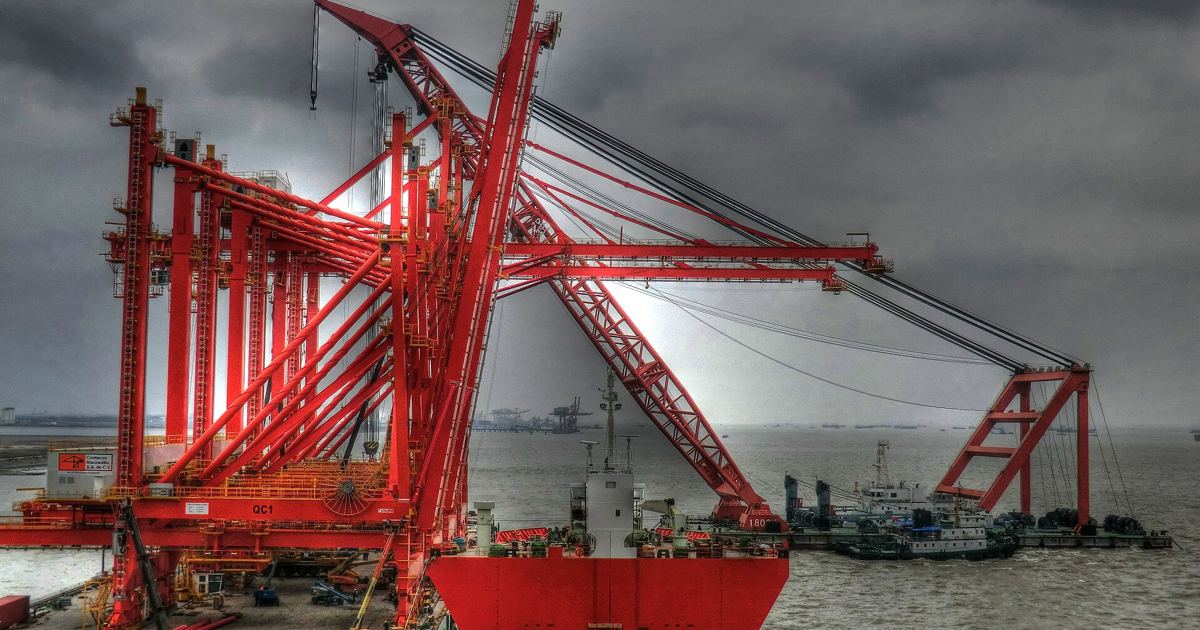
Lifting materials from floating vessels introduces dynamic forces, vessel tilt, and water hazards that do not exist on solid ground. Under federal safety standards, 29 CFR 1926.1437 establishes supplemental requirements whenever construction operations use floating cranes or derricks, as well as land cranes mounted on barges, pontoons, or other flotation devices. The only marine crane exemption occurs when using jacked barges whose jacks are deployed directly to the river, lake, or sea bed so the barge is fully supported by the jacks.
Scenario Walk-Through: Planning a Land Crane Lift from a Barge Deck
Consider a hypothetical marine contractor preparing to place a mobile land crawler onto a flat-deck barge to handle heavy materials along a shoreline structure. The project supervisor must determine whether standard lifting procedures apply or whether marine modifications are mandated. Because the barge floats freely rather than resting on deployed seabed jacks, the entire operation must comply with the general and specific provisions of 29 CFR 1926.1437.
The team cannot simply drive the machine aboard and use standard terrestrial charts. Instead, the rated capacity must be modified for marine service by the equipment manufacturer or by a qualified person holding expertise in both land crane capacity and vessel stability. This reduction must account for list, trim, wave action, and wind at the specific barge location.
Securing Work Area Boundaries and Adding Vessel Safety Devices
Before any hoisting starts, the crew sets up swing radius protection on the floating deck. Under the marine standard, the employer must address hazard areas using specific physical controls or visible markings:
- Erecting and maintaining control lines, warning lines, railings, or similar physical barriers to define the perimeter of hazard zones.
- Marking hazard zones with warning signs such as “Danger—Swing/Crush Zone” combined with high-visibility markings on the crane, while training all workers to recognize their meaning.
In addition, the crane cab or operator station must be equipped with mandatory marine safety devices. These include a barge list and trim device, a positive equipment house lock, and a wind speed and direction indicator whenever a competent person identifies wind as a factor to consider.
Managing Capacity Derating, List, Trim, and Securing Options
During the hypothetical lift, the team monitors vessel tilt continuously. For a land crane positioned on a barge, the maximum allowable list and maximum allowable trim cannot exceed the least of 5 degrees, the crane manufacturer specification, or the limit established by the qualified person. Furthermore, deck stability rules require that all deck surfaces remain entirely above water and the bottom area of the barge stays fully submerged throughout the operation.
To prevent machine movement on the deck, the crane must be anchored according to one of four designated mounting methods: Option (1), Option (2), Option (3), or Option (4), such as physical attachment, corralling, rail systems, or centerline cable systems. If divers enter the water to assist underwater work, the securing means must not allow any shifting in any direction.
Floating Cranes: Permanent Marine Attachment Standards
In an alternate hypothetical setup using a permanently mounted floating crane, different design tables apply under 29 CFR 1926.1437. The manufacturer load charts must evaluate a minimum wind speed of 40 miles per hour. Operational stability depends on capacity thresholds:
- Equipment of 25 tons or less allows a maximum list of 5 degrees and a maximum trim of 5 degrees under Table M1.
- Equipment over 25 tons allows up to 7 degrees of list and 7 degrees of trim.
- Permanent derricks of any rated capacity are permitted up to 10 degrees of list and 10 degrees of trim.
Vessel freeboard rules under Table M2 require at least 2 ft of freeboard at rated capacity in a 60 mph wind, and at least 1 ft when operated at rated capacity plus 25% under a 60 mph wind. For boom backward stability, Table M3 requires stability under high boom, no-load conditions with full back list in wind speeds up to 90 mph.
Establishing the Marine Inspection and Survey Schedule
Operating over water requires multiple layers of inspections beyond standard terrestrial requirements:
- Shift inspections: A competent person checks attachment hardware for wear, corrosion, loose or missing fasteners, defective welds, and insufficient tension.
- Monthly inspections: The competent person checks deck tie-downs, confirms the barge is not taking on water, verifies deck loads are secured, reviews compartment watertightness, and tests firefighting and lifesaving gear.
- Annual inspections: A qualified person with vessel expertise inspects external hulls, hardware like cleats, bitts, and chocks, reads four-corner drafts, and evaluates lifelines, life preservers, work vests, and rescue skiffs.
- Four-year internal surveys: A marine engineer, marine architect, licensed surveyor, or other qualified vessel expert surveys internal compartments. Documentation for this survey must be retained for a minimum of 4 years.
If any inspection identifies a condition that constitutes a hazard, the vessel must be pulled from service immediately until repairs are complete.
Working with Divers and Operational Aid Rules
When the hypothetical lift involves placing underwater components with divers, extra worker protections take effect. If the crane lowers or retrieves a diver, it cannot perform any other lift until every diver is safely back on board. The crane operator must remain at the controls at all times. Signals between the operator and tender must maintain a clear line of sight or rely on electronic transmission under §§ 1926.1419 through 1926.1422.
Finally, while anti two-block devices are standard on land, under marine rules an anti two-block device is strictly required only when hoisting personnel or hoisting over an occupied cofferdam or shaft. Contractors can compare these operational aids against standard terrestrial boundaries by reviewing our guide on OSHA crane swing radius control under § 1926.1424 and scheduling protocols in our review of crane inspection requirements in § 1926.1412.
Sources
Published October 30, 2026. No affiliate links on this page. Facts come from the sources linked above; check them for updates.