OSHA 29 CFR 1926.1127: Cadmium Compliance Guide for Bids
Construction work involving cadmium compounds presents strict regulatory triggers that directly shape jobsite production rates, labor costs, and project milestones. Under OSHA 29 CFR 1926.1127, employers must implement precise controls whenever cadmium hazards exist during alteration, demolition, repair, or installation tasks. For estimators evaluating structural demolition, electrical work involving cadmium-coated conduit, or cutting surfaces coated with cadmium-containing paint, pricing compliance requires comparing baseline thresholds, operational boundaries, and control exemptions.
Action Level vs. Permissible Exposure Limit
The standard establishes two distinct airborne concentration thresholds that dictate contractor obligations over an 8-hour time-weighted average (TWA):
- Action Level (AL): An airborne concentration of cadmium of 2.5 micrograms per cubic meter of air (2.5 µg/m3), calculated as an 8-hour TWA. Reaching or anticipating this level obligates the employer to identify exposed personnel and conduct ongoing representative air monitoring.
- Permissible Exposure Limit (PEL): An airborne concentration of 5 micrograms per cubic meter of air (5 µg/m3), calculated as an 8-hour TWA. Exceeding the PEL triggers mandatory regulated areas, required personal protective equipment, strict engineering controls, and written employee notifications.
When tracking general project expenses through estimating general conditions, estimators must recognize that the Action Level initiates administrative and sampling overhead, whereas the PEL introduces physical access barriers, productivity reductions, and direct personal protective equipment mandates.
Objective Data vs. Personal Air Monitoring
Before any work begins where cadmium may be present, an employer must designate a competent person under 29 CFR 1926.32(f). This competent person determines whether cadmium is on-site through investigations that include reviewing plans, past reports, Safety Data Sheets (SDS), and consulting property owners. If employee exposure could reach or exceed the 2.5 µg/m3 Action Level, the contractor must evaluate compliance pathways:
Objective Data Reliance: An employer may forgo initial exposure monitoring only if objective data demonstrates that cadmium will not exceed airborne concentrations at or above the Action Level under expected handling and processing conditions. A written record of this determination must be maintained, identifying the date and the name of each covered employee.
Full-Shift Breathing-Zone Sampling: Without qualified objective data, initial monitoring must be conducted using personal breathing-zone air samples reflecting full shift exposures for each shift, job classification, and work area. Monitoring methods must have an accuracy of not less than plus or minus 25 percent (±25%) with a 95 percent confidence level for concentrations at or above the Action Level. If initial monitoring shows exposures below the Action Level and that result is confirmed by another monitoring taken at least 7 days later, monitoring may be discontinued. However, changes in raw materials, personnel, equipment, or work practices require additional monitoring.
Regulated Areas vs. Unrestricted Workspaces
Whenever airborne concentrations exceed, or are reasonably expected to exceed, the PEL of 5 µg/m3, the contractor must establish a regulated area. The operational differences between regulated zones and typical work areas substantially alter labor productivity:
Regulated areas must be demarcated to alert employees and protect nearby workers outside the zone. Access is strictly limited to authorized persons. Inside the boundaries, workers cannot eat, drink, smoke, chew tobacco or gum, or apply cosmetics. Carrying or storing these products within the area is also prohibited. Every person entering the zone must be supplied with and required to wear an appropriate respirator. Incorporating these restrictions into crew shift schedules directly affects the net productive hours calculated within your labor burden rate.
Engineering Controls vs. The 30-Day Intermittent Exemption
Under 29 CFR 1926.1127, the standard enforces a clear hierarchy of controls. Employers must implement engineering and work practice controls to reduce exposures to or below 5 µg/m3, rather than relying solely on respirators. Employee rotation cannot be used to achieve compliance.
However, the requirement to install engineering controls to reach the PEL contains a narrow exception: it does not apply if the employer demonstrates that the employee is only intermittently exposed and is not exposed above the PEL on 30 or more days per year (defined as 12 consecutive months). For short-duration tasks that fall within this exception, respiratory protection must supplement available controls. If engineering ventilation is installed, its effectiveness must be measured, and any filtration systems must utilize High-efficiency Particulate Air (HEPA) filters capable of trapping at least 99.97 percent of mono-dispersed particles of 0.3 micrometers in diameter.
Comparing Prohibited Methods Across Cadmium Scopes
Construction work covered under the rule includes wrecking, demolition, cutting, brazing, burning, grinding, welding, and retrofitting cadmium-coated materials. Work methods face distinct restrictions when exposures exceed the PEL:
- High-Speed Abrasive Power Tools: High-speed abrasive disc saws cannot be operated on cadmium materials unless equipped with appropriate engineering controls to minimize emissions.
- Spray Applications: Cadmium-containing materials cannot be spray-applied above the PEL unless workers use positive-pressure supplied-air respirators (with full facepiece, hood, helmet, or suit) and containment measures prevent overspray.
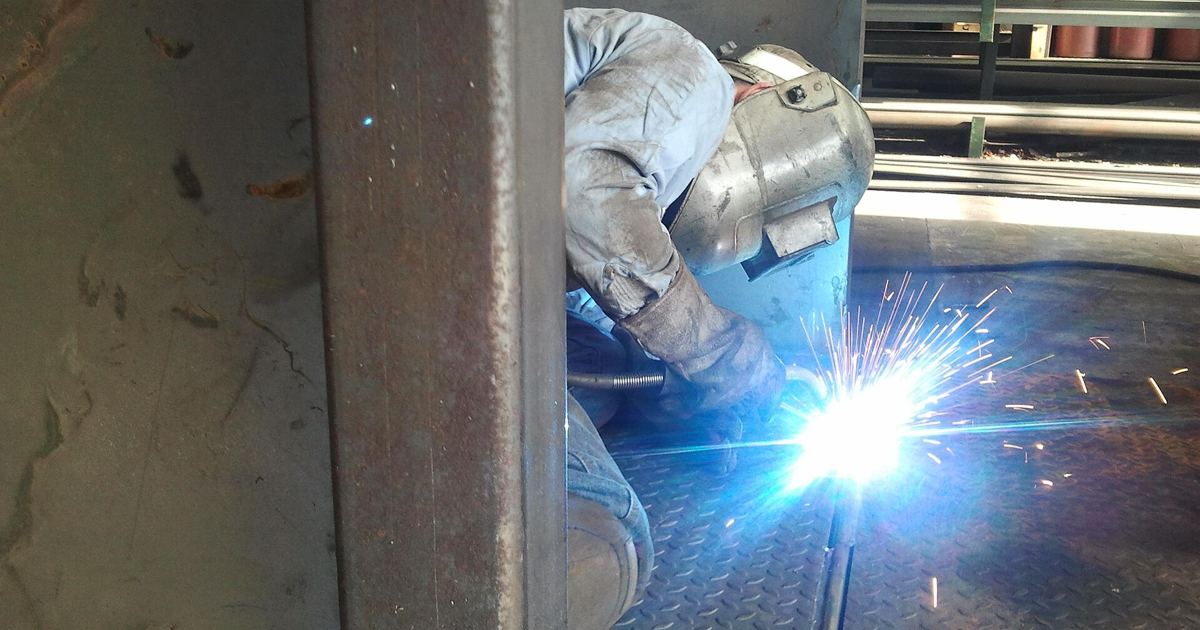
- Thermal Work: Welding, cutting, and heating must align with 29 CFR 1926.353 and 29 CFR 1926.354 to protect against metal fume hazards.
Sources
Published October 28, 2026. No affiliate links on this page. Facts come from the sources linked above; check them for updates.