Bidding Derrick Safety: 5 Costly 29 CFR 1926.1436 Mistakes
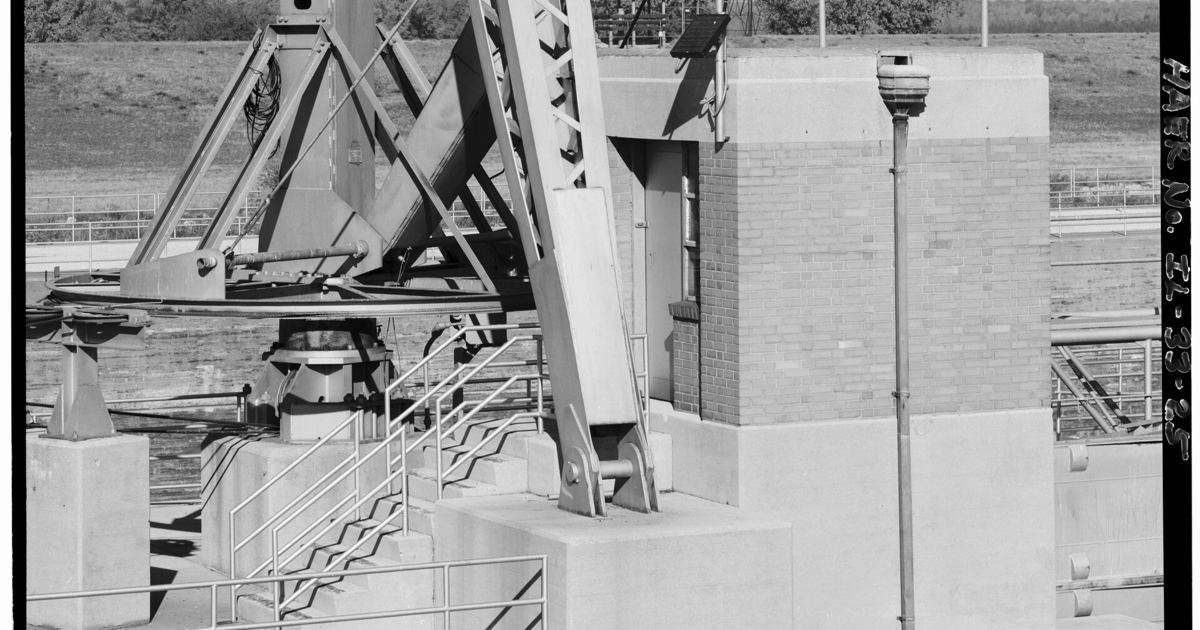
Estimators and trade contractors pricing projects that require stationary or base-mounted hoisting equipment often overlook the specialized mandates for derricks. Under 29 CFR 1926.1436, OSHA provides supplemental rules covering powered equipment with a mast or equivalent member held by guys or braces—such as guy, stiffleg, Chicago boom, gin pole, A-frame, basket, breast, and shearleg derricks. Failing to budget for the testing, qualified oversight, anchoring, and operational aid alternatives required by this standard can quickly create budget overruns before the first pick is made.
Mistake 1: Treating Derrick Load Charts and Operation Like Standard Cranes
A frequent estimating error is assuming standard crane procedures apply across the board without checking the exceptions outlined in the regulation. While general operation rules in § 1926.1417 apply, the standard specifically exempts derricks from § 1926.1417(c) regarding the accessibility of procedures, while establishing unique mandates for load charts. Estimators must account for posting and tracking these documents properly depending on the installation type.
For permanently installed derricks with fixed lengths of boom, guy, and mast, the load chart must be posted where it is visible to personnel responsible for operation. For non-permanent installations, the load chart must be readily available at the job site to operating personnel. Every chart must specify the rated capacity at corresponding ranges of boom angle or operating radii, specific component lengths, required parts for hoist reeving, and rope size and construction (either on the chart or in the operating manual). Reviewing these requirements alongside general conditions estimating ensures the administrative and operational setup costs are accounted for in the proposal.
Mistake 2: Overlooking Guy and Stiffleg Structural Anchoring Rules
Estimators regularly misjudge the engineering coordination and anchor verification needed for guyed and stiffleg configurations. Under § 1926.1436, anchoring data developed by the manufacturer or a qualified person must always be used. Specific derrick types carry distinct structural minimums that must be reflected in your equipment mobilization plan:
- Guy Derricks: Require a minimum of 6 guys with equal spacing, unless a qualified person or manufacturer approves variations and revises the rated capacity. For guy derricks manufactured after December 18, 1970, employers must have data showing initial sag or tension and the tension in guy line rope at the anchor.
- Stiffleg Derricks: The vertical mast must be supported by at least two stifflegs, with one end connected to the mast top and the other securely anchored. The mast base and stifflegs must withstand maximum horizontal and vertical forces encountered within rated capacity, and the mast must be prevented from lifting out of its socket when in tension.
- Gin Pole Derricks: Guy lines must be sized and spaced to maintain stability in both boomed and vertical positions, and the base must be anchored against horizontal forces when present.
- Chicago Boom Derricks: Boom fittings and topping lift attachments must allow swinging at all permitted operating radii and mounting heights, fit the upright member of the host structure, and prevent lifting out under tensile forces.
Mistake 3: Mispricing Hoist Standards and Drum Proof Testing
Derrick hoisting mechanisms are typically base-mounted and rely on operating ropes. When providing hoists, contractors cannot just supply any industrial winch. Base mounted drum hoists must satisfy ASME B30.7-2001 sections 7-1.1, 7-1.2 (excluding operator cabs and fire extinguishers), 7-1.3, and 7-0.2. Welding on load-sustaining members must comply with ANSI/AWS D14.3-94 or AWS D1.1/D1.1M:2002.
New hoists must be load tested to a minimum of 110% and not more than 125% of rated capacity, unless otherwise recommended by the manufacturer. If the manufacturer has not performed this test, the employer must budget for it. Repaired or modified hoists affecting capacity or safe operation must be evaluated by a qualified person to determine if a load test is required. The test procedure requires hoisting the test load a vertical distance to confirm it is held by hoist brakes, then lowering, stopping, and holding it with the brakes, with a competent person confirming the test is passed.
Mistake 4: Missing the Post-Assembly Functional and Load Test Budgets
Before any new or reinstalled derrick is put into initial service, two separate pre-use evaluations must be executed and supervised by a competent person. Anchorages—including the host structure and any rock or hairpin anchorages—must be approved by a qualified person and tested if special testing is deemed necessary. Bidders who forget to carry crew time for these requirements risk unbillable job delays.
First, a functional test with no hook load must cycle through the full range of hook travel, boom travel, swing in each direction, and actuate all anti two-block, boom hoist limit, locking, and indicating devices. Second, a load test between 100% and 110% of rated capacity (and never less than the maximum anticipated load) must be performed. The test load must be hoisted a few inches, held with the hoist brakes, swung through the full range of swing at maximum working radius, boomed up and down, and stopped and held during lowering. Test documentation containing the date, results, and name of the tester must be retained until the equipment is re-tested or dismantled.
Mistake 5: Failing to Carry Crew Protocols and Operational Aid Controls
Operational aid rules under OSHA 29 CFR 1926.1436 exempt derricks from certain standard crane devices like boom hoist limiting devices, boom angle indicators, and load weighing devices under § 1926.1416. However, bidders must budget for the mandatory compliance alternatives. If a functioning boom angle indicator is absent, employers must either install an electronic warning or limiting device, or mark the boom hoist cable with visible caution and stop marks corresponding to maximum and minimum angles, monitored by the operator or a spotter.
Furthermore, derricks manufactured more than one year after November 8, 2010, with a rated capacity over 6,000 pounds, require a load weighing device, load moment indicator, rated capacity indicator, or rated capacity limiter. If deficient, repairs must occur within 30 days, or within 7 days of receiving parts if ordered within 7 days of the deficiency. Bidders must also plan for daily inspections of guys for tension, annual inspections of gudgeon pins and foundation supports, jumping operations supervised by an A/D director, general supervision by a competent person, and securing booms when idle for 30 days or more. Coordinating these protocols with OSHA crane operation rules protects your schedule and labor margins.
Sources
Regulatory mandates and technical provisions referenced above are sourced from:
Published October 30, 2026. No affiliate links on this page. Facts come from the sources linked above; check them for updates.