OSHA 29 CFR 1926.602: Material Handling Equipment Rules for Estimators
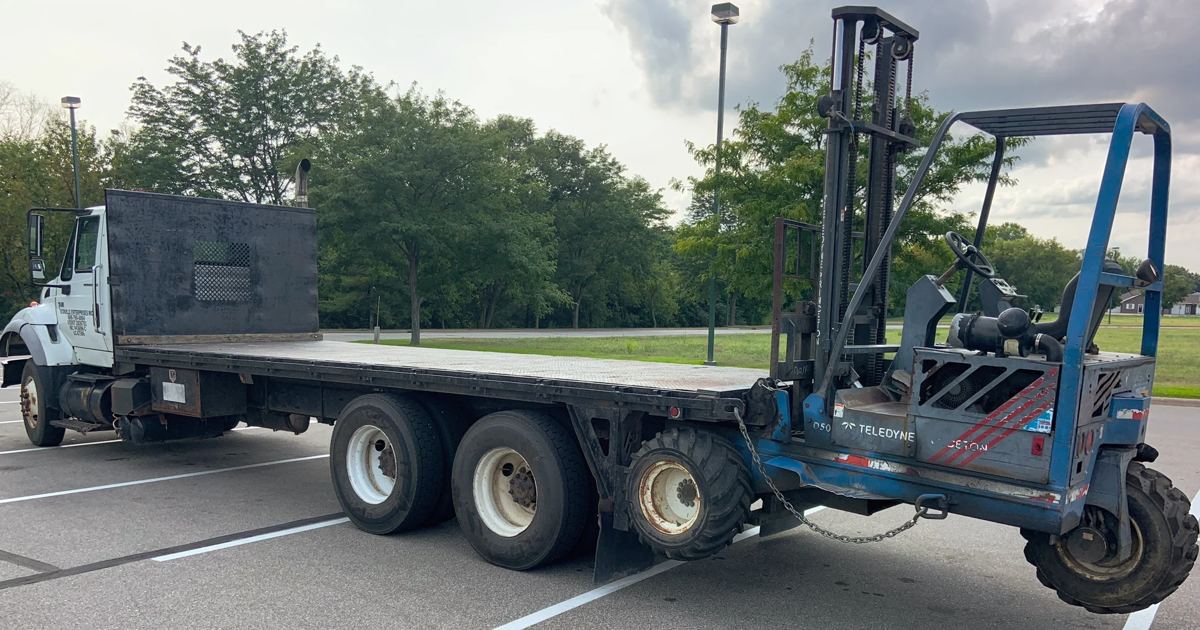
Material movement can quickly create jobsite delays and unexpected costs when equipment does not meet safety standards. Federal regulations under OSHA 29 CFR 1926.602 establish baseline mechanical and operational requirements for earthmoving machinery and powered industrial trucks. Estimators and project managers who account for these rules during takeoff and schedule planning can prevent jobsite standstills, costly retrofit requests, and safety violations.
Earthmoving Machinery Scope and Baseline Rules
The general rules under paragraph (a)(1) apply to common heavy machinery used on job sites, including scrapers, loaders, crawler or wheel tractors, bulldozers, off-highway trucks, graders, and agricultural or industrial tractors. Specific rules for compactors and rubber-tired skid-steer units remain reserved pending future standards development.
For operations, equipment access roads and grades must be constructed and maintained to allow safe movement of vehicles. In addition, any emergency access ramp or berm used by an employer must be built to restrain and control runaway vehicles. Estimators should cross-check access site conditions with general conditions estimating to ensure grading and temporary haul paths are properly covered.
Audible Alarms, Horns, and Operator Safeguards
Equipment visibility and warning systems are strictly regulated to avoid strike hazards in active work zones:
- Horns: All bidirectional equipment—such as rollers, compactors, front-end loaders, and bulldozers—must carry an operative horn distinguishable from ambient jobsite noise, sounded as needed in either direction.
- Reverse Alarms: Earthmoving or compacting machinery with an obstructed rear view cannot operate in reverse gear unless it has an audible reverse alarm distinguishable from surrounding noise or an employee signals that movement is safe.
- Scissor Points: Front-end loaders must have guarded scissor points whenever they present an operator hazard during regular use.
- Seat Belts: Operators must have seat belts meeting Society of Automotive Engineers standards (such as SAE J386-1969 for construction equipment or SAE J333a-1970 for light industrial tractors), unless the unit is designed strictly for standup use or lacks rollover protective structures (ROPS) or canopy protection. Tractors retain seat belt requirements even when backhoes or breakers are attached.
Powered Industrial Trucks and Forklift Standards
Subcontractors handling drywall, framing packages, or ceiling grid frequently rely on forklifts to stage interior materials. Under 29 CFR 1926.602(c), industrial trucks must satisfy key mechanical safeguards:
- Rated Capacity: Rated capacity must be posted clearly so it is visible to the machine operator. If auxiliary removable counterweights are used, alternate capacities must also be shown, and operators must never exceed these limits.
- Manufacturer Approval for Changes: Employers cannot make modifications or additions affecting safe operation or capacity without prior written approval from the manufacturer. Data plates, decals, and instruction tags must be updated accordingly, and original safety factors cannot be lowered.
- Overhead Guards: High lift rider trucks require overhead protection meeting configuration requirements in American National Standards Institute ANSI B56.1-1969.
- Steering Knobs: Spinner knobs cannot be installed on steering wheels unless the steering mechanism prevents road reactions from causing the wheel to spin rapidly, and the knob must sit within the wheel periphery.
- Unison Lifts: When multiple trucks lift a load simultaneously, no single machine may exceed its proportional capacity.
Elevating Personnel on Lift Carriage Controls
When an industrial truck features vertical controls or vertical and horizontal controls elevatable with the lifting carriage or forks for lifting personnel, the standard mandates specific precautions. A firmly secured safety platform must be attached to the lifting carriage or forks. Personnel working on that platform must have an accessible shutoff mechanism to cut power to the vehicle, and protection against falling objects must be provided whenever site conditions require it. When planning interior trades, balance these access protocols with labor burden allocations for trained spotting and operating crews.
Operator Training and Scheduling Checkpoints
Paragraph (d) notes that powered industrial truck operator training requirements for construction mirror those in general industry standard 29 CFR 1910.178(l). Subcontractors cannot allow untrained personnel to operate equipment. Building compliance into bid schedules requires budgeting time for daily pre-shift inspections, verification of operator certifications, and confirmation that rental machinery carries compliant placards, reverse alarms, and seat belts before delivery to the site.
Sources
Federal safety requirements detailed above are drawn directly from the following official regulatory standard:
Published October 28, 2026. No affiliate links on this page. Facts come from the sources linked above; check them for updates.