Blasting Day Safety: Questions Trade Contractors Must Ask the GC
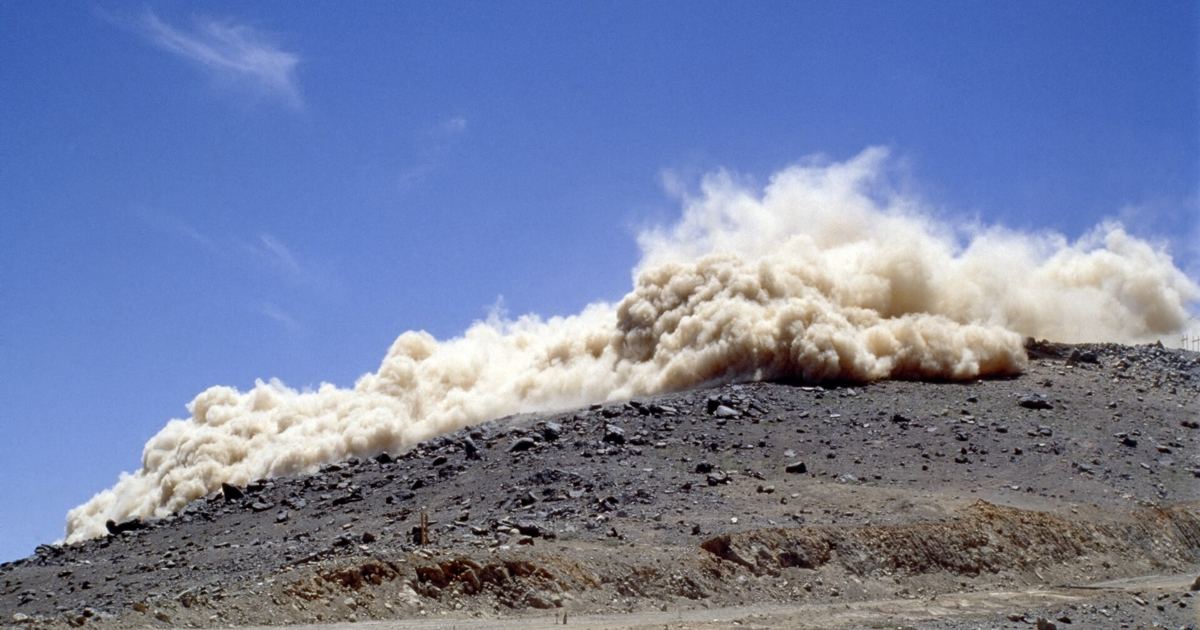
When blasting occurs on a jobsite, trade contractors, framers, and interior crews must coordinate closely with the general contractor to protect field personnel and maintain schedules. Subcontractors cannot simply assume site boundaries and clearance times are handled without direct verification. Federal safety regulations establish rigorous procedures for firing charges, clearing fumes, inspecting rubble, and resolving unexploded shots. Asking direct, structured questions helps trade estimators account for project delays in estimating general conditions and ensures field crews understand jobsite commands before work begins.
What Warning Codes and Danger Signs Are Established on Site?
Ask the general contractor where blasting signal codes and danger notices are physically displayed across the project. Under eCFR Section 1926.909, a code of blasting signals equivalent to Table U-1 must be posted on one or more conspicuous places at the operation. Employers must require all employees to familiarize themselves with this code and conform to it, while danger signs must be placed at suitable locations.
Verify how the general contractor communicates these mandatory auditory patterns to your trade supervisors:
- Warning Signal: A 1-minute series of long blasts given 5 minutes prior to the blast signal.
- Blast Signal: A series of short blasts sounded 1 minute prior to the shot.
- All Clear Signal: A prolonged blast sounded following the inspection of the blast area.
The blaster in charge must give a loud warning signal before firing and must fix the time of blasting. Subcontractors should verify that surplus explosives are secured in a safe place and that all crew members, equipment, and vehicles are relocated to a safe distance or placed under sufficient cover before detonation.
How Will Surrounding Traffic and Underground Access Points Be Secured?
Inquiries regarding perimeter security prevent accidental worker exposure. Under eCFR Section 1926.909, flagmen must be safely stationed on highways passing through the danger zone to stop traffic during blasting operations. If your crews mobilize along access roads, confirm the exact staging locations of these flagmen with the prime contractor.
For underground operations, ask how access passages are monitored:
- Before firing an underground blast, warning must be given to all personnel.
- All possible entries into the blasting area must be carefully guarded.
- Any entrances to any working place where a drift, raise, or other opening is about to hole through must be carefully guarded.
- The blaster must make sure that all employees are out of the blast area prior to firing.
Who Confirms Disconnections and Area Inspections After the Shot?
Subcontractors must ask what verification occurs immediately following a shot before workers resume framing, drywall, or mechanical rough-ins. According to eCFR Section 1926.910, the firing line must be disconnected from the blasting machine immediately after the blast has been fired. If power switches are used, they must be locked open or in the off position.
Ask how long crews must wait before re-entry:
- Sufficient time must be allowed for smoke and fumes to leave the blasted area before returning to the shot.
- In tunnels, this wait time must be not less than 15 minutes.
- An inspection of the area and surrounding rubble must be made by the blaster to determine if all charges have exploded before employees return.
- In tunnels, this inspection occurs only after the muck pile has been wetted down.
Only after this inspection is completed can employees return to the operation. Factoring these required wait and inspection intervals into your bid helps avoid uncompensated delays outlined on your bid day checklist.
How Does the Project Plan Isolate and Resolve Discovered Misfires?
Unexploded charges introduce severe hazards that can halt progress in surrounding project spaces. Under eCFR Section 1926.911, if a misfire is found, the blaster must provide proper safeguards for excluding all employees from the danger zone. Subcontractors should ask the general contractor how notification occurs so crews can immediately clear the designated zone.
Essential misfire requirements every trade contractor should verify include:
- No other work may be performed except what is necessary to remove the hazard of the misfire, and only employees necessary to do the work may remain in the danger zone.
- If there are any misfires while using cap and fuse, all employees must remain away from the charge for at least 1 hour.
- All misfires must be handled under the direction of the person in charge of the blasting.
- All wires must be carefully traced and a search made for unexploded charges.
- No drilling, digging, or picking is permitted until all missed holes have been detonated or the authorized representative has approved that work can proceed.
- No attempt may be made to extract explosives from any charged or misfired hole.
- A new primer must be put in and the hole reblasted.
- If refiring presents a hazard, explosives may be removed by washing out with water or, where the misfire is under water, blown out with air.
Sources
eCFR Section 1926.909 - Firing the blast
eCFR Section 1926.910 - Inspection after blasting
eCFR Section 1926.911 - Misfires
Published October 30, 2026. No affiliate links on this page. Facts come from the sources linked above; check them for updates.