Crane Assembly and Disassembly: OSHA Rules and Schedule Steps
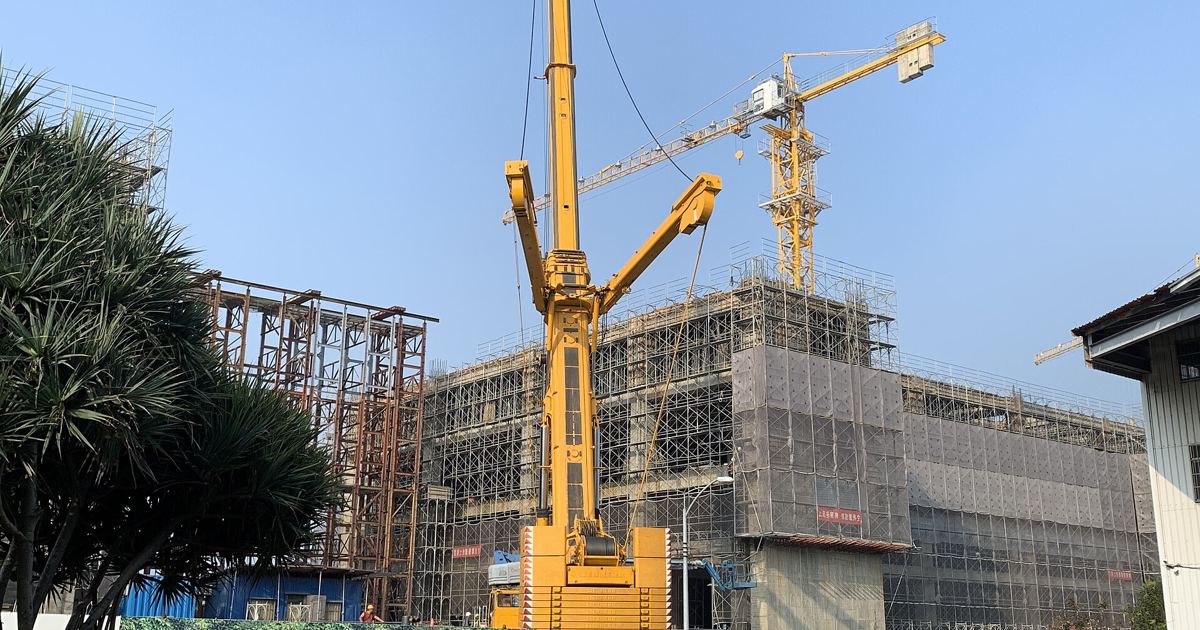
On tight commercial jobsites, scheduling crane mobilization requires more than just booking equipment delivery. Federal safety standards govern every stage of erecting and taking down hoisting machinery. Under 29 CFR 1926.1403 and 29 CFR 1926.1404, employers must establish strict oversight, assign qualified personnel, and walk through detailed physical safety checks before any hoisting work can begin. Walking through a hypothetical project mobilization reveals exactly how these requirements dictate the field sequence and project schedule.
Scenario Walk-Through: Planning Crane Mobilization on Site
Consider a hypothetical commercial building project where a general contractor and trade partners must mobilize a mobile lattice boom crane to hoist exterior framing bundles and interior framing packs. Before the rig arrives, the project team must set aside dedicated schedule windows exclusively for assembly. Equipment cannot simply show up and immediately start hoisting materials into place. The site schedule must budget time for reviewing procedures, evaluating ground conditions, briefing personnel, inspecting rigging, setting outriggers, and performing a mandatory post-assembly inspection.
Step 1: Selecting Assembly Procedures Under Section 1926.1403
The first compliance requirement appears under 29 CFR 1926.1403. When assembling or disassembling equipment or attachments, the employer must comply with all applicable manufacturer prohibitions. The employer must then choose to follow either:
- Manufacturer procedures applicable to assembly and disassembly, or
- Employer procedures for assembly and disassembly, provided the employer can demonstrate the procedures satisfy the requirements of 29 CFR 1926.1406.
There is a critical restriction: if the crew uses synthetic slings during assembly or disassembly rigging, the employer must follow manufacturer procedures in accordance with 29 CFR 1926.1404(r). In our hypothetical walk-through, the team selects manufacturer procedures, ensuring manufacturer instruction manuals and load charts are on site before equipment trailers roll through the gate.
Step 2: Assigning and Preparing the A/D Director
Under 29 CFR 1926.1404(a), all assembly and disassembly must be directed by an assembly/disassembly director ("A/D director"). This person must meet the criteria for both a competent person and a qualified person, or be a competent person assisted by one or more qualified persons. If the assembly is handled by only one person, that individual must meet both criteria.
The A/D director must understand the procedures and review them immediately prior to commencing work, unless the director already understands them and has previously applied them to the exact same equipment type and configuration. The A/D director must also ensure the weight of each component is readily available and that rated capacity limits are not exceeded for any boom section, accessory, lifting lug, or piece of rigging equipment.
Step 3: Crew Briefings and Blind-Spot Movement Controls
Before assembly begins, the A/D director must brief every crew member. The crew must understand their assigned tasks, the specific hazards involved, and the hazardous positions or locations they must avoid. If a crew member is assigned a different task later in the day, or if new workers join the operation, the A/D director must repeat these instructions before they start.
During the build, workers frequently navigate blind spots around the carrier. Under 29 CFR 1926.1404(e), before any crew member goes to a location out of the operator's view—whether in, on, under, or near the equipment or load where movement could cause injury—the worker must inform the crane operator. Once notified, the operator is prohibited from moving any part of the crane or load until informed through a pre-arranged communication system that the employee has returned to a safe position.
Step 4: Managing Stability, Pin Removal, and Rigging
Lattice boom assembly demands precise handling of structural connections. When pins or similar connection devices are being removed, workers are prohibited from being under the boom, jib, or components. The standard allows an exception only if the employer demonstrates site constraints require an employee to be under the boom; in that case, the A/D director must implement procedures that minimize both the risk of unintended dangerous movement and the exposure duration.
The A/D director must also address several distinct mechanical and environmental hazards during the sequence:
- Ground conditions and blocking: Checking ground bearing capacity under OSHA Section 1926.1402 crane ground conditions, ensuring blocking material size, amount, condition, and stacking method sustain loads without collapsing.
- Assist crane loads: When using an assist crane to position components, verifying imposed loads at every phase according to 29 CFR 1926.1417(o)(3).
- Center of gravity and cantilever limits: Identifying centers of gravity to prevent unintended shifts, and respecting manufacturer limits on cantilevered boom sections (or written limitations from a registered professional engineer if manufacturer data is missing).
- Brakes, snagging, and weather: Testing boom hoist brakes prior to placing reliance on them, watching for counterweight swing, avoiding pendant snagging on pins, and evaluating wind speed and weather impacts.
- Rigging safety: Ensuring rigging work is executed by a qualified rigger under 29 CFR 1926.251, with synthetic slings protected from abrasive or sharp edges and localized compression.
Step 5: Setting Outriggers and Completing Post-Assembly Checks
If the configuration requires outriggers or stabilizers, they must be fully extended or deployed according to the manufacturer load chart. Outriggers must lift the machine's wheels entirely off the ground (except on locomotive cranes). Floats must be securely attached to the outriggers, and blocking must sit directly beneath the float pad or outer bearing surface. Each outrigger must remain visible to the operator or a designated signal person while being extended and set.
Once components are secured, shipping pins and reusable transport links must be removed and safely stowed to prevent falling object hazards. Finally, before the crane enters operational hoisting service, a post-assembly inspection must be completed in line with 29 CFR 1926.1412(c) to verify the equipment configuration matches manufacturer specifications or approved engineering modifications.
Sources
Occupational Safety and Health Administration standards referenced in this guide:
- 29 CFR 1926.1403 - Assembly/Disassembly—selection of manufacturer or employer procedures
- 29 CFR 1926.1404 - Assembly/Disassembly—general requirements
Published October 29, 2026. No affiliate links on this page. Facts come from the sources linked above; check them for updates.