Crane Fall Protection Checklist: Section 1926.1423 Compliance
Working around lifting machinery introduces fall hazards that differ from traditional scaffolding or framing tasks. Under federal safety standards published in eCFR Section 1926.1423, employers must implement clear fall protection protocols covering boom walkways, routine operations, assembly work, anchorages, and crew instruction. Use this checklist-driven guide to verify equipment hardware, working heights, and procedural safeguards before hoisting operations proceed.
Checklist for Boom Walkways and Access Points
Machinery manufactured after November 8, 2011 must incorporate built-in features that facilitate safe transit across booms and work decks. Review these structural requirements before dispatching personnel onto equipment:
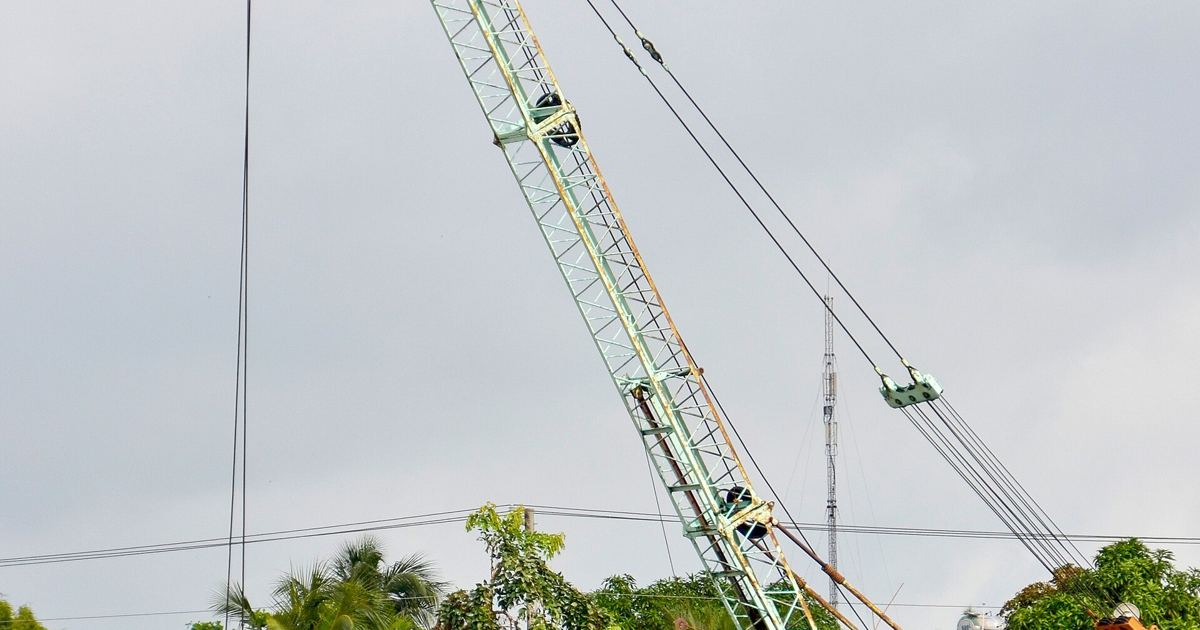
- Boom walkway threshold: For machinery manufactured after November 8, 2011 that features lattice booms, walkways are required along the boom if the vertical profile from cord centerline to cord centerline measures 6 feet or more.
- Walkway width dimensions: Every designated boom walkway must measure at least 12 inches wide.
- Guardrail parameters: Permanent guardrails along boom walkways are not mandatory. They are prohibited on booms supported by pendant ropes or bars where snagging could occur. Removable guardrails designed to be assembled and disassembled each time the boom is moved are prohibited. Where permitted, railings may reach any height up to, but no more than, 45 inches.
- Equipment maintenance: Employers must maintain original steps, handholds, ladders, grabrails, and railings in good working condition. Standard guardrail provisions under § 1926.502(b) do not apply to this equipment.
- Operator access standards: Equipment built after November 8, 2011 must provide safe access between the ground and operator stations (including forward and rear positions). Access components must satisfy SAE J185 (May 2003) or ISO 11660-2:1994(E), except where infeasible.
- Slip resistance: Stepping and walking surfaces, excluding crawler treads, must feature slip-resistant surfaces such as diamond plate metal, expanded metal, slip-resistant paint, or strategically placed grip tape.
Checklist for Non-Assembly vs. Assembly Fall Protection Triggers
The standard distinguishes between routine lifting activities and assembly or disassembly work, applying separate trigger heights for fall protection equipment:
- Non-assembly walking surfaces: Fall protection equipment is mandatory for employees on walking or working surfaces with unprotected sides or edges more than 6 feet above a lower level.
- Point-to-point travel: Fall protection must be used when moving point-to-point on non-lattice booms (horizontal or non-horizontal), on non-horizontal lattice booms, and on horizontal lattice booms where the fall distance is 15 feet or more.
- Work stations during operation: Workers stationed on any part of the equipment, including the boom, must use fall protection. Exceptions apply when personnel remain inside the cab, on the deck, or at or near draw-works while equipment runs.
- Assembly and disassembly operations: For assembly and disassembly tasks, employers must provide fall protection when workers are on surfaces with unprotected edges more than 15 feet above a lower level. As with routine work, personnel in the cab, on the deck, or near operating draw-works are exempt.
Checklist for Personal Fall Arrest and Restraint Systems
When employees must tie off on cranes or derricks, systems must adhere to strict component guidelines established in eCFR Section 1926.1423:
- Component standards: Personal fall arrest system hardware must conform to § 1926.502(d), though § 1926.502(d)(15) does not govern individual components.
- Approved harness gear: Workers may utilize either body belts or body harnesses within personal fall arrest or fall restraint configurations.
- Fall restraint capacity: Anchorages for restraint systems must withstand twice the maximum load an employee could impose under reasonably anticipated conditions of use.
Anchorage Verification and Load Line Tie-Off Criteria
Finding a compliant anchor point on heavy machinery requires visual evaluation by a competent person or specific engineering confirmation:
- Substantial equipment parts: Personal fall arrest systems can connect to any apparently substantial part of the machine unless a competent person concludes from a visual check, without engineering calculations, that § 1926.502(d)(15) criteria would not be met.
- Positioning anchorages: Positioning devices may anchor to substantial machine components unless visual inspection by a competent person reveals that § 1926.502(e)(2) requirements cannot be satisfied.
- Portable anchor devices: Attachable anchor devices secured to equipment must meet § 1926.502(d)(15) for arrest systems and § 1926.502(e)(2) for positioning gear. See our OSHA 1926.502 Guide: Guardrails, Safety Nets, and Fall Arrest for details on primary anchorage criteria.
- Load line tie-off protocol: Tying off to the crane hook or load line is permitted only when a qualified person confirms that the crane setup and rated capacity (including hook, line, and rigging) meets § 1926.502(d)(15), the operator is on site and informed, and no load is suspended from the line.
Dedicated Rules for Tower Cranes
Tower cranes maintain specific provisions within Section 1926.1423 that differ from mobile crawler or derrick setups:
- Access and egress: Tower cranes built after November 8, 2011 must provide safe access between the ground and the cab, machinery platforms, and mast. Devices such as ladders, steps, and handholds must meet ISO 11660-1:2008(E) and ISO 11660-3:2008(E), or SAE J185 (May 2003) where feasible, with slip-resistant surfaces.
- Routine operations: For work other than erecting, climbing, and dismantling, fall protection is required at heights greater than 6 feet above a lower level, except on decks, in cabs, or near running draw-works.
- Erecting, climbing, and dismantling: During erecting, climbing, or dismantling work, the fall protection threshold is set at heights exceeding 15 feet above a lower level. Consult our Fall Protection Pre-Job Guide: What Subcontractors Must Ask the GC to coordinate fall safety roles prior to job mobilization.
Crew Fall Hazard Training Checklist
Employers must instruct all personnel exposed to fall hazards while working on or hoisted by covered equipment before work begins:
- Subpart crane requirements: Instruct workers on all fall protection rules specified in this equipment subpart.
- General fall standards: Ensure training covers the applicable fall hazard mandates found in § 1926.500 and § 1926.502.
Sources
Regulatory citations and criteria detailed above are sourced from the federal standard published at eCFR Section 1926.1423.
Published October 29, 2026. No affiliate links on this page. Facts come from the sources linked above; check them for updates.