Crane Standard Definitions: Estimator Bid-Day Checklist
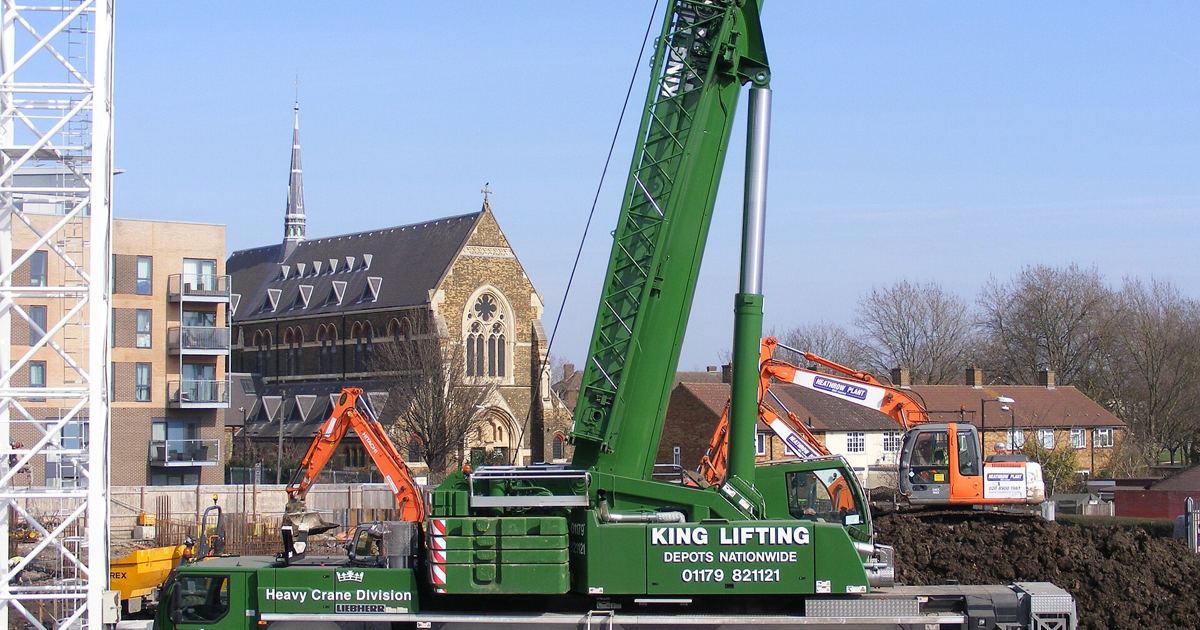
Estimating crane time, hoisting subcontracts, and interior material distribution requires a precise understanding of federal safety terminology. When general contractors issue lift plans, bidding trade contractors often sign off on responsibilities without checking how federal rules classify site personnel, machine configurations, and rigging equipment. Under 29 CFR 1926.1401, the Occupational Safety and Health Administration sets specific definitions for crane operations. Use this bid-day checklist to verify scopes, allocate labor, and price lift requirements accurately alongside your bid day checklist.
Checklist Item 1: Identify Key Site Personnel and Authority
Bid proposals must account for designated personnel required during crane operations. Federal regulations define these positions strictly by function and capability rather than employer payroll titles:
- A/D Director (Assembly/Disassembly Director): An individual who meets the regulatory requirements to direct assembly or disassembly operations. This designation applies regardless of whether the individual holds a management or non-management position, or what their formal job title states.
- Competent Person: An individual who can identify existing and predictable hazards in working conditions or surroundings that are unsanitary, hazardous, or dangerous to employees, and who possesses explicit authorization to initiate prompt corrective measures to eliminate those conditions.
- Controlling Entity: The employer holding overall responsibility for project planning, quality, and completion, such as a prime contractor, construction manager, or general contractor. Estimators should confirm which entity provides site supervision before pricing general conditions.
- Dedicated Spotter (Power Lines): A worker whose sole duty is watching the clearance between energized lines and the crane, load line, load, rigging, and lifting accessories. To qualify as a dedicated spotter, the individual must satisfy the signal person qualification requirements established in § 1926.1428 to prevent encroachment.
Checklist Item 2: Account for Hoisted Loads and Rigging Deadweight
When calculating required crane capacity on bid day, estimators cannot look solely at the delivered material weight of drywall, framing bundles, or mechanical equipment. Under 29 CFR 1926.1401 definitions, the term “load” refers to the object or objects being hoisted, their weight, and all load-attaching gear. This gear includes the load block, slings, ropes, shackles, and any ancillary attachments. Every pound of rigging hardware reduces the crane's remaining net capacity.
Estimators should also confirm how site crews handle support materials. The standard defines “blocking” (also termed “cribbing”) as wood or alternative material used to support components or equipment and distribute weight to the ground. This material is commonly required under outrigger and stabilizer floats or beneath lattice boom sections during assembly and disassembly.
Checklist Item 3: Define Hazard Areas and Fall Zones
A compliant lift plan restricts access around the pick area. Your bid must reflect labor pacing and barricade controls based on clear boundary definitions:
- Fall Zone: The entire area where partially or completely suspended materials could reasonably fall during an accident. This area includes, but is not limited to, the space directly beneath the suspended load.
- Directly Under the Load: Any physical condition where a part of an employee, or the entire worker, is positioned beneath the load.
- Encroachment: Any event where the equipment, load line, load, or rigging hardware breaches the minimum clearance distance required from an energized line.
- Dedicated Channel: A protected line of communication established by the employer controlling the system, designated strictly to one signal person and crane or a coordinated crane group.
Checklist Item 4: Verify Multi-Purpose Machines and Crane Types
Subcontractors frequently bring versatile equipment to the site for interior stock-up. Estimators must check whether a machine triggers crane standard compliance based on its working attachment. A “multi-purpose machine” is designed to operate in various configurations, including hoisting through a winch or hook while moving suspended loads horizontally. When configured with removable forks or tongs for forklift work, the machine is not covered by the subpart. However, when fitted with a winch pack, a jib with an end hook, or a jib working alongside a winch, it falls directly under the crane standard.
Additionally, estimators should distinguish between mobile cranes, crawler cranes running on sprocket-driven track belts, and articulating cranes that use pin-connected, folding structural boom sections operated by hydraulic cylinders. Tower cranes introduce separate terminology where “erecting and climbing” replaces assembly, and “dismantling” replaces disassembly.
Checklist Item 5: Review Required Limiting Devices and Operational Aids
Before submitting crane rental allowances, review equipment specifications for required operational aids and limiters described in § 1926.1416:
- Load Moment (Rated Capacity) Indicator: A system that senses overturning moment (calculated as load multiplied by radius) and compares operating conditions against rated capacity, notifying the operator through visual percentages, bells, buzzers, or lights.
- Load Moment Limiter: An automated device that cuts power to equipment functions that increase loading severity (such as telescoping out, hoisting, or luffing out) when rated capacity is reached, while keeping load-decreasing functions operational.
- Boom Hoist Limiting Device: Automatic shut-offs, kick-outs, or disconnects that disengage power at a predetermined boom angle, setting brakes or closing valves to stop downward boom movement.
- Controlled Load Lowering: Lowering loads using hoist drive motors rather than load hoist brakes, ensuring maximum control through hydraulic or gear train components.
Sources
Definitions and regulatory text cited in this guide originate from the following federal standard:
Published October 30, 2026. No affiliate links on this page. Facts come from the sources linked above; check them for updates.