Working Near Exposed Energized Parts: Estimator and Field Mistakes Under 29 CFR 1926.960
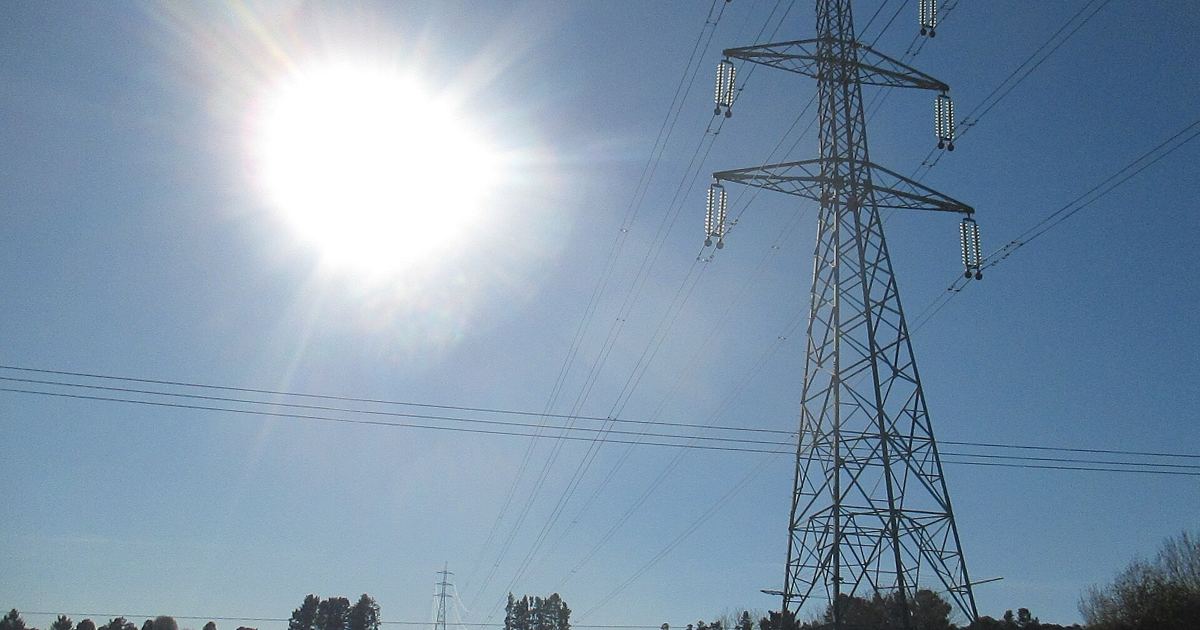
On jobsites involving power distribution or work near power infrastructure, assuming an exposed line is dead or underestimating clearance requirements creates serious safety and financial risks. Federal safety rules under 29 CFR 1926.960 set explicit operational mandates for working on or near exposed live parts. Whether planning field activities, pricing utility work alongside trade bids, or evaluating crew configurations through our electrical power-line installer labor guide, avoiding these standard compliance missteps is essential.
Mistake 1: Permitting Non-Qualified Workers Near Unguarded Parts Operating at 50 Volts or More
One frequent misconception is that general trade workers may work within areas containing uninsulated live lines as long as they stay clear of physical contact. Under 29 CFR 1926.960, only qualified employees are permitted to work on or with exposed energized lines or equipment parts. Furthermore, only qualified employees may work in areas containing unguarded, uninsulated energized lines or equipment parts operating at 50 volts or more. Estimators and general contractors must also treat all electric lines and equipment as energized unless they have been explicitly deenergized under § 1926.961. Noninsulated, covered conductors must also be treated as exposed live parts under this standard.
Mistake 2: Missing the Mandatory Two-Employee Crew Rule for Systems Over 600 Volts
Bidding single-worker task execution on high-voltage infrastructure violates federal crew requirements. The standard mandates that at least two employees must be present when workers perform specific operations:
- Installation, removal, or repair of lines energized at more than 600 volts.
- Installation, removal, or repair of deenergized lines if a worker is exposed to contact with other parts energized at more than 600 volts.
- Installation, removal, or repair of equipment, such as transformers, capacitors, and regulators, if an employee is exposed to contact with parts energized at more than 600 volts.
- Work involving the use of mechanical equipment, other than insulated aerial lifts, near parts energized at more than 600 volts.
- Other work exposing an employee to electrical hazards equal to or greater than those operations.
Exceptions to this two-employee requirement apply only during routine circuit switching when conditions permit safe execution, work using live-line tools where the worker is neither within reach of nor exposed to contact with energized parts, or emergency repairs necessary to safeguard the general public. Failing to staff two qualified workers on these tasks leads to immediate jobsite shutdowns and revised labor costs.
Mistake 3: Misapplying Minimum Approach Distances and Insulation Requirements
Employers must calculate and enforce minimum approach distances no less than those computed by Table V-2 for alternating current (ac) systems or Table V-7 for direct current (dc) systems. For voltages exceeding 72.5 kilovolts, employers determine the maximum anticipated per-unit transient overvoltage phase-to-ground via engineering analysis or by assuming values under Table V-8. When using portable protective gaps, the value must provide for five standard deviations between statistical sparkover voltage and statistical withstand voltage.
No worker may bring any conductive object closer than the established minimum approach distance unless:
- The employee is insulated from the energized part using rubber insulating gloves or rubber insulating gloves and sleeves.
- The energized part is insulated from the employee and any other conductive object at a different potential.
- The worker is insulated from other exposed conductive objects in accordance with live-line barehand work under § 1926.964(c).
Mistake 4: Wearing and Removing Insulating Gear Inside the Reach Zone
When rubber insulating gloves are required, workers must also wear rubber insulating sleeves unless non-worked exposed parts are insulated and sleeves are omitted while working from a position that does not expose the upper arm. A critical operational error occurs when workers adjust or put on protective gear too close to the line. The standard states employees must put on rubber insulating gloves and sleeves in a position where they cannot reach into the minimum approach distance, and they must not remove them until they have moved completely outside that reach zone. Crew planning should align with field protocols outlined in our power line safety briefing guide.
Mistake 5: Overlooking Arc Flash Protection and Connection Sequences
Job hazard assessments must estimate available heat energy whenever employees are exposed to electric arc hazards. If the estimated incident heat energy exceeds 2.0 cal/cm2, employers must provide flame-resistant outer clothing and arc-rated protective equipment covering the entire body. Clothing made from acetate, nylon, polyester, rayon, or polypropylene (alone or in blends) is strictly prohibited unless treated or worn to eliminate the hazard.
Hand protection does not require arc-rated gear if wearing rubber insulating gloves with protectors, or heavy-duty leather work gloves of at least 407 gm/m2 (12 oz/yd2) where incident energy does not exceed 14 cal/cm2. For head protection under § 1926.100(b)(2), arc ratings are not required if incident energy is below 9 cal/cm2 for single-phase arcs in open air or 5 cal/cm2 for other exposures. Finally, connection sequencing mistakes pose severe hazards: employees connecting lines to energized circuits must connect to the deenergized part first, whereas disconnecting requires removing the source end first.
Sources
Published October 30, 2026. No affiliate links on this page. Facts come from the sources linked above; check them for updates.