How to Bid and Schedule OSHA 29 CFR 1926.350 Cylinder Rules
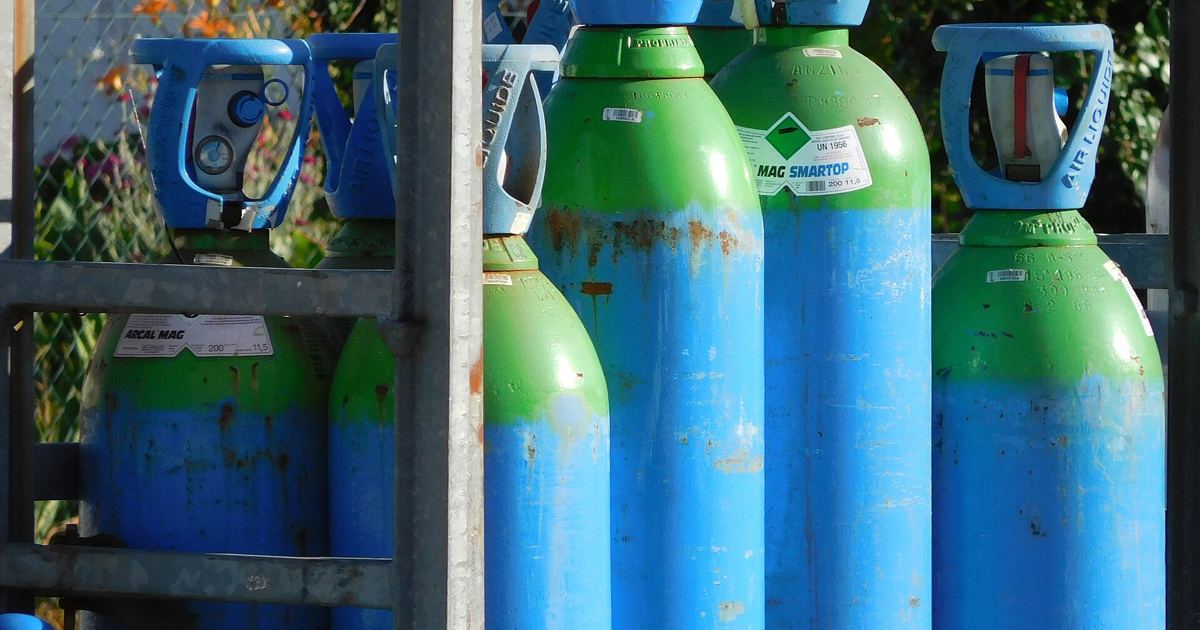
Compressed gas cylinders used for cutting and gas welding are common across commercial interior framing, mechanical installations, and general contracting sites. Under OSHA 29 CFR 1926.350, contractors must follow strict safety mandates covering cylinder placement, rigging, storage separation, hose maintenance, and leak responses. Failing to budget for the necessary gear and labor hours can quickly squeeze margins. This practical how-to guide explains the requirements of 29 CFR 1926.350 and details how estimators can build compliance into job costs and project schedules.
Plan Secure Storage and Spatial Separation
Jobsite cylinder storage cannot be treated as an afterthought. Oxygen cylinders in storage must be separated from fuel-gas cylinders or combustible materials, especially oil or grease, by a minimum distance of 20 feet (6.1 m). If that physical distance is not available on a tight site layout, the standard requires an alternative: a noncombustible barrier at least 5 feet (1.5 m) high with a fire-resistance rating of at least one-half hour.
Inside buildings, cylinders must be stored in a well-protected, well-ventilated, dry location at least 20 feet (6.1 m) away from highly combustible materials such as excelsior or oil. Cylinders must be assigned dedicated storage places away from elevators, stairs, or gangways where they will not be knocked over or damaged by falling or passing objects, or tampered with by unauthorized personnel. Storing cylinders in unventilated enclosures such as lockers and cupboards is prohibited. Furthermore, all in-plant handling, storage, and utilization must comply with Compressed Gas Association Pamphlet P-1-1965. When pricing job setup, estimators should include temporary barrier construction and designated secure cages within Estimating General Conditions: The Job Costs That Aren't in Your Takeoff.
Follow Compliant Rigging and Transport Procedures
Moving compressed gas cylinders around a multi-story or sprawling jobsite requires specific equipment. Cylinders must remain secured in an upright position at all times, with an exception allowed only for short periods while cylinders are actually being hoisted or carried. When hoisted, they must be secured on a cradle, slingboard, or pallet. Using magnets or choker slings is strictly prohibited.
Valve protection caps must be in place and secured whenever cylinders are moved or transported. These caps must never be used to lift cylinders from one vertical position to another. When cylinders are moved, workers must tilt and roll them on their bottom edges rather than dropping, striking, or letting them strike each other violently. If cylinders are frozen to the ground, bars cannot be used under valves or caps to pry them loose; warm, not boiling, water must be used to thaw them. Regulators must be removed and valve caps secured before moving, unless the cylinders are firmly secured on a special carrier intended for that purpose. On powered vehicles, cylinders must always be secured vertically, and all cylinders must satisfy Department of Transportation requirements under 49 CFR part 178, subpart C.
Inspect and Maintain Torches, Hoses, and Manifolds
Daily operational safety centers on the delivery equipment. Fuel gas and oxygen hoses must be easily distinguishable by color or surface feel, must never be interchangeable, and cannot consist of a single hose with multiple gas passages. When parallel sections of oxygen and fuel gas hose are taped together, not more than 4 inches out of 12 inches can be covered by tape.
Contractors must account for the following physical requirements and inspections:
- Every hose carrying acetylene, oxygen, or fuel gas must be inspected at the beginning of each working shift, and defective hose must be removed from service.
- Hose subjected to flashback, or showing severe wear or damage, must be tested to twice its normal operating pressure, and never less than 300 p.s.i.
- Hose couplings must require a rotary motion to disconnect so they cannot unlock from a straight pull.
- Torches must be inspected at the beginning of each working shift for leaking shutoff valves, hose couplings, and tip connections. Defective torches must not be used.
- Clogged torch tips must be cleaned exclusively with suitable cleaning wires, drills, or purpose-designed devices, and torches must be lit with friction lighters or approved devices, never matches or hot work.
- Fuel gas and oxygen manifolds require clear substance labeling in letters at least 1-inch high, accessible and ventilated placement outside enclosed spaces, capped connections when idle, and hose fittings that prevent interchanging fuel and oxygen lines.
Instruct Field Crews on Fuel Gas Valves and Leaks
Employers must thoroughly instruct workers in the correct operation of fuel gas equipment. Before attaching a regulator, the cylinder valve must be cracked by opening it slightly and closing it immediately to clear dust, with the worker standing to one side of the outlet away from sparks or flames. Cylinder valves must be opened slowly to prevent regulator damage, and fuel gas valves must not be opened more than 1 1/2 turns. If a special wrench is required to operate the valve, it must remain on the stem during use for rapid shutdown. In manifolded setups, at least one wrench must always be available for immediate use.
Cylinders, valves, couplings, regulators, and hoses must be kept entirely free from oil and grease, and workers must never handle oxygen equipment with oily hands or gloves. If a leak develops around a fuel gas valve stem, the worker must close the valve and tighten the gland nut. If the leak persists, the cylinder must be tagged and removed from the work area. Any fuel gas valve leak that cannot be shut off, or any leak at a fuse plug or safety device, requires tagging and immediate removal. However, if a regulator attached to a valve effectively stops a seat leak, the cylinder need not be removed from the work area. Finally, cylinders containing oxygen, acetylene, or fuel gas must never be taken into confined spaces.
Account for Cylinder Compliance in Bids and Schedules
Meeting these standards impacts both labor productivity and tool budgets. Estimators should incorporate steadying devices, cylinder carts, chains, noncombustible storage barriers, friction lighters, and tip drills into project line items. Hoses and cables must be kept clear of passageways, ladders, and stairs, which requires hanging brackets or floor protection that field crews must install during initial mobilization.
Project schedules must reflect routine safety routines. Closing valves when cylinders are empty, when work finishes, or whenever cylinders move requires daily crew time. Setting aside time for mandatory pre-shift inspections of torches and hoses keeps crews compliant with the standard and avoids work stoppages. Incorporating these handling tasks when reviewing your Bid Day Checklist for Drywall and Ceiling Subcontractors ensures safety costs are fully recovered. For technical details not covered directly in the subpart, American National Standards Institute Z49.1-1967 applies.
Sources
Regulatory safety mandates and technical standards referenced in this guide are drawn from:
Published October 28, 2026. No affiliate links on this page. Facts come from the sources linked above; check them for updates.