Special Conditions Under OSHA 29 CFR 1926.967: Key Requirements Breakdown
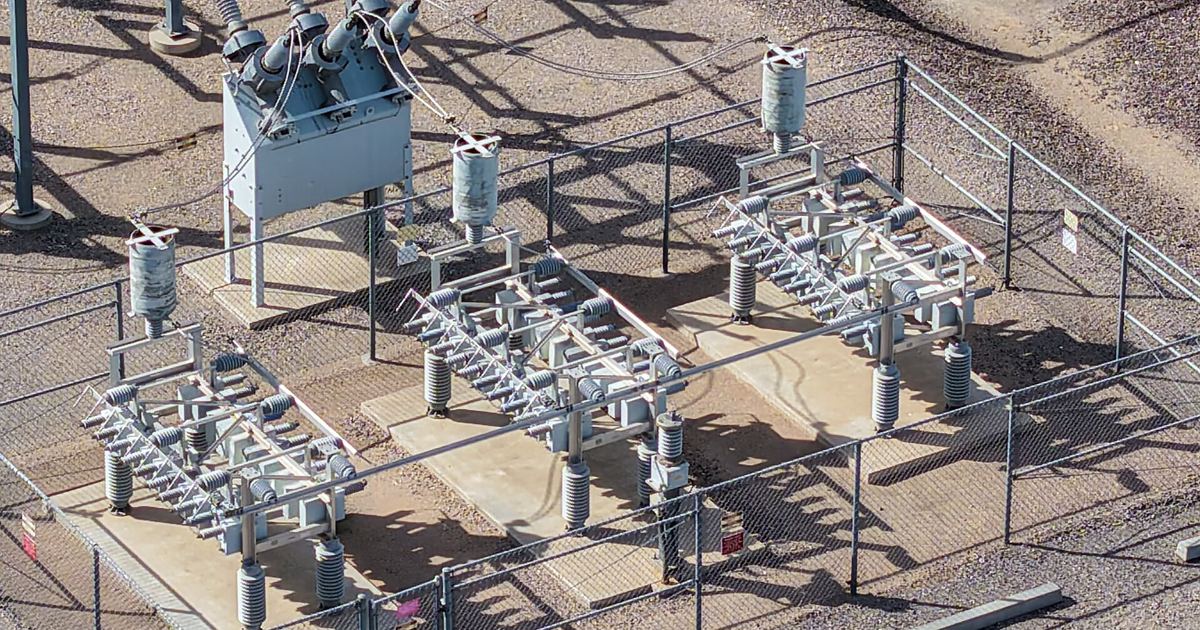
Power transmission and distribution jobsites present unique physical and electrical hazards that extend beyond standard overhead line construction. Federal safety standards establish clear procedures for complex equipment and site-specific hazards under 29 CFR 1926.967. For general contractors, electrical contractors, and site estimators managing utility scopes, understanding these special conditions is essential for planning crew tasks, sequencing work, and accounting for mandatory safety controls.
Capacitor Disconnection and the Mandatory 5-Minute Wait
Work performed on capacitors and lines connected to capacitors involves residual stored energy that requires strict procedural timing. Under 29 CFR 1926.967(a), employers must enforce specific steps before crews handle these components:
- Source Disconnection and Timing: Before employees begin work, the employer must disconnect capacitors from energized sources and short circuit them. The employee applying the short circuit must wait at least 5 minutes from the exact time of disconnection before applying that short circuit.
- Series-Parallel Banks: Prior to handling individual units, each unit in series-parallel capacitor banks must be short-circuited between all terminals and the capacitor case or rack. If capacitor cases sit on ungrounded substation racks, the employer must bond those racks to ground.
- Connected Conductors: Any line connected to capacitors must be short-circuited before crew members treat the line as deenergized.
The standard also directs employers to § 1926.961 and § 1926.962 for additional requirements regarding deenergizing and grounding capacitor installations.
Current Transformer Secondaries and Open-Circuit Prevention
Current transformers present severe high-voltage hazards if their secondary circuits are interrupted while current flows through the primary side. OSHA § 1926.967(b) mandates that employers ensure employees do not open the secondary of a current transformer while the transformer remains energized.
When crews must work on an instrument, relay, or other section of a current transformer secondary circuit and the primary cannot be deenergized first, the employer must bridge the circuit. Bridging ensures that the current transformer secondary never experiences an open-circuit condition during maintenance or testing.
Series Streetlighting Circuits Exceeding 600 Volts
Streetlighting systems wired in series require distinct operational precautions because opening a loop can create high open-circuit voltages. Under § 1926.967(c), specific rules apply based on operating levels and loop configurations:
If the open-circuit voltage of a series streetlighting circuit exceeds 600 volts, the employer must ensure that employees work on the circuit in accordance with overhead line standards under § 1926.964 or underground line standards under § 1926.965, as appropriate.
Before any crew member opens a series loop, the employer must either deenergize the streetlighting transformer and isolate it from the supply source or bridge the loop to prevent an open-circuit condition.
Illumination Levels and Drowning Protection Near Water
Site conditions frequently involve low-light environments and crossings near bodies of water. Under § 1926.967(d), employers must provide sufficient illumination to enable employees to perform their work safely, cross-referencing specific illumination level requirements in § 1926.56.
When power line operations occur near water where the danger of drowning exists—such as when an employee could be pulled, pushed, or fall into water—§ 1926.967(e) establishes three specific safeguards:
- Personal Flotation Devices: Employers must provide, and ensure employees use, personal flotation devices that satisfy § 1926.106.
- Equipment Inspection: Employers must maintain personal flotation devices in safe condition and inspect them frequently enough to verify they have no rot, mildew, water saturation, or other conditions making them unsuitable for use.
- Water Crossings: Employees may cross streams or other bodies of water only when a safe means of passage, such as a bridge, is available.
Public Work Areas, Traffic Control, and Excavation Safety
When power line projects interact with public rights-of-way, vehicular flow, or trenching, § 1926.967 establishes operational barricading and alerting mandates. All excavation operations conducted under this section must comply with subpart P.
For operations in public work areas, traffic-control signs and devices must meet § 1926.200(g)(2). Before starting work in the vicinity of vehicular or pedestrian traffic that could endanger workers, employers must position warning signs, flags, or other traffic-control devices in conspicuous locations to alert and channel oncoming traffic. Barricades must protect excavated areas and provide additional employee protection wherever necessary. At night, employers must display warning lights prominently.
Backfeed, Lasers, Hydraulic Fluids, and Communication Systems
Section 1926.967 addresses several technical conditions common to modern utility installations:
- Voltage Backfeed: Where voltage backfeed is possible from cogeneration sources or secondary systems (such as multiple energized phases feeding a common load), § 1926.960 applies if crews work lines or equipment as energized. If working them as deenergized, § 1926.961 and § 1926.962 apply.
- Lasers and Hydraulics: Laser equipment must be installed, adjusted, and operated in accordance with § 1926.54. Hydraulic fluids used in insulated equipment sections must provide insulation for the voltage involved.
- Microwave Transmission: Employees must never look directly into an open waveguide or antenna connected to an energized microwave source. Where electromagnetic radiation levels exceed the radiation-protection guide in § 1910.97(a)(2), warning signs with the warning symbol described in § 1910.97(a)(3) must be posted. The sign's lower half must state: “Radiation in this area may exceed hazard limitations and special precautions are required. Obtain specific instruction before entering.” Employers must implement controls, including administrative measures, engineering controls, or personal protective equipment, to keep exposure within permitted limits.
- Power-Line Carrier: All power-line carrier work, including coupling carrier current to line conductors, must follow subpart requirements for energized lines.
Sources
eCFR: 29 CFR 1926.967 Special Conditions
OSHA: Electrical Overview
Published October 31, 2026. No affiliate links on this page. Facts come from the sources linked above; check them for updates.