Overhead Lines vs. Live-Line Barehand Work: OSHA 1926.964 Guide
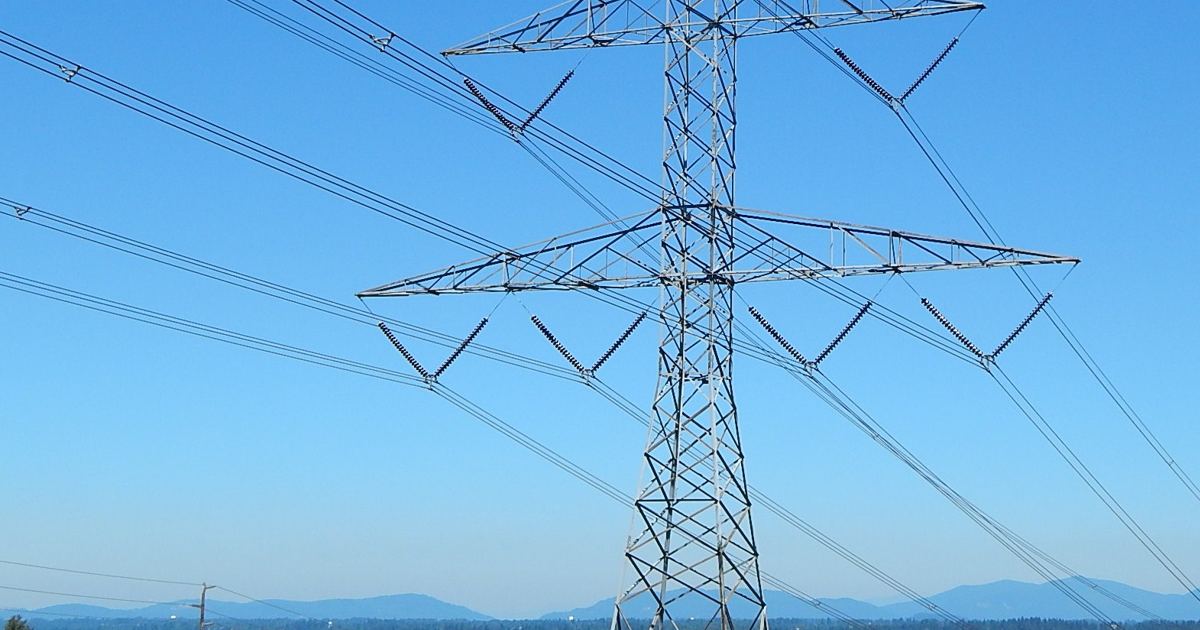
Utility construction estimators and specialty contractors planning high-voltage projects face distinct operational methods under federal safety rules. Under 29 CFR 1926.964, the Occupational Safety and Health Administration separates general overhead line activities—such as pole placement, line tensioning, and tower assembly—from the intensive procedures governing live-line barehand work. Comparing these approaches helps estimators identify true labor pacing, rigging limits, and mandatory equipment requirements before final submission on bid day.
Structural Evaluations: Setting Poles vs. Tower Assembly
General overhead work demands rigorous verification of physical support structures before crews introduce extra loads. Under 29 CFR 1926.964, employers must check that elevated structures such as poles or towers can sustain additional or unbalanced stresses before allowing employees to climb them or install equipment. If a structure cannot support expected loads, contractors must brace or support it to prevent structural failure.
When comparing pole placement to tower erection, the operational controls diverge:
- Pole Handling: When setting, moving, or removing a pole near exposed energized overhead conductors, the pole may not contact the conductor. Handling crews must wear electrical protective equipment or use insulated devices, and no worker may touch the pole with uninsulated body parts. Ground holes must be physically guarded or attended whenever anyone works nearby.
- Tower Operations: Employees are prohibited from working directly beneath towers or structures while work proceeds, unless assisting overhead crews. Raising and positioning tower sections requires the use of tag lines (unless demonstrating a greater hazard), and load lines cannot be detached until members are safely secured.
Stringing and Line Installation vs. Potential Induced Voltages
Installing conductors parallels complex mechanical tasks that require tight crew coordination. When new lines can contact energized parts, the employer must use tension-stringing methods, physical barriers, or equivalent controls. Pulling rigs, reel handlers, and tensioning gear must be maintained in safe operating condition, leveled, and aligned. In addition, two-way radios or equivalent reliable communications must connect the reel tender and pulling-rig operator at all times.
A major difference between standard pulling and parallel-run installations is the handling of induced voltage. Before lines are installed parallel to existing energized lines, the contractor must determine the approximate induced voltage or treat the line as hazardous. If protective precautions against involuntary shock reactions are omitted, a hazard exists if induced voltage passes 1 milliampere through a 500-ohm resistor. If involuntary reaction protections exist, the threshold becomes more than 6 milliamperes. Unless contractors prove induction is non-hazardous or treat lines as energized, temporary protective grounds must be arranged to prevent employee exposure to hazardous electric potential differences.
Reclosing Device Controls Across Both Methods
Whether stringing overhead spans or executing energized barehand techniques, automated system operations pose severe risks. However, the application criteria differ slightly between the two operations:
- Line Installation: When conductors being installed or removed cross over energized lines in excess of 600 volts, the automatic-reclosing feature of the protecting circuit-interrupting devices must be rendered inoperable, provided the device design permits.
- Live-Line Barehand Work: For barehand tasks on energized circuits, the employer must disable the automatic-reclosing feature of the protecting circuit-interrupting devices whenever device design permits, regardless of specific crossover voltage thresholds.
Live-Line Barehand Work: Daily Testing and Aerial Lift Controls
Unlike standard overhead tasks where workers isolate themselves from conductors, live-line barehand work places the technician at conductor potential. This technique requires specialized aerial lifts equipped with dual upper and lower controls. Upper controls must be easily reachable from the bucket (both buckets on two-bucket lifts), while lower ground-level controls near the base must override operation at any time but cannot operate while personnel are aloft except during an emergency.
Rigorous pre-work testing governs barehand lifts. Before elevating the boom, the truck body must be grounded or barricaded and treated as energized. Crews must check all controls before entering work positions. Furthermore, workers must perform a boom-current test at the start of each day, when encountering higher voltages, and whenever changed conditions warrant. This test requires contacting an energized source equal to the target voltage for a minimum of 3 minutes; leakage current cannot exceed 1 microampere per kilovolt of nominal phase-to-ground voltage. Any indication of malfunction requires an immediate suspension of work.
Clearance Distances, Weather Limits, and Rigging Restrictions
Maintaining minimum approach distances is central to live-line barehand procedures. A nonconductive measuring device must be readily accessible to assist workers in maintaining required clearances from grounded objects and lines at different electrical potentials. Crews approach, bond to, and leave energized circuits while maintaining set approach distances from grounded boom sections and truck components.
The rules also impose explicit boundaries on auxiliary equipment and atmospheric conditions:
- Bonding and Liners: Employees must use conductive bucket liners bonded to the line via a positive connection before contact occurs, supported by conductive footwear or leg clips. Electrostatic shielding must be provided where potential differences create hazards.
- Handlines and Transfer: Handlines cannot run between the bucket and the boom or ground, though nonconductive lines from conductor to ground are allowed if not bucket-supported. Passing uninsulated tools or materials between structures and the bucket while bonded to energized parts is strictly banned. Conductor grips cannot be used on wire rope unless specifically designed by the manufacturer.
- Weather Prohibitions: Live-line barehand tasks must halt under adverse weather conditions, including thunderstorms in the vicinity, high winds, snow storms, and ice storms, or when winds reduce phase-to-phase or phase-to-ground clearances below established minimum approach distances.
For related cost considerations regarding equipment operators, review our guide to pricing equipment operator labor or explore overall field staffing allocations in our labor burden calculation guide.
Sources
- Electronic Code of Federal Regulations: 29 CFR 1926.964 - Overhead lines and live-line barehand work
Published October 30, 2026. No affiliate links on this page. Facts come from the sources linked above; check them for updates.