Plastics Construction Products PPI: Estimator Checklist for Bids
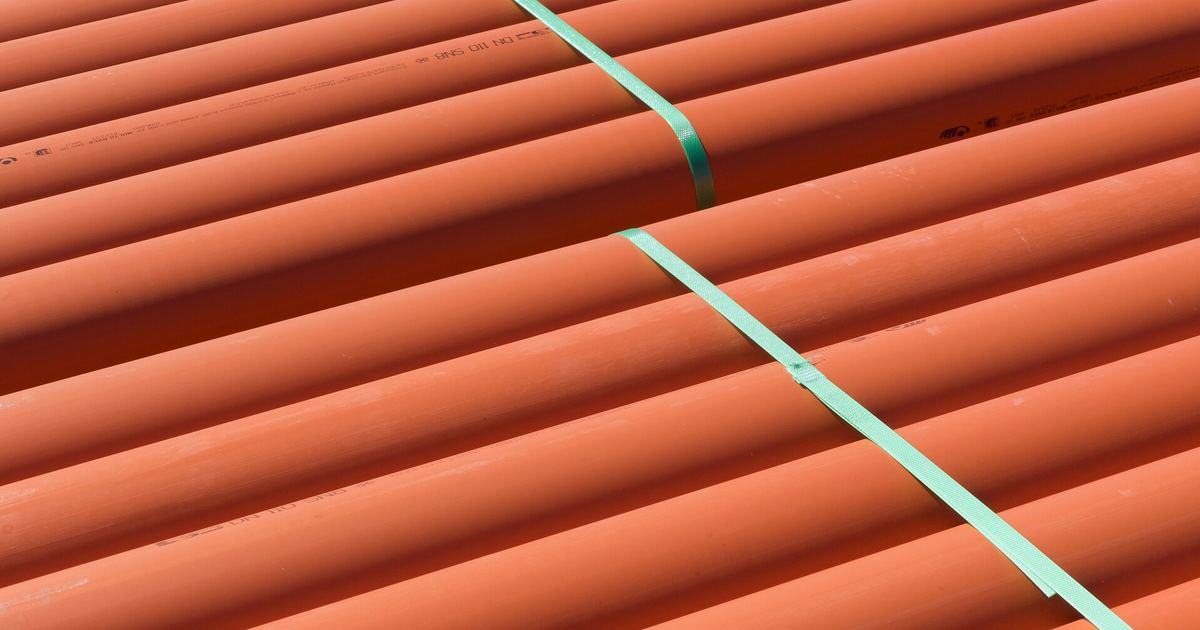
Estimating commercial interior packages, siding, piping, or specialty plastic profiles requires a firm grasp of material inflation. Federal producer price data reveals how polymer-based building supplies have behaved over recent years and provides a statistical foundation for protecting profit margins.
Step 1: Check Current BLS Plastics Index Levels
The primary benchmark for evaluating these materials is commodity series WPU072106, tracked by the U.S. Bureau of Labor Statistics under the title Rubber and plastic products-Plastics construction products. These figures are not seasonally adjusted, and recent monthly releases are preliminary and subject to revision for four months.
As of late October 2026, the latest published figure stands at 355.1 for September 2026 (raw value 355.051). This marks a minor month-over-month decrease of -0.1% from the August 2026 level of 355.3. Tracking these monthly shifts helps estimators avoid carrying stale supplier figures on bid day.
Step 2: Review Long-Term and Multi-Year Shifts
Plastics construction products experienced substantial run-ups earlier in the decade before leveling out. While current prices sit below their all-time high in the recent window, they remain sharply elevated compared to pre-pandemic periods. Consider the following multi-year movements when establishing base budgets:
- One-year change: From September 2025 at 339.4 (raw 339.420) to September 2026, the index increased +4.6%.
- Two-year change: Compared to September 2024 at 343.1 (raw 343.118), the index is up +3.5%.
- Five-year change: Measuring from September 2021 at 306.0 (raw 305.951), the index rose +16.0%.
- Pre-pandemic comparison: Since January 2020 at 229.3 (raw 229.300), the index has surged +54.8%.
- High-water mark: The series peaked at 362.2 (raw 362.153) in August 2022. The latest September 2026 level sits -2.0% below that record.
- Low-water mark: The lowest monthly reading in the recorded window was 213.0 (raw 213.000) in January 2017.
Step 3: Analyze Key PPI Benchmark Data
A structured review of historical data helps subcontractors calibrate where current project quotes stand relative to market cycles. The table below outlines pivotal index checkpoints over the 2017 to 2026 window.
| Timeline Milestone | Index Value | Change to Latest (Sept 2026) |
|---|---|---|
| September 2026 (Latest) | 355.1 | 0.0% |
| September 2025 (1 Year Prior) | 339.4 | +4.6% |
| September 2024 (2 Years Prior) | 343.1 | +3.5% |
| September 2021 (5 Years Prior) | 306.0 | +16.0% |
| January 2020 (Pre-Pandemic) | 229.3 | +54.8% |
| August 2022 (Window High) | 362.2 | -2.0% |
| January 2017 (Window Low) | 213.0 | N/A |
Step 4: Audit Historical Annual Trajectories
Looking at annual averages highlights how quickly plastics costs transformed. The annual average was 217.3 in 2017, followed by 226.1 in 2018, 229.4 in 2019, and 233.5 in 2020. The index then surged to 285.5 in 2021 and jumped again to 351.9 in 2022.
Subsequent years showed mild cooling, with annual averages of 346.5 in 2023, 343.0 in 2024, and 338.9 in 2025. For 2026, the average across January through September reached 348.7. Over the trailing 13 months, index readings were 339.4 in September 2025, 337.7 in October and November 2025, and 338.3 in December 2025. In 2026, values climbed from 340.7 in January and 340.1 in February to 341.5 in March, 343.5 in April, 351.6 in May, 354.7 in June, peaking mid-year at 355.9 in July, before easing to 355.3 in August and 355.1 in September.
Step 5: Apply Price Protections to Your Proposal
Because plastics construction inputs climbed +4.6% in the past year alone, holding long quote-validity periods on extensive siding, polymer trim, or piping bids creates exposure. Estimators should structure bids with defined timelines on vendor pricing. To insulate your numbers against unforeseen commodity spikes, incorporate appropriate price escalation clauses tied to documented benchmarks like federal price indices.
Additionally, review your general conditions and proposal terms before submission. Ensuring that quote duration limits and supplier escalation triggers are clearly stated in your bid exclusions and clarifications prevents your business from absorbing unexpected manufacturing cost shifts between bid award and installation.
Sources
Published October 31, 2026. No affiliate links on this page. Facts come from the sources linked above; check them for updates.