Pricing Solar Photovoltaic Installer Labor: BLS Wage & Outlook Breakdown
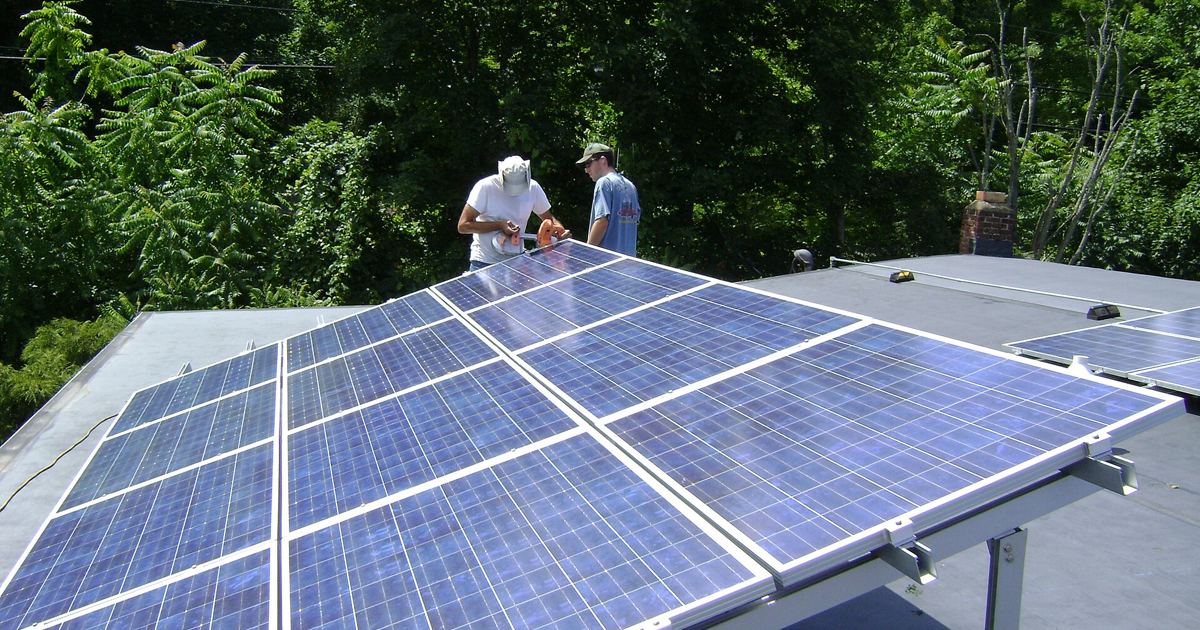
Estimating renewable energy scopes requires commercial subcontractors and general contractors to understand trade-specific labor rates, crew capabilities, and market availability. When pricing the assembly and setup of solar arrays, estimators must look closely at federal occupational metrics to establish baseline wage figures and forecast workforce availability across multi-year project schedules.
Baseline Wage Requirements: Parsing Hourly and Annual Median Pay
Establishing an accurate labor rate starts with reliable wage benchmarks. According to the U.S. Bureau of Labor Statistics Solar Photovoltaic Installers Occupational Outlook Handbook, the median hourly wage for solar photovoltaic (PV) installers was $25.55 in May 2025. On an annualized basis, the median wage was $53,140.
For an estimator, median pay provides an essential baseline before applying company overhead, taxes, and fringe benefits. A bare hourly rate of $25.55 does not reflect the total cost to employ a worker on site. Contractors must incorporate mandatory payroll taxes, workers' compensation, insurance, and benefits into their calculations. Reviewing Labor Burden: How to Calculate Your True Hourly Labor Cost can help bidders convert bare wages into an all-inclusive billing rate that protects cash flow.
Onboarding and Training Requirements: Time to Full Productivity
Crew productivity directly impacts jobsite labor hours, and installer productivity is heavily influenced by onboarding time. Federal occupational data reveals specific benchmarks for entry into the trade:
- Typical Entry-Level Education: High school diploma or equivalent.
- Work Experience in a Related Occupation: None.
- Formal Postsecondary Training: While not strictly required, some workers complete courses at a technical school or community college.
- On-the-Job Training: Moderate-term on-the-job training typically lasting up to 1 year.
Because installers typically require on-the-job training lasting up to 1 year before reaching full proficiency, estimators should pay close attention to crew composition. Bidding a crew heavy with new trainees may require carrying lower output rates per day. Conversely, utilizing experienced installers who have completed their initial year of field training allows estimators to bid more aggressive production schedules.
Work Environment Requirements: Pricing Confined Spaces and Travel
Solar photovoltaic installers assemble, set up, and maintain systems that convert sunlight into energy. While rooftop work is standard, the physical scope of work introduces unique site conditions that estimators must account for in their proposals.
Federal data highlights that while most solar panel installations are performed outdoors, PV installers must also work in attics and crawl spaces to connect solar panels to the electrical grid. Working in tight attics or crawl spaces slows production rates compared to open-air rooftop racking. When preparing an estimate, review architectural and electrical plans to identify crawl space wire runs or attic junction boxes, adjusting productivity factors accordingly.
In addition, federal job details note that installers must travel to jobsites. Depending on the spread of regional contracts, estimators should verify whether travel time, mileage, or vehicle maintenance must be accounted for within project overhead. Check Estimating General Conditions: The Job Costs That Aren't in Your Takeoff to ensure travel logistics are properly captured.
Workforce Supply Requirements: Factoring in 37% Projected Growth
Long-term project bidding requires an understanding of labor supply and trade demand. According to the U.S. Bureau of Labor Statistics, there were 31,100 solar photovoltaic installer jobs in 2025. Over the 2025–35 projection decade, employment is projected to grow by 37 percent, an expansion rate described as much faster than the average for all occupations.
This 37 percent growth represents an employment increase of 11,300 jobs between 2025 and 2035. On an annual basis, the Bureau projects about 4,200 job openings for solar photovoltaic installers each year over the decade. Many of these openings will stem from the need to replace workers who retire or transfer to different occupations rather than net new positions.
For estimators and subcontractors, this rapid expansion signals tight local labor markets. With 4,200 annual openings competing for entry-level personnel, contractors bidding future phases must anticipate upward wage pressure. Bidding future work without tracking trade availability risks winning jobs that cannot be staffed at baseline labor rates.
Estimator Summary Checklist for Solar Installer Labor
When compiling bid packages that include solar array installation, ensure your estimate reflects these core operational realities:
- Benchmark base wages against the May 2025 national median of $25.55 per hour ($53,140 annually) before calculating labor burden.
- Account for onboarding curves, recognizing that workers typically require moderate-term training lasting up to 1 year.
- Differentiate productivity between open outdoor rooftop racking and confined work in attics or crawl spaces required for electrical grid connections.
- Incorporate site-to-site travel costs into general conditions or labor rates.
- Plan for local recruiting competition driven by 37 percent ten-year projected job growth and 4,200 annual job openings nationwide.
Sources
U.S. Bureau of Labor Statistics: Solar Photovoltaic Installers Occupational Outlook Handbook
Published October 28, 2026. No affiliate links on this page. Facts come from the sources linked above; check them for updates.