Railroad Roadway Maintenance Machines: 29 CFR 1926.1442 Rules
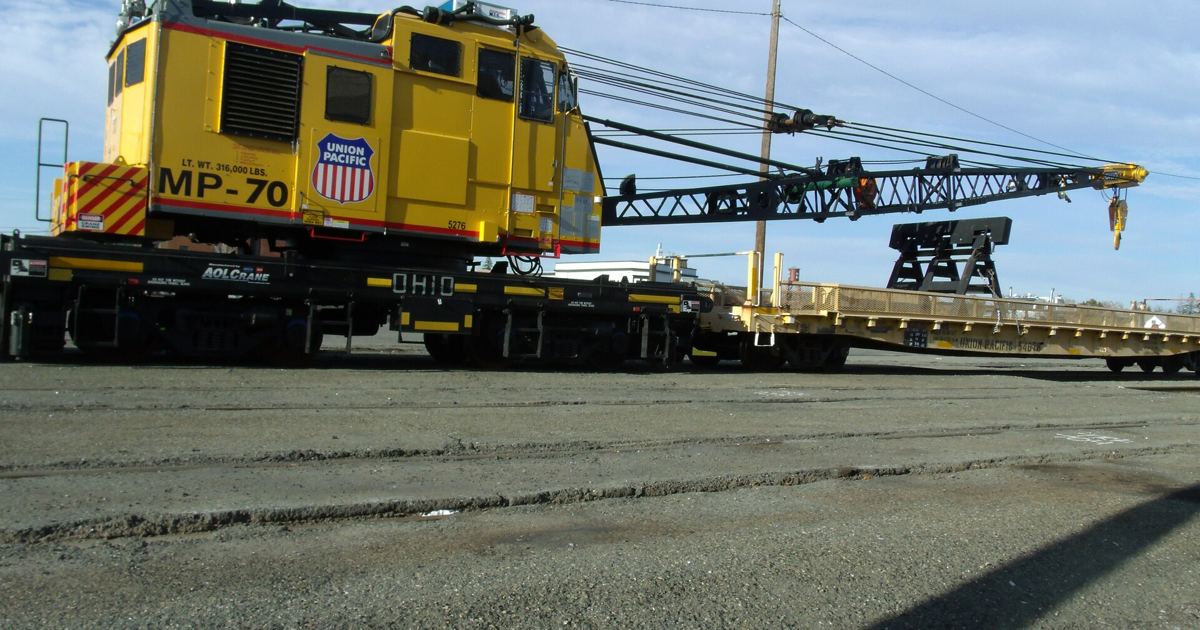
Construction work performed around track beds and rail corridors presents distinct jurisdictional and operational questions for contractors. While general construction rigging and lifting fall under standard federal crane provisions, equipment classified as a roadway maintenance machine faces a distinct set of regulatory boundaries. Understanding how 29 CFR 1926.1442 modifies standard crane rules helps estimators and project managers identify which requirements apply and which are formally excluded on rail-related construction projects.
Baseline Scope: General Subpart CC vs. Roadway Maintenance Machines
Under standard construction operations, lifting machinery must meet every baseline provision of 29 CFR part 1926 subpart CC. However, under 29 CFR 1926.1442(a), equipment that satisfies the definition of a roadway maintenance machine found in 49 CFR 214.7 follows a modified framework. When employers operate this machinery subject to the authority of the Federal Railroad Administration, they must still comply with subpart CC generally, but seven specific statutory exception categories remove standard crane obligations.
If an employer is not subject to Federal Railroad Administration authority, these seven carve-outs do not apply, and standard construction crane requirements remain in full effect across the board.
Operator Qualifications and Training Requirements Compared
On typical construction sites, crane operators and designated personnel must satisfy rigorous training, evaluation, and qualification benchmarks. Section 1926.1442(b)(1) establishes major divergences between standard construction lifting equipment and roadway maintenance machines:
- General Construction Cranes: Operators must comply with comprehensive testing, evaluation, and certification mandated by OSHA 1926.1427: Crane Operator Certification Bidding Guide, along with general training rules under § 1926.1430. Specialized rigs also require distinct operator qualification steps.
- Roadway Maintenance Machines: The standard certification and evaluation mandates of § 1926.1427 and training rules of § 1926.1430 do not apply. Furthermore, employers are exempt from the training and qualification requirements established for derricks under § 1926.1436(q), sideboom cranes under § 1926.1440(a), and lifting equipment with a rated capacity of 2,000 pounds or less under § 1926.1441(a).
Track Restraints, Rail Stops, and Work-Area Controls
Standard lifting operations require physical safeguards and strict swing perimeter restrictions to prevent collisions and tip-overs. When comparing standard crane safety protocols to track machines under § 1926.1442(b)(2), several physical controls are waived for roadway maintenance machines:
In conventional lifting, equipment mounted on rails may need rail clamps and rail stops outlined in § 1926.1415(a)(6). Additionally, employers must enforce work-area controls under § 1926.1424(a)(2) to protect personnel from pinch points and rotating superstructures, as explored in our guide to OSHA Crane Swing Radius Control: Bidding § 1926.1424. For qualifying roadway maintenance machines subject to Federal Railroad Administration authority, neither rail clamps nor rail stops under § 1926.1415(a)(6) are required, and the work-area controls specified by § 1926.1424(a)(2) do not apply.
Level Indicator Mandates and Sideways Load Handling
Operating surfaces and side pulls represent two additional areas where roadway maintenance machines operate under separate standards from common construction cranes:
- Out-of-Level Ground Conditions: General cranes must adhere to strict restrictions regarding unlevel setup. These include ground verification under § 1926.1402(b), daily or shift inspections of level indicators under § 1926.1412(d)(1)(xi), and device installation rules under § 1926.1415(a)(1). Roadway maintenance machines are completely exempt from out-of-level work restrictions, level indicator installations, and level indicator inspection checks.
- Sideways Load Dragging: Standard crane operating practices under § 1926.1417(q) explicitly ban dragging loads sideways. Under § 1926.1442(b)(4), this sideways dragging prohibition does not apply to roadway maintenance machines.
- Boom-Hoist Limiting Devices: Under § 1926.1416(d)(1), cranes generally require boom-hoist limiting devices. For roadway maintenance machines, this limiting device requirement is waived whenever the crane utilizes hydraulic cylinders to raise its boom.
Manufacturer Guidance Rules Under 49 CFR Part 214
Standard OSHA crane rules frequently require employers to follow original equipment manufacturer instructions, specifications, and procedures during assembly, operation, and modification. For roadway maintenance machines, compliance duties shift when an employer is subject to 49 CFR part 214:
Under § 1926.1442(b)(6), the obligation to follow manufacturer guidance for equipment modifications covered by § 1926.1434 does not apply if the contractor is governed by 49 CFR part 214. Similarly, § 1926.1442(b)(7) exempts employers subject to 49 CFR part 214 from following manufacturer instructions, prohibitions, limitations, or specifications set forth in § 1926.1404(j), (m), or (q); § 1926.1415(a)(6); § 1926.1417(a), (r), (u), or (aa); § 1926.1433(d)(1)(i); or § 1926.1441.
Sources
eCFR: 29 CFR 1926.1442 Railroad Roadway Maintenance Machines
Published October 31, 2026. No affiliate links on this page. Facts come from the sources linked above; check them for updates.