SCUBA vs. Surface-Supplied Diving: Depth Limits and Crew Bid Costs
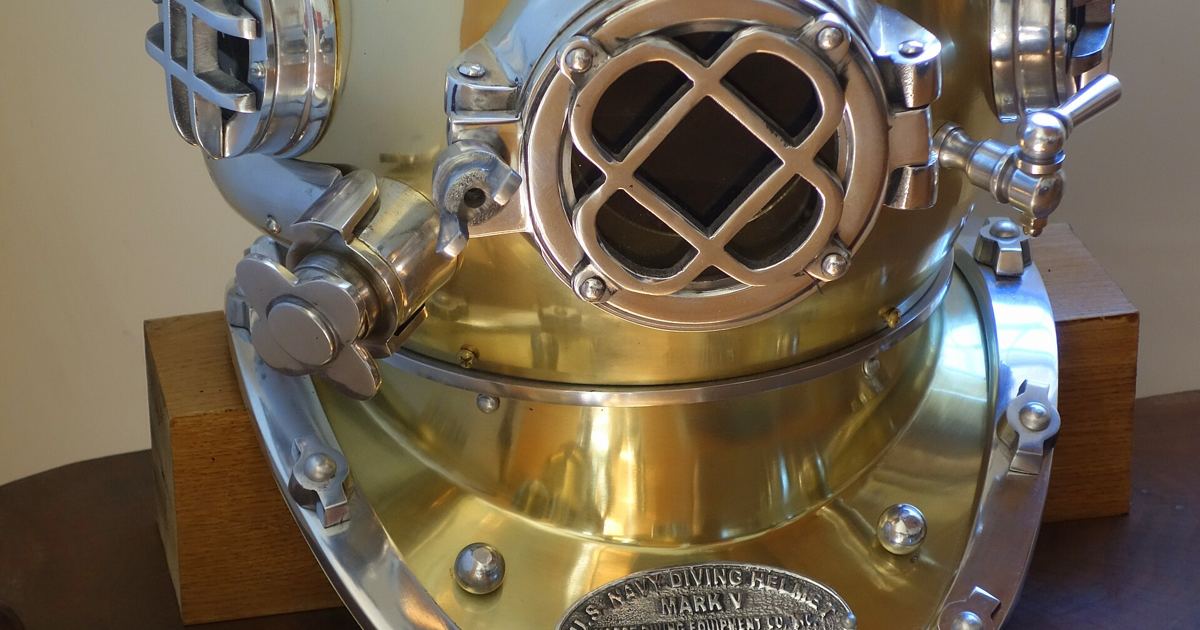
Estimating commercial underwater work requires a precise understanding of federal safety regulations. Whether an intake pipe needs inspection or underwater structural demolition is required, contractors cannot simply assume a generic dive team rate. The Occupational Safety and Health Administration outlines distinct operational boundaries for self-contained underwater breathing apparatus and surface-supplied operations. Comparing 29 CFR 1910.424 with 29 CFR 1910.425 reveals how depth limits, crew sizes, and mandatory support equipment shift your bottom-line proposal.
Myth 1: SCUBA Can Be Used at Any Moderate Water Depth
Fact: SCUBA diving faces strict depth ceilings and chamber requirements that limit where it can be deployed.
Under 29 CFR 1910.424(b), SCUBA operations must never be conducted at depths deeper than 130 fsw (feet of seawater). Furthermore, SCUBA diving is prohibited at depths deeper than 100 fsw or outside the no-decompression limits unless a decompression chamber is ready for use. If current velocities exceed 1 knot, SCUBA divers cannot work unless they are line-tended. These thresholds prevent estimators from treating SCUBA as an all-purpose underwater solution. When planning site staging, mobilization, and general conditions, overlooking these depth and current triggers will lead to underbidding the required support setup.
Myth 2: Surface-Supplied Air Has the Same Depth Thresholds as SCUBA
Fact: Surface-supplied air diving allows operations to go significantly deeper, but triggers deeper-water equipment mandates.
According to 29 CFR 1910.425(b), surface-supplied air diving cannot be conducted deeper than 190 fsw, with one specific exception: dives with bottom times of 30 minutes or less may be conducted to depths of 220 fsw. Just like SCUBA, a decompression chamber must be ready for use at the dive location for any dive deeper than 100 fsw or outside the no-decompression limits. In addition, when inwater decompression time exceeds 120 minutes, a dive bell is mandatory unless heavy gear is worn or the dive occurs in physically confining spaces. Carrying equipment like a decompression chamber or a dive bell significantly changes mobilization pricing.
Myth 3: Tending and Diver Staffing Requirements Are Identical
Fact: Surface-supplied diving imposes stricter individual tending and deep-water staffing rules.
Staffing a dive project requires evaluating whether divers can work in pairs or need dedicated tenders on the surface, which directly influences your labor burden calculations:
- SCUBA tending: Under 29 CFR 1910.424(c), a diver must be line-tended from the surface OR accompanied by another diver in the water who maintains continuous visual contact. A standby diver must be available while a diver is in the water.
- Surface-supplied tending: Under 29 CFR 1910.425(c), each diver must be continuously tended while in the water. For dives deeper than 100 fsw or outside no-decompression limits, a separate dive team member must tend each diver in the water, and a standby diver must be available.
- Heavy-gear additions: When heavy-gear diving occurs deeper than 100 fsw or outside no-decompression limits, the standby diver must have an extra breathing gas hose capable of supplying gas to the diver in the water, and an inwater stage must be provided.
Myth 4: Underwater Enclosed Space Protocols Do Not Impact Crew Size
Fact: Enclosed or physically confining spaces automatically require dedicated entry-point personnel under both standards.
When working inside intake pipes, culverts, or interior flooded compartments, standard buddy diving or simple surface line-tending is insufficient. Both 29 CFR 1910.424(c)(3) and 29 CFR 1910.425(c)(2) dictate that a diver must be stationed at the underwater point of entry when diving is conducted in enclosed or physically confining spaces. For SCUBA, diving in enclosed or physically confining spaces also mandates that the working diver be line-tended. This means an estimator must price an additional diver strictly to monitor the entry point, expanding the headcount beyond the primary worker and the topside crew.
Myth 5: Breathing Gas Reserve Rules Are the Same for Both Systems
Fact: Reserve supply requirements depend heavily on the delivery system and physical site hazards.
SCUBA divers must carry a reserve breathing gas supply featuring either a manual reserve (J valve) or an independent reserve cylinder equipped with a separate regulator or linked to the breathing apparatus. This reserve valve must be set in the closed position before the dive begins. In contrast, surface-supplied diving demands an entire system-level safeguard: the primary breathing gas supply must be sufficient to support divers for the duration of the planned dive, including decompression. For surface-supplied dives deeper than 100 fsw or outside no-decompression limits, contractors must furnish both a dive-location reserve breathing gas supply and a diver-carried reserve breathing gas supply (unless heavy gear is worn). Diver-carried reserves are also required whenever the configuration prevents a diver from ascending directly to the surface, unless heavy gear or space constraints intervene.
Sources
Published October 31, 2026. No affiliate links on this page. Facts come from the sources linked above; check them for updates.