Updating Owned-Equipment Rates with Construction Machinery PPI
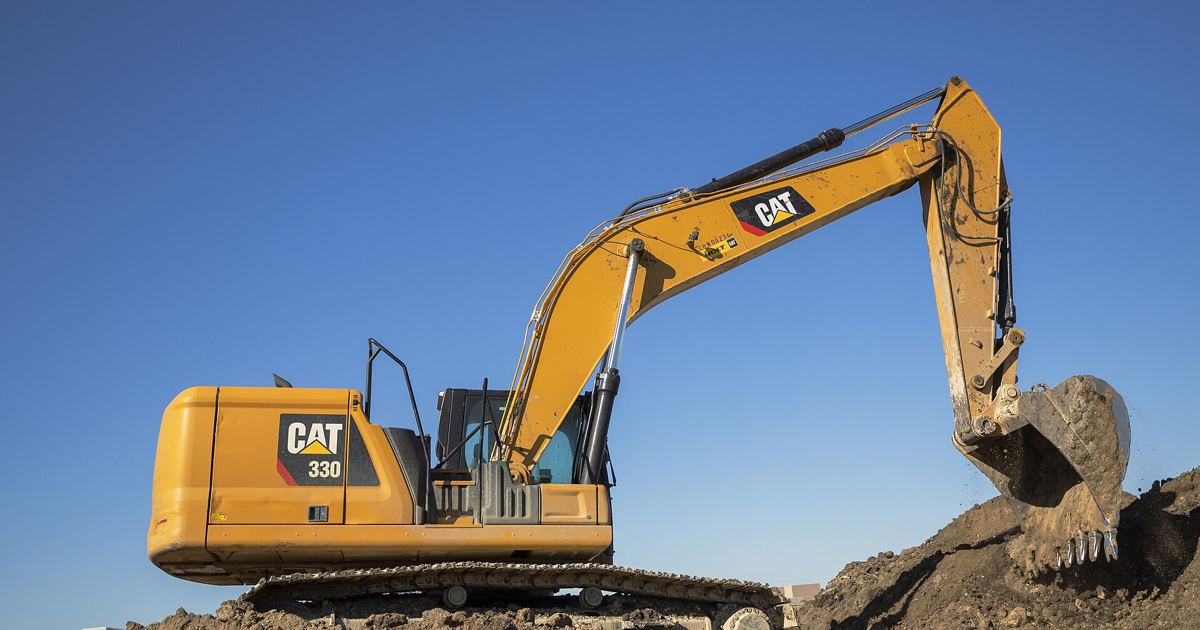
When estimators build commercial construction bids, pricing company-owned equipment often falls into the trap of using static internal rental sheets. Whether your crews operate material handlers, scissor lifts, rough-terrain forklifts, or heavy earthmoving rigs, your hourly rates must reflect current replacement costs and market value. Tracking federal price indexes provides a clear, defensible benchmark for adjusting these internal machinery rates across bidding models.
Step 1: Benchmark Replacement Costs Using Series WPU112
The primary federal benchmark for heavy tools and vehicles is tracked under U.S. Bureau of Labor Statistics PPI series WPU112, titled Machinery and equipment-Construction machinery and equipment. Set to an index base period of 1982 = 100, this commodity series tracks producer selling prices across domestic manufacturing transactions without seasonal adjustment.
In September 2026, the index registered at 326.3. That represents a 1.7 percent increase over the September 2025 level of 320.9 and a 6.2 percent increase compared to the September 2024 level of 307.1. Evaluating these changes allows contractors to verify whether internal cost allocation sheets have kept pace with factory-gate pricing.
Step 2: Track Long-Term Inflation Against Baseline Yard Schedules
Owned machinery rates established several years ago will severely understate actual replacement and fleet maintenance values. A quick look at the multi-year history of series WPU112 reveals substantial compound increases across recent operating cycles:
- September 2026 stood at 326.3, which is 30.6 percent higher than the September 2021 level of 249.9.
- Compared to the pre-pandemic level of 236.3 in January 2020, machinery prices are up 38.1 percent.
- The annual averages demonstrate how capital asset costs climbed from 220.9 in 2017 and 223.1 in 2018 to 232.6 in 2019, 236.6 in 2020, 248.1 in 2021, and 274.4 in 2022.
- Further upward momentum pushed annual averages to 298.5 in 2023, 307.1 in 2024, and 316.1 in 2025, reaching 324.6 across January through September 2026.
If an estimating department still calculates hourly charge-out rates using baseline figures from 2020 or 2021, the company is absorbing significant depreciation shortfalls on every awarded project.
Step 3: Review Key BLS Machinery and Equipment Price Benchmarks
The following table outlines the trajectory of construction machinery and equipment prices across key historical markers within the data window:
| Time Horizon | Period | Index Level | Change to September 2026 |
|---|---|---|---|
| Latest Month | September 2026 | 326.3 | 0.0% |
| Data Window High | August 2026 | 326.4 | -0.0% |
| One Year Earlier | September 2025 | 320.9 | +1.7% |
| Two Years Earlier | September 2024 | 307.1 | +6.2% |
| Five Years Earlier | September 2021 | 249.9 | +30.6% |
| Pre-Pandemic Baseline | January 2020 | 236.3 | +38.1% |
| Data Window Low | January 2018 | 217.9 | N/A |
Step 4: Incorporate Price Plateaus into Project Proposals
Monthly movements in late 2025 and 2026 show that machinery prices reached a plateau near historical peaks. The series recorded values of 320.9 in September 2025, 322.4 in October 2025, 322.4 in November 2025, and 324.0 in December 2025. Entering 2026, the index registered 322.6 in January 2026, 323.5 in February 2026, 323.5 in March 2026, 323.8 in April 2026, 324.3 in May 2026, and 324.4 in June 2026.
The series rose to 326.3 in July 2026 and hit a window peak of 326.4 in August 2026 before settling at 326.3 in September 2026, reflecting a month-over-month change of -0.0 percent. When setting equipment allocations in general conditions estimating, this high plateau means estimators cannot anticipate price relief when replacing aging plant or purchasing specialized attachments.
Step 5: Protect Long-Duration Estimates Against Latent Escalation
On multi-year projects or long procurement cycles, equipment operating rates should not remain fixed without contractual safeguards. Even during periods of modest monthly change, multi-year escalation can undermine equipment recovery budgets. Incorporating formal terms via price escalation clauses tied to official commodity benchmarks ensures your firm can adjust equipment allowances if manufacturer prices surge unexpectedly.
Furthermore, estimators should remember that published figures for recent months remain preliminary and subject to revision for four months under official BLS procedures. When validating rate calculations against the BLS construction machinery PPI series WPU112, verify whether preliminary values from May 2026, June 2026, July 2026, or August 2026 have undergone routine revisions before finalizing your internal billing schedules.
Sources
Published October 30, 2026. No affiliate links on this page. Facts come from the sources linked above; check them for updates.