Heat Transfer Equipment PPI Trends: Bidding Walk-Through
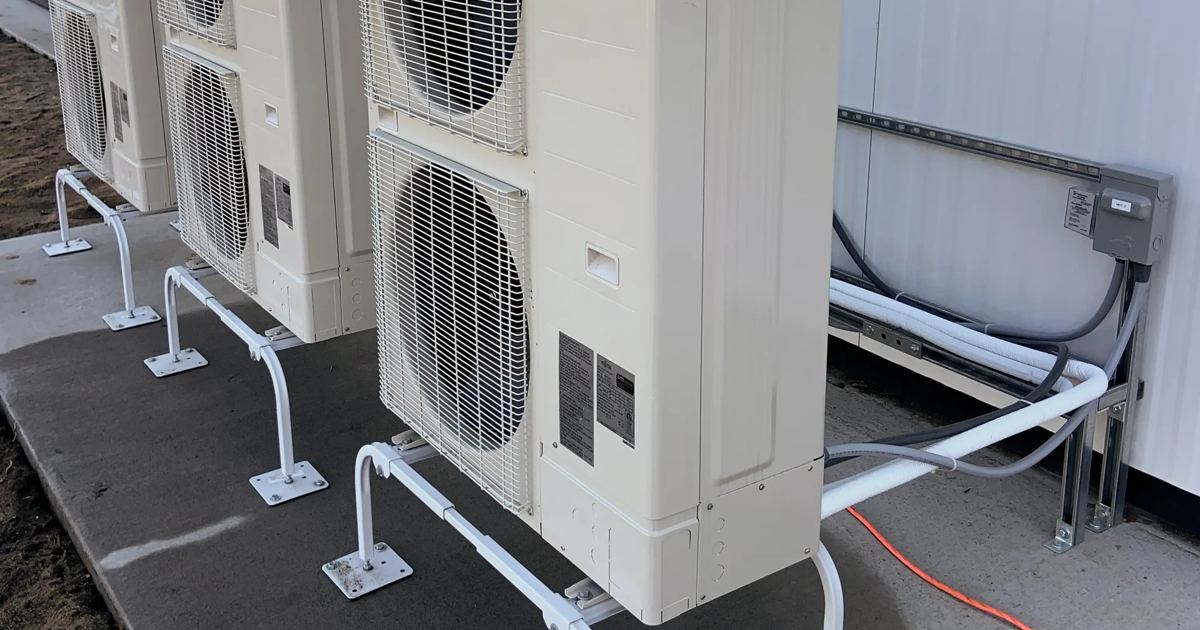
Suppose an estimator is pricing a mechanical bid package that includes commercial heat pumps and heat transfer equipment. Because major HVAC machinery often involves multi-month manufacturing cycles between the bid date and delivery, bidding without referencing verified producer price trends leaves the contractor open to unbudgeted wholesale spikes. By walking through official federal price data, an estimator can evaluate where equipment prices stand, review historical shifts, and set up realistic bid provisions.
Step 1: Benchmarking Long-Term Price Shifts Against Baseline Data
The estimator begins the walk-through by reviewing commodity figures published in the U.S. Bureau of Labor Statistics PPI commodity data for series WPU114807, which tracks heat transfer equipment, including heat pumps, against a base period of December 2011 = 100. This non-seasonally adjusted index reveals significant cost growth over recent construction cycles.
In January 2020, before widespread economic shifts, the index was 120.6. By September 2026, the index reached 186.2, representing a cumulative increase of +54.4%. Looking back five years to September 2021, when the index stood at 137.1, equipment costs have climbed +35.8% to the September 2026 level. Annual averages calculated from the monthly data illustrate how these costs accumulated year over year:
- 2019: 120.0
- 2020: 122.4
- 2021: 131.9
- 2022: 159.3
- 2023: 170.3
- 2024: 173.8
- 2025: 179.9
- 2026 (January through September only): 184.2
Step 2: Tracking Intermediate Stability and the 2026 Peak
Next in the scenario, the estimator checks intermediate timeframes to determine whether recent equipment quotes reflect steady increases or sudden swings. Two years prior, in September 2024, the index was 173.6, resulting in a +7.2% change through September 2026. One year prior, in September 2025, the index was 182.2, representing an increase of +2.2% over the twelve-month span.
Within the overall data window spanning January 2019 to September 2026, the lowest monthly value recorded was 119.1 in January 2019. The highest monthly value occurred in August 2026 at 187.3. Following that high, the index adjusted downward by -0.6% from August 2026 to September 2026, landing at 186.2. For an estimator analyzing current quotes, this -0.6% month-over-month decline indicates a modest ease right after reaching a series high, though overall price levels remain elevated.
Step 3: Examining the Thirteen-Month Trend for Procurement Planning
To understand the month-by-month trajectory leading into bid day, the estimator reviews the 13 months of index data leading up to September 2026:
- September 2025: 182.2
- October 2025: 181.8
- November 2025: 181.9
- December 2025: 181.8
- January 2026: 181.8
- February 2026: 180.8
- March 2026: 184.2
- April 2026: 184.1
- May 2026: 184.0
- June 2026: 184.1
- July 2026: 185.6
- August 2026: 187.3
- September 2026: 186.2
This sequence shows that prices held steady between October 2025 and January 2026 at 181.8 to 181.9, dipped slightly to 180.8 in February 2026, rose to 184.2 in March 2026, stabilized through June 2026, pushed to 187.3 in August 2026, and eased to 186.2 in September 2026.
Heat Transfer Equipment Producer Price Index Milestones
To share these benchmarks with the project team during bid leveling, the estimator organizes key figures from the BLS Producer Price Index series WPU114807 into a standardized summary.
| Reference Milestone | Index Date | PPI Index Value | Change to Latest (September 2026) |
|---|---|---|---|
| Pre-Pandemic Baseline | January 2020 | 120.6 | +54.4% |
| Five Years Earlier | September 2021 | 137.1 | +35.8% |
| One Year Earlier | September 2025 | 182.2 | +2.2% |
| Window High | August 2026 | 187.3 | -0.6% |
| Latest Value Available | September 2026 | 186.2 | Baseline |
Step 4: Structuring Proposals and Risk Controls
After reviewing the index data, the estimator incorporates specific practices into the HVAC proposal:
- Note that recent figures from the BLS are preliminary and subject to revision for four months, making it critical to identify exact index publication months when referencing baseline numbers.
- Propose defined terms using price escalation clauses to address extended project schedules where equipment release occurs long after bid submission.
- Verify vendor quotes against broader system categories outlined in our checklist for HVAC equipment PPI trends to ensure mechanical submittals match overall trade pricing conditions.
- Account for the cumulative +54.4% shift since January 2020 when negotiating budgets on multi-year building renovations.
Sources
U.S. Bureau of Labor Statistics, Producer Price Index series WPU114807
Published November 9, 2026. No affiliate links on this page. Facts come from the sources linked above; check them for updates.